 IDYORA







Before You Start
Mild
The small green chilli provides the heat. Use half a chilli for a milder taste or omit it entirely for no heat.
Make it with no chilli
Simply omit the green chilli from the tempering step; the flavour will remain delicious and aromatic from the cumin and tomato.
30 mins in total
30 mins hands-on (chopping and cooking).
Contains: Milk (dairy)
Vegetarian · contains dairy. We check for milk, gluten, tree nuts, peanuts, mustard, sesame and celery. Always check your own labels, especially for asafoetida (hing), which often contains wheat.
Ingredients
Main Ingredients
Tempering & Seasoning
Make It a Meal
Serve warm as a standalone breakfast or light lunch, perhaps with a side of plain yoghurt.
Serve this warm upma in a bowl alongside a side of fresh yogurt if desired.
Good to Know
Nutrition values are approximate, per serving. IDYORA shares general wellness information — not medical advice.
Step by Step Instructions
-
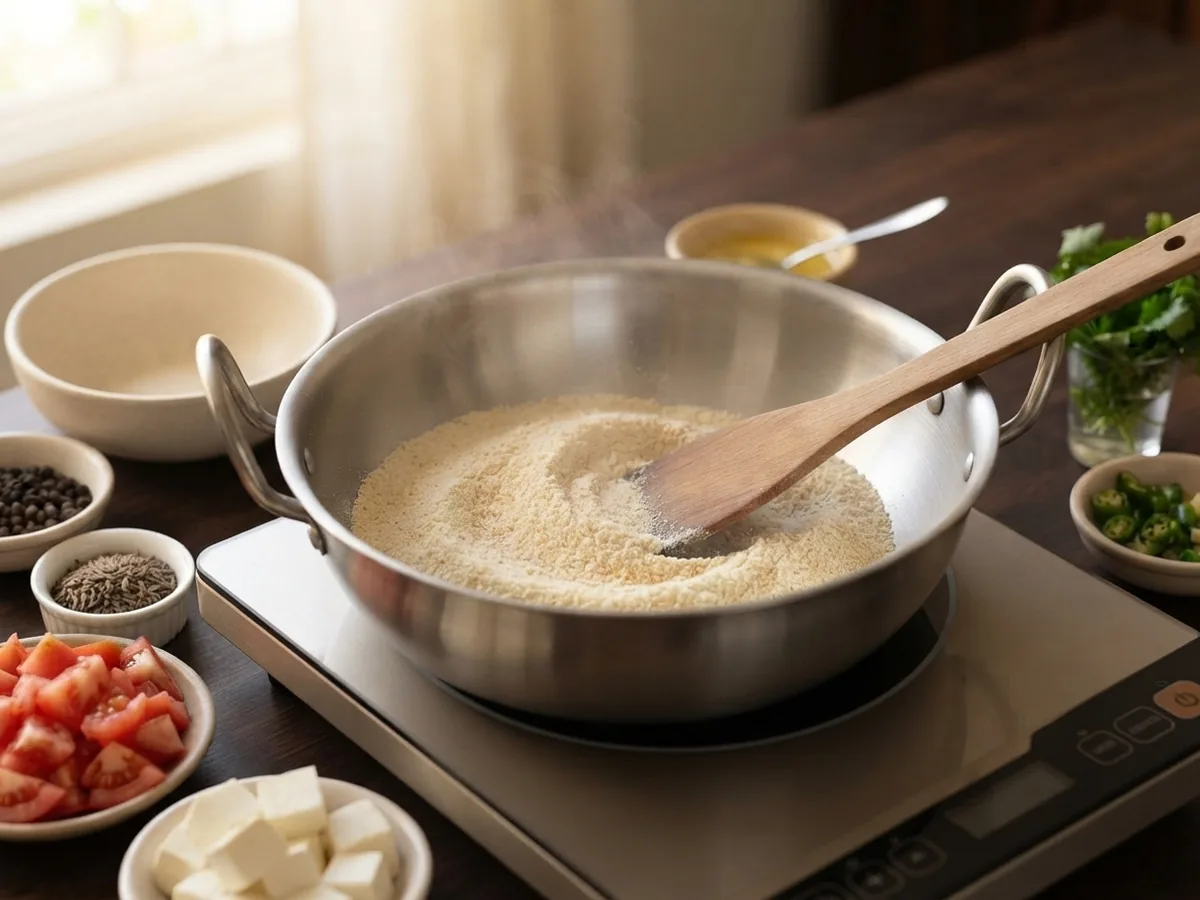
Roast Samak Flour
Heat a dry pan on low heat. Add 0.5 cup samak rice flour and roast for 2–3 minutes until fragrant, then remove from the pan.
Done when: The flour will smell toasted and nutty; do not let it brown or burn, as burnt flour will make the entire dish taste bitter.
5 mins hands-on
-
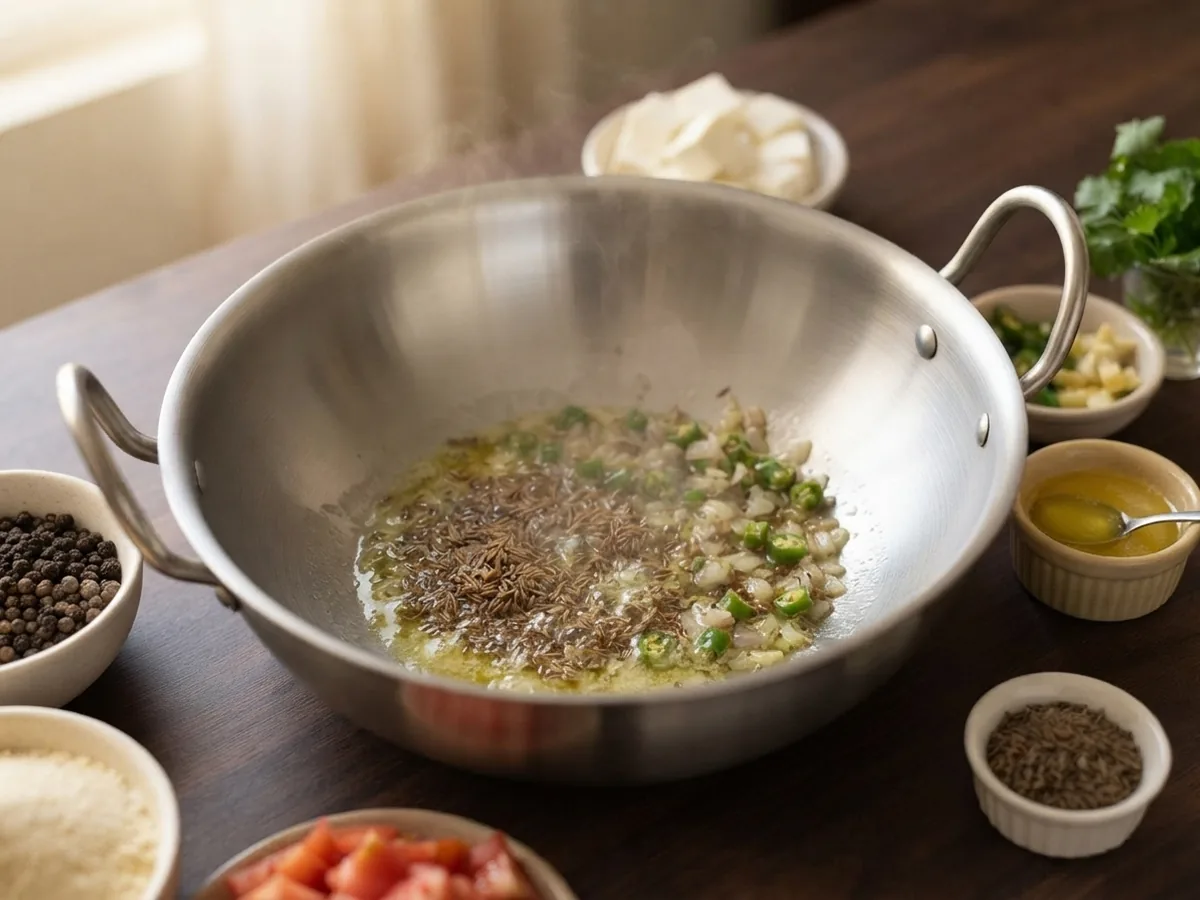
Prepare Tempering
In the same pan, heat 1 tbsp ghee. Add 0.5 tsp cumin seeds, 1 small green chilli.
Done when: Onions should look soft and see-through; if they start to brown too quickly, turn the heat down to prevent them from drying out.
5 mins hands-on
-
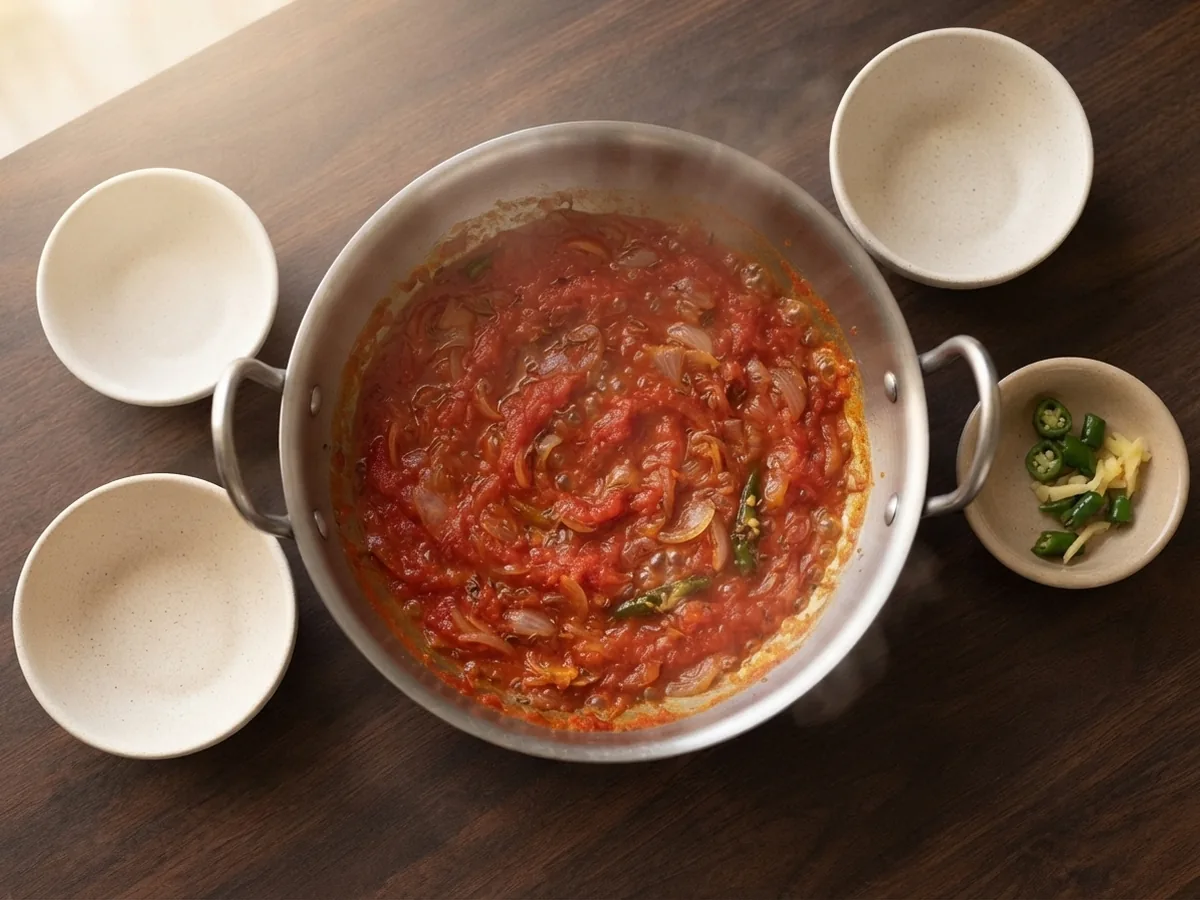
Cook Tomato Base
Add 0.5 cup tomato puree and a pinch of sendha namak to the pan. Cook on medium heat for 3–4 minutes until the raw smell fades and the oil begins to separate from the puree.
Done when: You will see tiny beads of fat separating from the tomato puree; this indicates the raw tomato flavour has cooked away.
5 mins hands-on
-
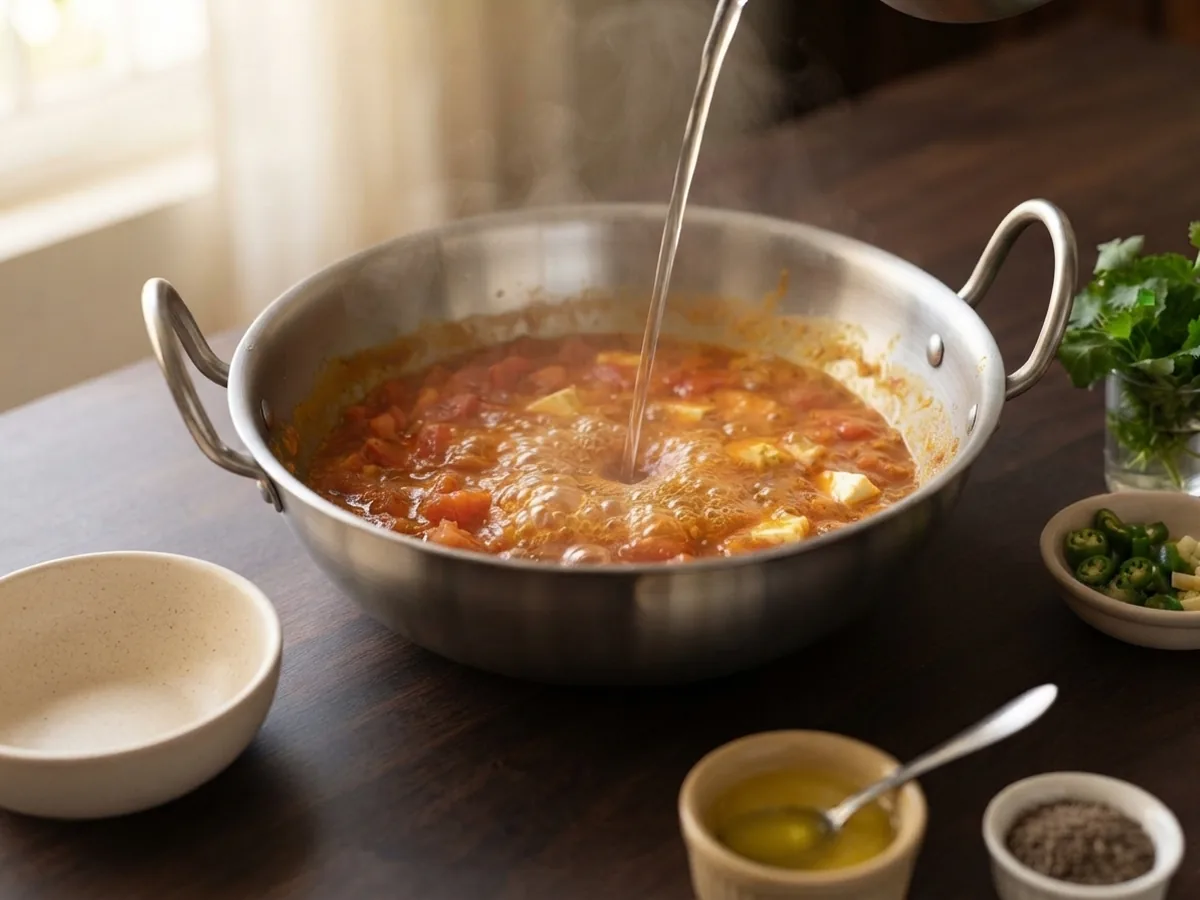
Boil Water
Pour in 1.5–2 cups water and bring the mixture to a rolling boil over medium-high heat. Ensure the liquid is bubbling actively before moving to the next step.
Done when: The water must be at a vigorous, rolling boil; adding the flour to lukewarm water will result in a gummy, lumpy texture.
4 mins hands-on
-
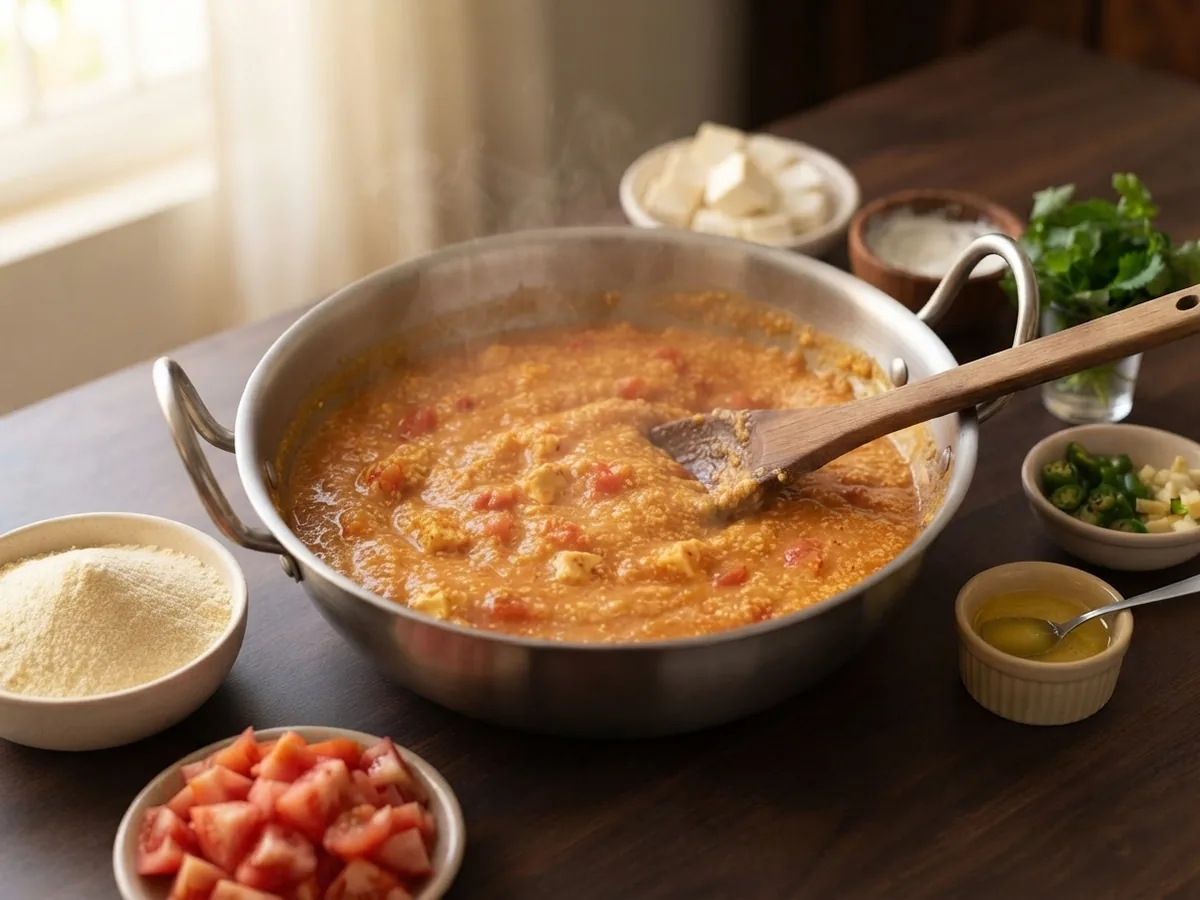
Mix and Simmer
Gradually stir in the roasted samak flour while whisking to prevent lumps. Cook on medium-low heat for 3–5 minutes until the mixture thickens and the water is fully absorbed into a soft, porridge-like consistency.
Done when: The mixture should look like a soft, thick porridge that holds its shape slightly; if it is too stiff, add a splash of hot water.
6 mins hands-on
-
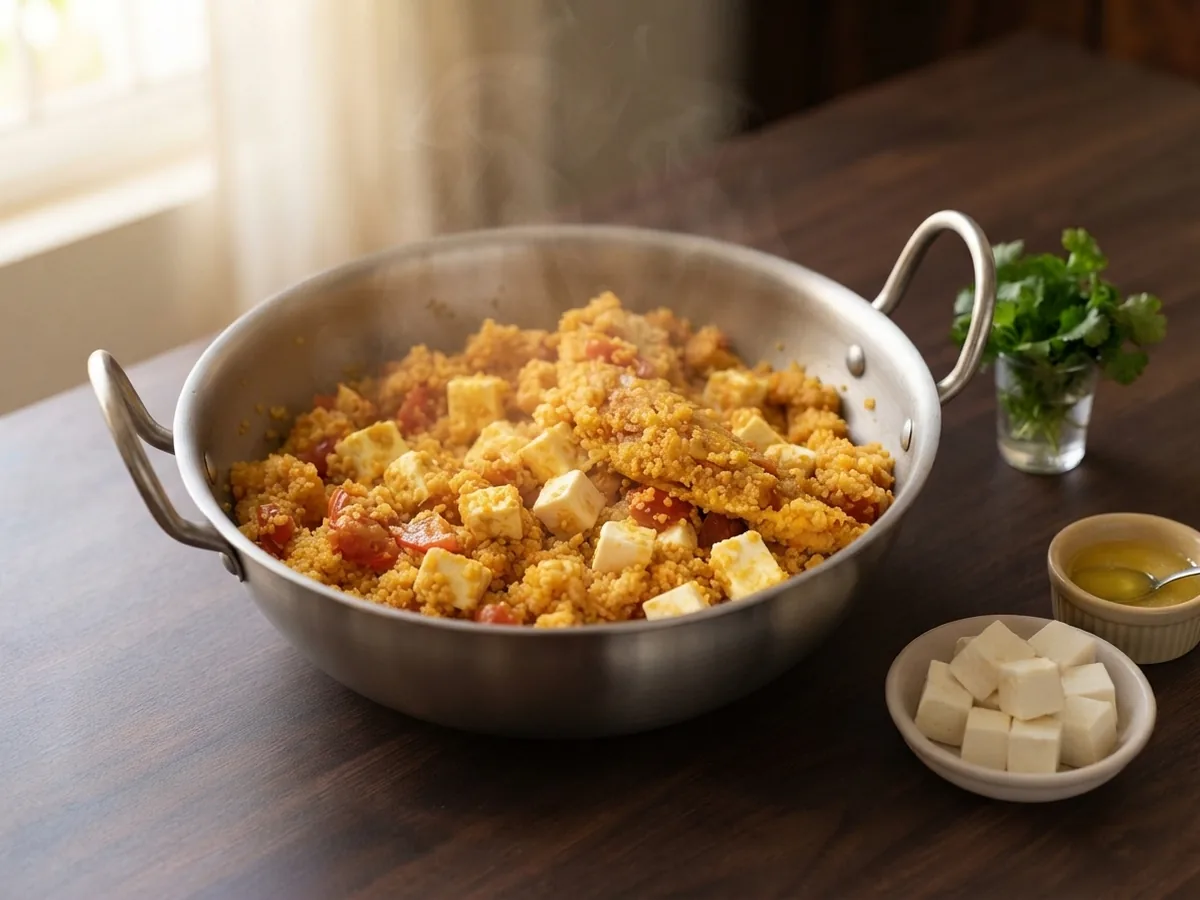
Add Paneer
Gently fold in 100 g paneer cubes. Simmer on low heat for 2 minutes until the paneer is warmed through and slightly softened by the tomato base.
Done when: The paneer cubes should feel tender when pressed; avoid stirring too vigorously to keep the paneer from breaking apart.
3 mins hands-on
-

Garnish and Serve
Remove the pan from the heat. Sprinkle 1 small bunch of chopped fresh coriander over the top and serve immediately while hot for the best texture.
Done when: The coriander should look vibrant green and wilt slightly; serve immediately as the upma thickens significantly as it cools.
2 mins hands-on
Made it? Rate it
Be the first to rate it
Why It's Good for You
This dish is a version of upma, a traditional Indian breakfast. Research indicates that breakfast foods like upma have varying glycaemic impacts1. Choosing ingredients that provide a balance of nutrients is key for a wholesome start to the day. The glycaemic index of breakfast foods is often influenced by their protein, fat, and dietary fibre content, which may negatively correlate with the glycaemic index1. By incorporating paneer, which provides protein, and using samak flour, this recipe creates a balanced profile suitable for your fasting days. Always plan your dietary changes with your doctor or a registered dietitian to ensure they align with your health needs.