 IDYORA




Ingredients
For the Kadhi Base
For the Tempering
Serving Suggestions
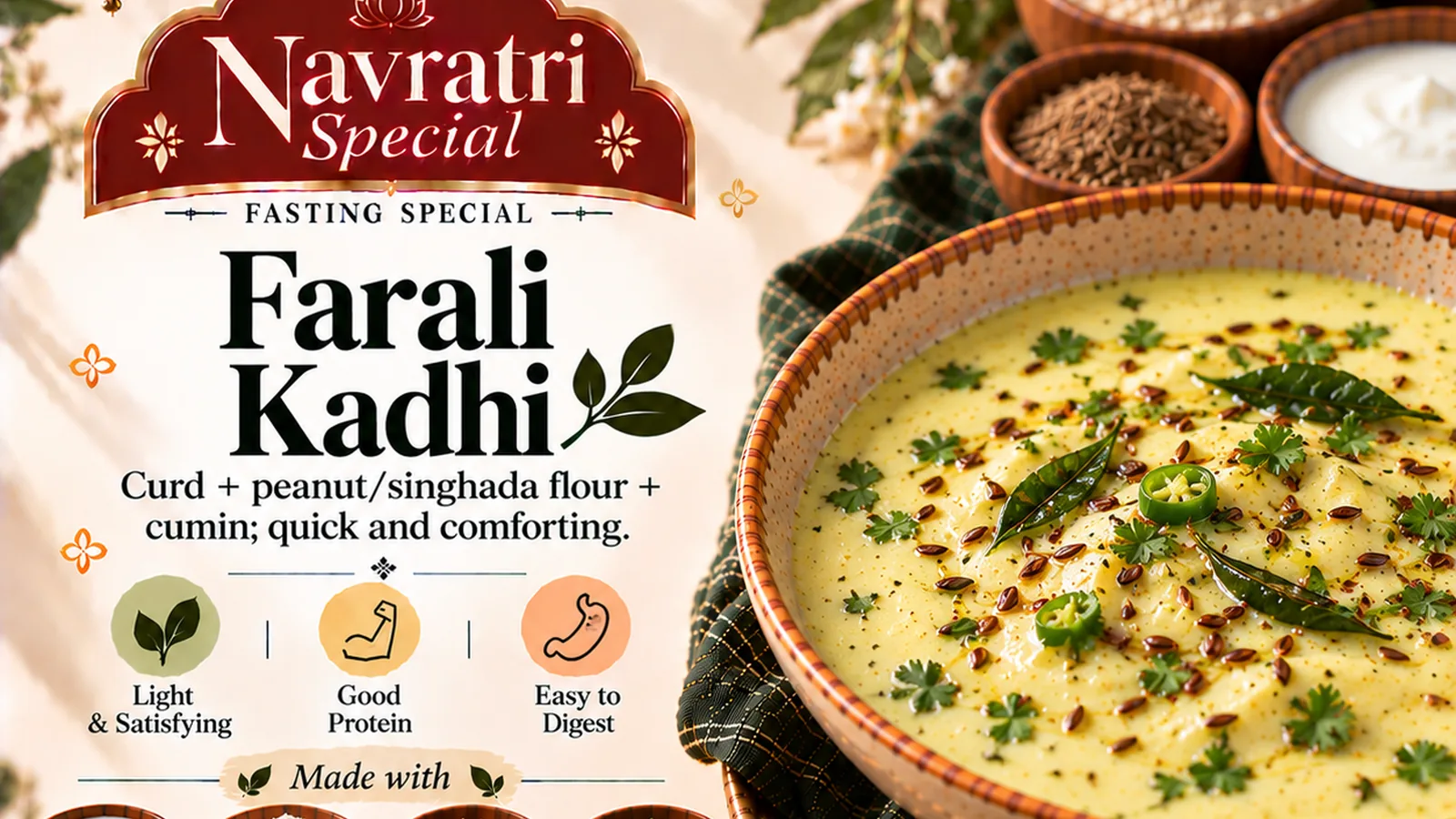
Serve this warm Farali Kadhi as a comforting meal on its own or alongside fasting-friendly grains like sama rice.
Good to Know
Nutrition values are approximate, per serving. IDYORA shares general wellness information — not medical advice.
Watch the Recipe
Key moments and transcriptStep by Step Instructions
-
Prepare the Base
In a large mixing bowl, whisk 1.5 cups of curd until perfectly smooth. Add 2/3 cup of singhada flour and whisk again thoroughly to ensure there are no lumps in the mixture.
-
Simmer the Kadhi
Pour the curd and flour mixture into a heavy-bottomed pot. Add 2.5 cups of water and 1 tsp of rock salt, stirring continuously on medium-low heat for about 8 minutes until the mixture thickens slightly and begins to simmer gently.
-
Temper the Spices
In a small pan, heat 1 tbsp of ghee on medium heat. Once hot, add 1 tsp of cumin seeds, 2 chopped green chillies, and 2g of curry leaves, letting them sizzle for 30 seconds until the cumin turns golden and the leaves become crisp.
-
Finish and Garnish
Pour the hot tempering over the simmering kadhi and stir once to combine the flavors. Cook for 1 additional minute, then remove from heat and garnish with 2 tbsp of fresh chopped coriander leaves before serving.
Made it? Rate it
Be the first to rate it
Why It's Good for You
This Farali Kadhi is a wholesome addition to a balanced diet. Curd is a fermented dairy product; research suggests that fermentation may offer beneficial effects on metabolism and is associated with a reduced risk of certain metabolic concerns when consumed as part of a varied diet1. Curd is also a source of calcium, which is important for maintaining bone health2,3.
Spices like cumin contribute to the overall nutrient profile of the meal4. While individual spices are consumed in small quantities, they contribute to the intake of minerals and essential amino acids4. The inclusion of singhada flour provides a traditional thickening agent suitable for fasting days.
According to the ICMR-NIN, a healthy meal should be based on a variety of food groups including fermented dairy, and should be seasoned with minimal fats and salt5. Always plan significant dietary changes during fasting with your doctor or a registered dietitian, especially if you have specific health conditions5.
Sources
5
- Dietary management of dyslipidemia - PMCUS National Institutes of Health
- ICMR-National Institute of NutritionICMR-National Institute of Nutrition
- The composition of Indian foods—mineral composition and intakes of Indian vegetarian populationsJournal article, 1995
- Common Indian spices: nutrient composition, consumption and contribution to dietary valueUS National Institutes of Health
- DIETARY GUIDELINES FOR INDIANSICMR-National Institute of Nutrition