 IDYORA
Ingredients
For the Millet
For the Curd Base
For the Tempering
Serving Suggestions
Serve this dish at room temperature or chilled as a refreshing Navratri meal.
Good to Know
Nutrition values are approximate, per serving. IDYORA shares general wellness information — not medical advice.
Watch the Recipe
Key moments and transcriptStep by Step Instructions
-
Cook the Millet
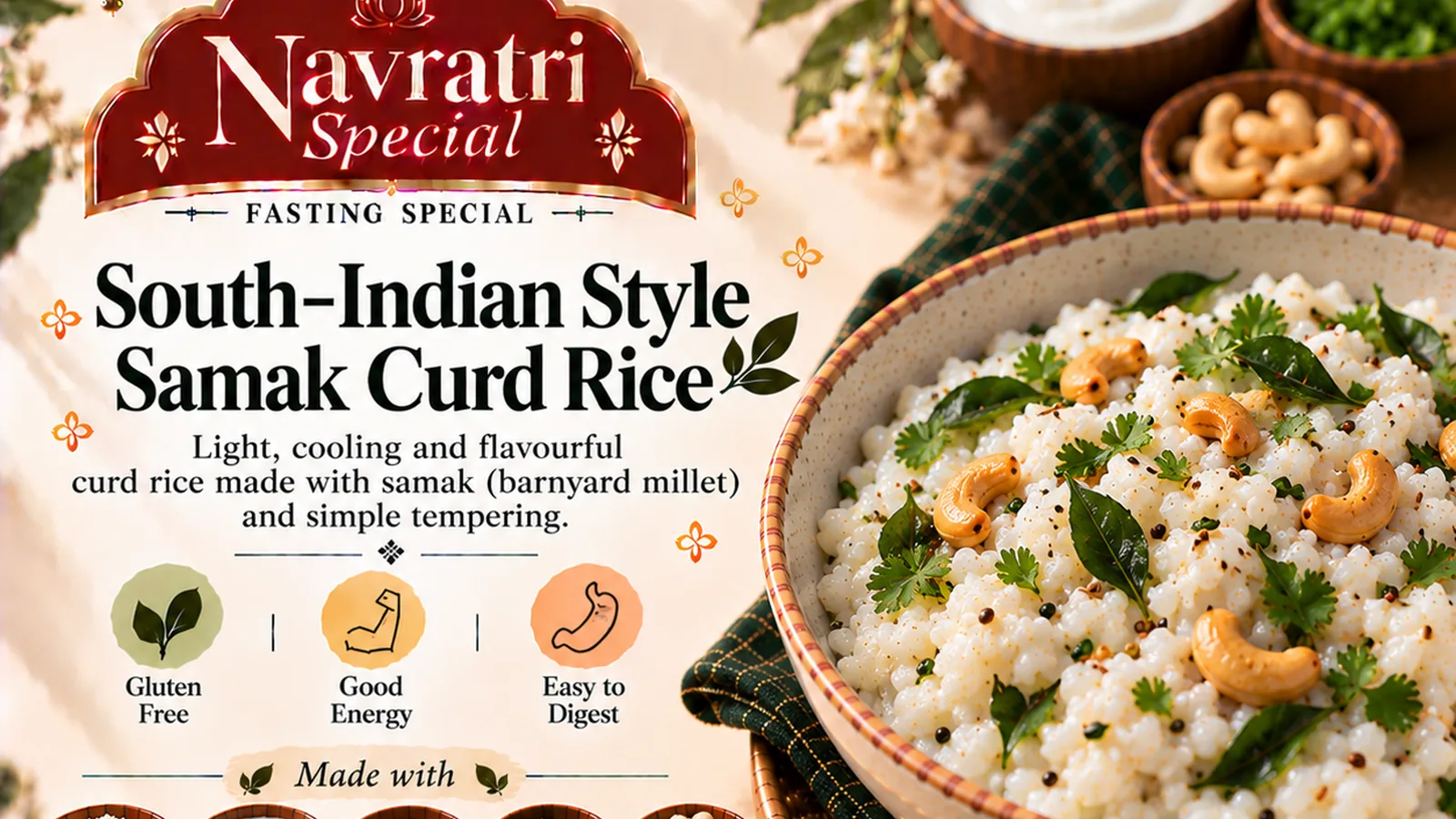
In a pot, combine 0.5 cup washed Samak rice with 1.5 cups water. Bring to a boil, then cover and simmer on low heat for about 12-15 minutes until the water is absorbed and the millet is soft.
-
Prepare the Base
Once it is cooked, let it cool slightly. In a bowl, mix the cooked Samak rice with 1.25 cups whisked fresh yogurt, 0.25 cup milk, and 0.5 tsp rock salt until the mixture is smooth and creamy.
-
Make the Tempering
Heat 0.5 tbsp ghee in a small pan over medium heat. Add 0.5 tsp cumin seeds, 2 tbsp halved cashews, 1 chopped green chilli, and 8-10 curry leaves, sautéing for about 1-2 minutes until the cashews turn golden brown and the curry leaves are crisp.
-
Assemble and Garnish
Pour the hot tempering over the curd-Samak rice mixture and stir gently for 30 seconds to combine the flavours. Garnish with 1 tbsp chopped fresh coriander and serve immediately while the tempering is still fragrant.
Made it? Rate it
Be the first to rate it
Why It's Good for You
Barnyard millet is an underutilized, fast-growing crop that is rich in protein and dietary fibre1. Compared to rice, it offers a higher nutritional profile in terms of protein, fat, and fibre2. Its low glycemic index makes it a valuable addition to a balanced diet, especially for those looking for wholesome alternatives to refined cereals3.
Curd, as a fermented milk product, is a key component of the ICMR-NIN model plate, which helps in maintaining good microbial flora in the intestine4. Incorporating a variety of foods from different groups—including cereals, pulses, nuts, and curd—is essential for achieving nutrient adequacy and preventing micronutrient malnutrition4,5. Ghee provides a traditional source of fat, and when used in moderation, it completes the profile of this traditional meal5.
Always remember that a balanced diet is the key to maintaining wellbeing, and any significant changes to your diet, especially if you have health conditions, should be planned with your doctor or a registered dietitian5.
Sources
5
- Potential of underutilized millets as Nutri-cereal: an overviewUS National Institutes of Health
- Comparative study on nutritional and sensory quality of barnyard and foxtail millet food products with traditional rice products - PMCUS National Institutes of Health, 2014
- Comparative Analysis of Nutritional Value, Glycemic Index and Sensory Quality of Barnyard Millet and Rice Varieties and their ProductsJournal article, 2020
- My plate for the day A4.cdrICMR-National Institute of Nutrition
- DIETARY GUIDELINES FOR INDIANSICMR-National Institute of Nutrition