 IDYORA


Before You Start
No chilli heat
This recipe contains no chilli and is naturally mild. To add heat, stir in 1/2 tsp of red chilli powder during step 3 or serve with a side of fresh green chillies.
40 mins in total
15 mins hands-on (chopping and cooking), 25 mins hands-off.
Plan ahead: Wash the rice and moong dal in a sieve under cold running water until the water runs clear, then drain well.
Contains: Milk (dairy)
Vegetarian · contains dairy. We check for milk, gluten, tree nuts, peanuts, mustard, sesame and celery. Always check your own labels, especially for asafoetida (hing), which often contains wheat.
Ingredients
For the Pulao
For the Kachumber
Make It a Meal
Serve warm with a side of plain yogurt or a dollop of butter for a comforting meal.
Serve the warm pulao in a wide bowl with the fresh, zesty kachumber on the side.
Good to Know
Nutrition values are approximate, per serving. IDYORA shares general wellness information — not medical advice.
Watch the Recipe
Key moments and transcriptStep by Step Instructions
-
Temper the Spices
Heat 1 tbsp ghee in a heavy-bottomed pot on medium heat. Add 1 tsp cumin and let it sizzle for 30 seconds until the seeds turn golden and become fragrant.
Done when: The cumin seeds should be golden brown and pop in the ghee; do not let them turn black or they will taste bitter.
5 mins hands-on
-
Sauté Methi Leaves
Add 2 cups chopped methi leaves to the pot. Sauté for about 3 minutes on medium heat until the leaves wilt, darken in color, and reduce significantly in volume.
Done when: The methi leaves should be soft and dark green, having shrunk to a fraction of their original size; avoid leaving them raw as they can be quite bitter.
5 mins hands-on
-
Cook the Pulao
Stir in 1 cup washed rice, 0.5 cup washed moong dal, 0.5 tsp turmeric, and 1 tsp salt. Pour in 3 cups water, bring to a boil, then cover and simmer on low heat for 20 minutes until the water is fully absorbed and the grains are tender and fluffy.
Done when: The water should be completely absorbed and the rice grains should be tender but hold their shape; avoid stirring too much once simmering to prevent the grains from breaking.
25 mins hands-off
-
Prepare the Kachumber
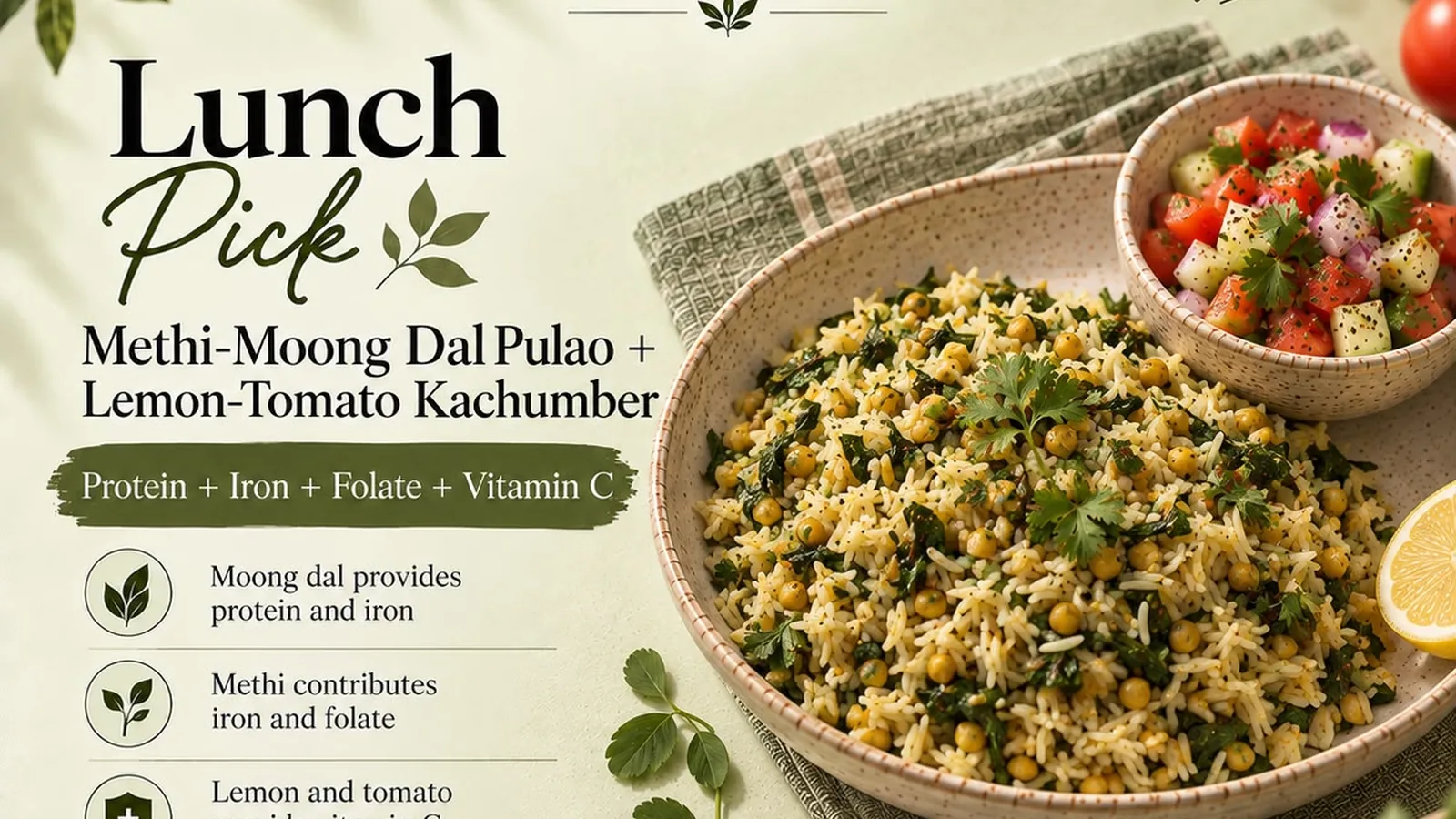
While the pulao cooks, combine 1 chopped tomato, 1 chopped cucumber, and 0.5 chopped onion in a mixing bowl. Toss with 1 tbsp lemon juice and 2 tbsp chopped coriander leaves for 1 minute until well coated; the vitamin C from the lemon may support iron absorption1.
Done when: The vegetables should be evenly coated in the lemon juice and look bright and fresh; ensure you chop the pieces small for a consistent texture.
5 mins hands-on prep
Made it? Rate it
Be the first to rate it
Why It's Good for You
This meal is a balanced choice that aligns with the ICMR-NIN recommendation to consume a variety of foods from different groups for nutrient adequacy1. Moong dal is a source of protein, while methi leaves contribute iron and folate to the diet1. Including fresh vegetables like tomatoes and cucumbers is a practical way to add protective nutrients and fiber to your plate1.
Research indicates that the composition of a meal significantly influences how effectively your body can use iron2. Specifically, the inclusion of key food ingredients like salad and lemon juice in a meal of rice and dal can enhance iron bioaccessibility2. For vegetarians, using lemon as a topping or in a side salad is one of the most effective ways to support better iron absorption from cereal-based meals2. If you have specific health conditions, please plan any significant dietary changes with your doctor or a registered dietitian.
Sources
2
- DIETARY GUIDELINES FOR INDIANSICMR-National Institute of Nutrition
- Effect of inclusion of key foods on in vitro iron bioaccessibility in composite mealsUS National Institutes of Health