Before You Start
Mild
The 1 small green chilli provides the heat. For a milder flavour, use half a chilli or remove the seeds; for more heat, add a second small green chilli.
Make it with no chilli
Omit the green chilli entirely from the batter; the dal remains flavourful from the ginger and coriander.
50 mins in total
50 mins hands-on (chopping and cooking).
Plan ahead: Soak the moong dal in water for 3 hours before starting. If you are in a rush, use warm water to speed up the soaking to 1 hour.
Contains: Peanuts, Mustard
Vegan. We check for milk, gluten, tree nuts, peanuts, mustard, sesame and celery. Always check your own labels, especially for asafoetida (hing), which often contains wheat.
Ingredients
For the Idli Batter
For the Tomato-Peanut Chutney
Can't Find Something?
- 1 small serrano pepper instead of 1 small green chilli. Serrano peppers have a very similar heat profile and texture to Indian green chillies.
Make It a Meal
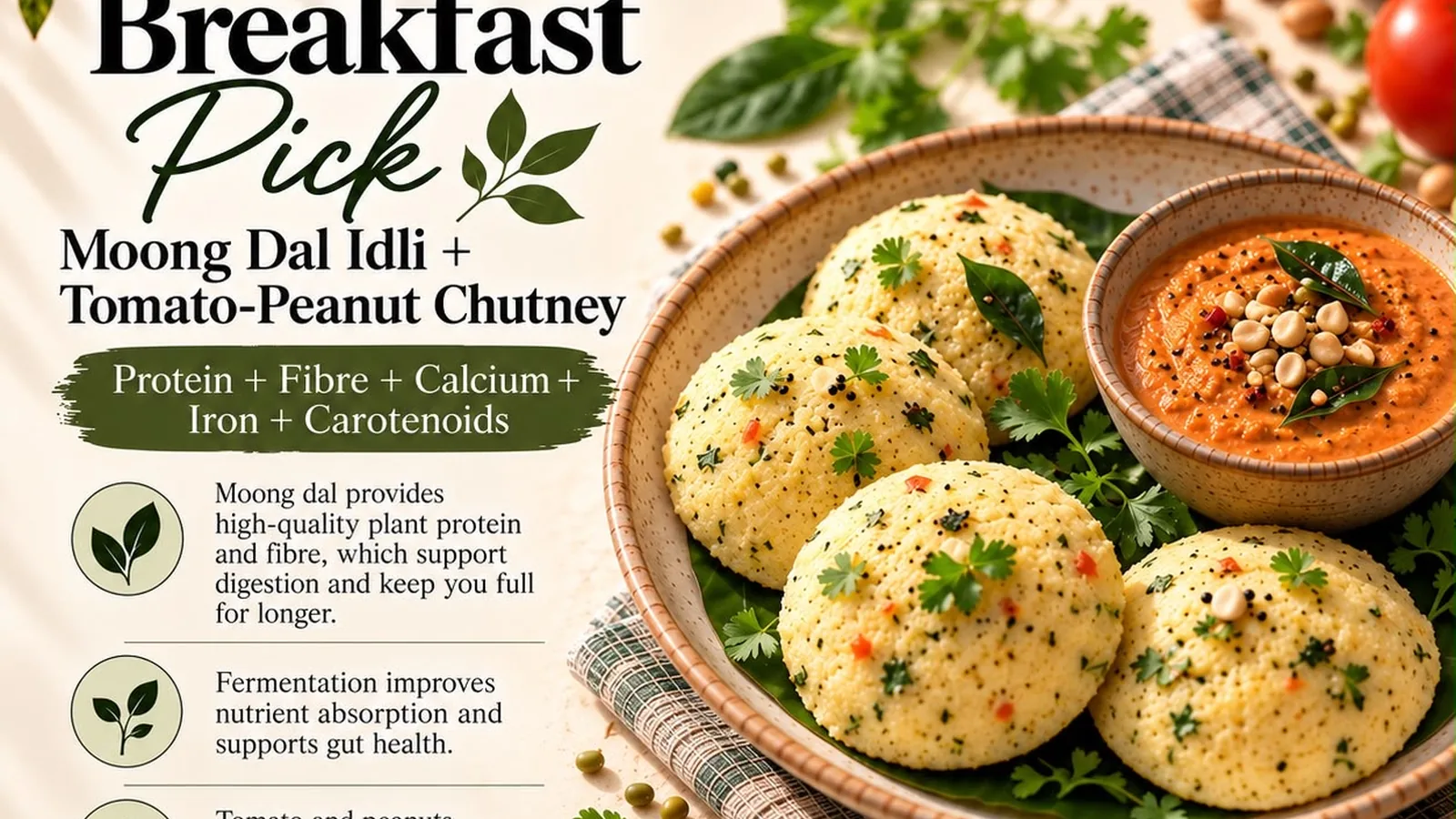
Serve these warm with the tomato-peanut chutney, perhaps adding a side of plain yoghurt for a complete meal.
Serve two warm idlis per person with a generous dollop of the tomato-peanut chutney on the side.
Good to Know
Nutrition values are approximate, per serving. IDYORA shares general wellness information — not medical advice.
Watch the Recipe
Key moments and transcriptStep by Step Instructions
-
Prepare the Batter
After soaking 1 cup of moong dal for 3 hours, drain the water completely. Grind the dal with 0.5 cup fresh water, 1 chopped green chilli, and 1 tsp grated ginger until the batter is smooth. Stir in 0.5 tsp salt and 2 tbsp chopped coriander leaves to finish the batter.
Done when: The batter should be thick and smooth like a heavy pancake batter. Avoid adding too much extra water, or the idlis will be flat rather than fluffy.
20 mins hands-on prep
-
Steam the Idlis
Stir 0.25 tsp baking soda into the batter until just combined. Grease your idli moulds with a little oil and pour the batter into each cavity. Steam over medium-high heat for 10-12 minutes until the idlis are firm and a toothpick inserted into the center comes out clean.
Done when: The idlis are done when they are firm to the touch and a toothpick comes out clean. Ensure you do not over-steam, or they may become rubbery.
15 mins hands-on
-
Make the Chutney
Heat 1 tsp vegetable oil in a small pan over medium heat. Add 0.5 tsp mustard seeds and 2 g curry leaves, cooking for about 30 seconds until the seeds splutter and leaves crisp. Add 0.5 cup chopped onions, 0.75 cup chopped tomatoes, and 1 clove of garlic, sautéing for about 5-7 minutes until the tomatoes turn soft and pulpy. Once cooled, blend this mixture with 0.5 cup roasted peanuts into a coarse, textured chutney.
Done when: The mustard seeds must pop and crackle before adding the vegetables; if they don't, the oil isn't hot enough, which can lead to a raw, bitter taste.
15 mins hands-on
“Good food is a step towards a healthier, happier you.”
Enjoy!Made it? Rate it
Be the first to rate it
Why It's Good for You
Moong dal is a valuable source of plant-based protein, which is essential for a balanced diet1. Traditional processing techniques like soaking and dehulling can improve the digestibility of legumes, making their amino acids more available for the body1. When combined with peanuts, this meal offers a heart-friendly combination of fats and additional protein2. Peanuts are particularly notable for their plant-based protein, which is comparable to other legumes, and they contribute essential minerals like iron and calcium to the diet2. The ICMR-NIN recommends obtaining nutrients from a variety of food groups to ensure dietary adequacy3. Including whole pulses, nuts, and fresh vegetables in your daily meals supports overall health and provides the fiber necessary for good digestion3. Always consult with a registered dietitian or your doctor if you have specific health conditions, as they can help you plan dietary changes that meet your individual needs.
Sources
3
- True ileal digestibility of legumes determined by dual-isotope tracer method in Indian adultsUS National Institutes of Health, 2019
- Peanuts as functional food: a review - PMCUS National Institutes of Health
- DIETARY GUIDELINES FOR INDIANSICMR-National Institute of Nutrition