 IDYORA

Before You Start
Medium
The 1-2 small green chillies in the chutney provide the heat. To make it milder, use only half a chilli; for extra heat, keep the seeds in or add a second chilli.
Make it with no chilli
Omit the green chillies entirely from the chutney; the fresh coriander and coconut will still provide a lovely, vibrant flavour.
50 mins in total
50 mins hands-on (chopping and cooking).
Plan ahead: Boil the potatoes in advance and let them cool completely before grating, as warm potatoes will make the batter gummy.
Contains: Milk (dairy), Peanuts
Vegetarian · contains dairy. We check for milk, gluten, tree nuts, peanuts, mustard, sesame and celery. Always check your own labels, especially for asafoetida (hing), which often contains wheat.
Ingredients
For the Chilla Batter
For the Chutney
Can't Find Something?
- 1 cup buckwheat flour instead of 1 cup kuttu flour. This is the standard UK supermarket equivalent for kuttu.
- ½ cup desiccated coconut rehydrated in 2 tbsp warm water instead of ½ cup coconut, grated. Provides the same texture and flavour if fresh or frozen grated coconut is unavailable.
Make It a Meal
Serve warm as a light breakfast or snack with a side of plain Greek-style yoghurt.
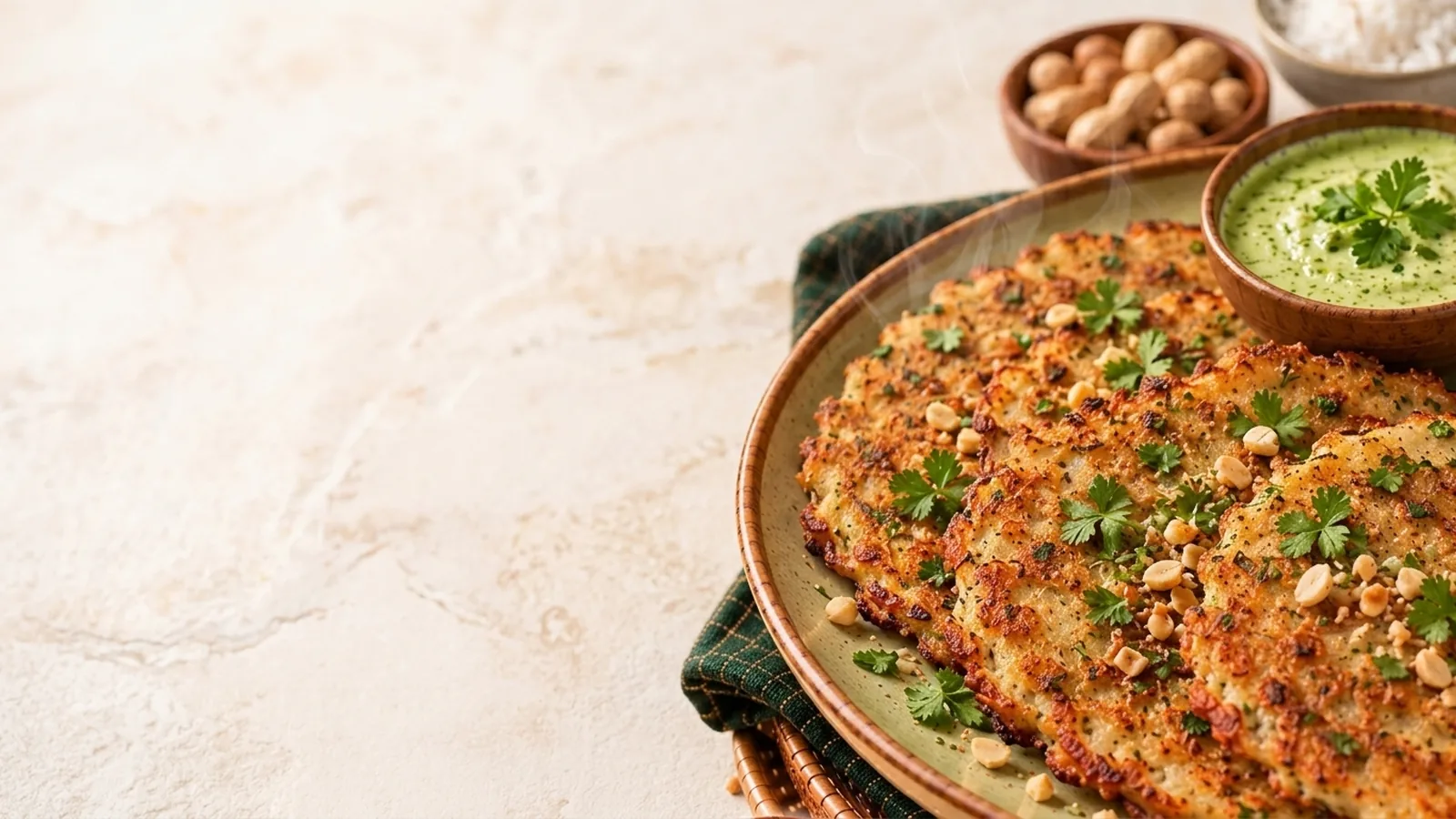
Serve the hot, crispy chillas immediately with a side of the fresh coconut-coriander chutney.
Good to Know
Nutrition values are approximate, per serving. IDYORA shares general wellness information — not medical advice.
Watch the Recipe
Key moments and transcriptStep by Step Instructions
-
Prepare the Chutney
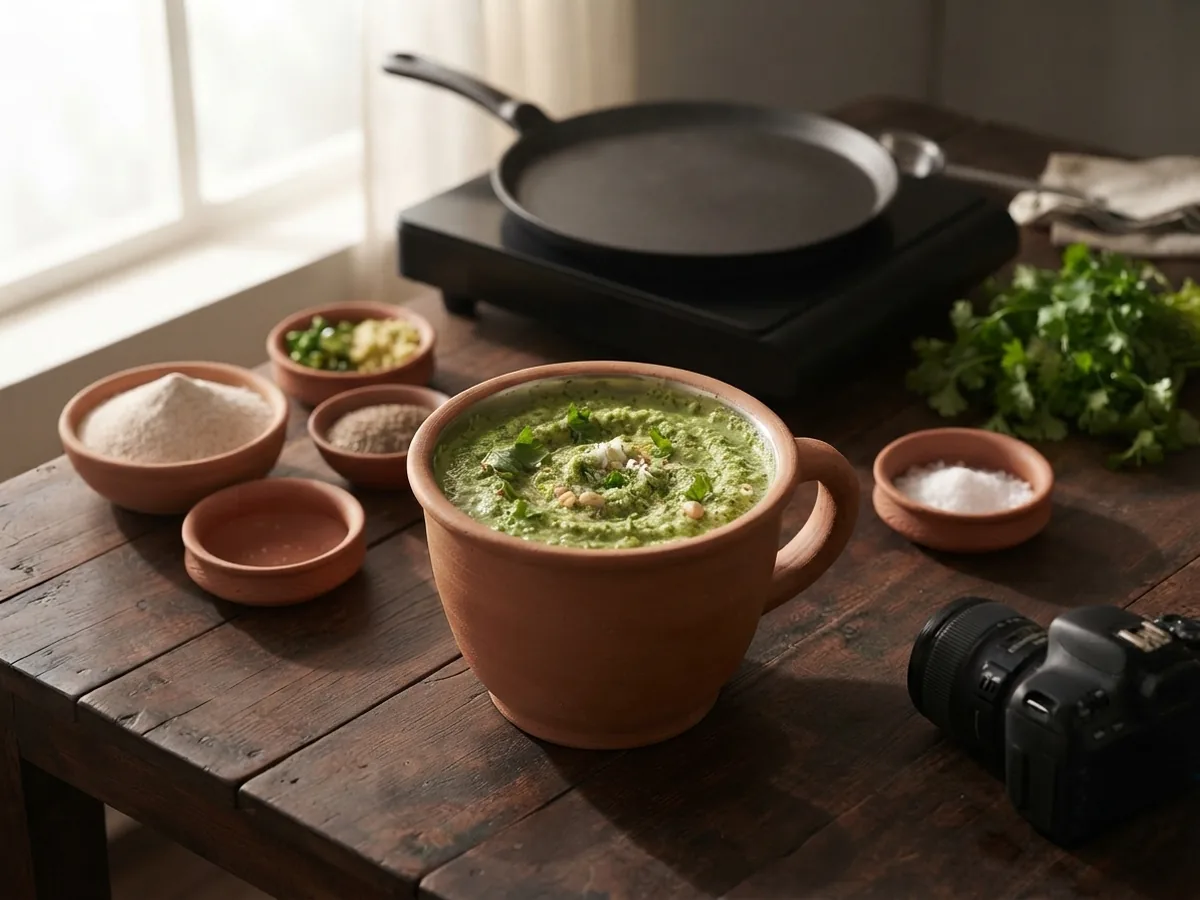
Add 0.5 cup grated coconut, 0.5 bunch chopped coriander, 1-2 green chillies, and 0.5 tsp salt into a blender jar. Add 2-3 tbsp water and blend for 30 seconds until you achieve a thick, slightly coarse paste. The chutney should look bright green with visible flecks of white coconut.
Done when: The chutney should be a thick, spreadable paste with bright green flecks; avoid over-blending, which can turn it into a thin, watery sauce.
10 mins hands-on prep
-
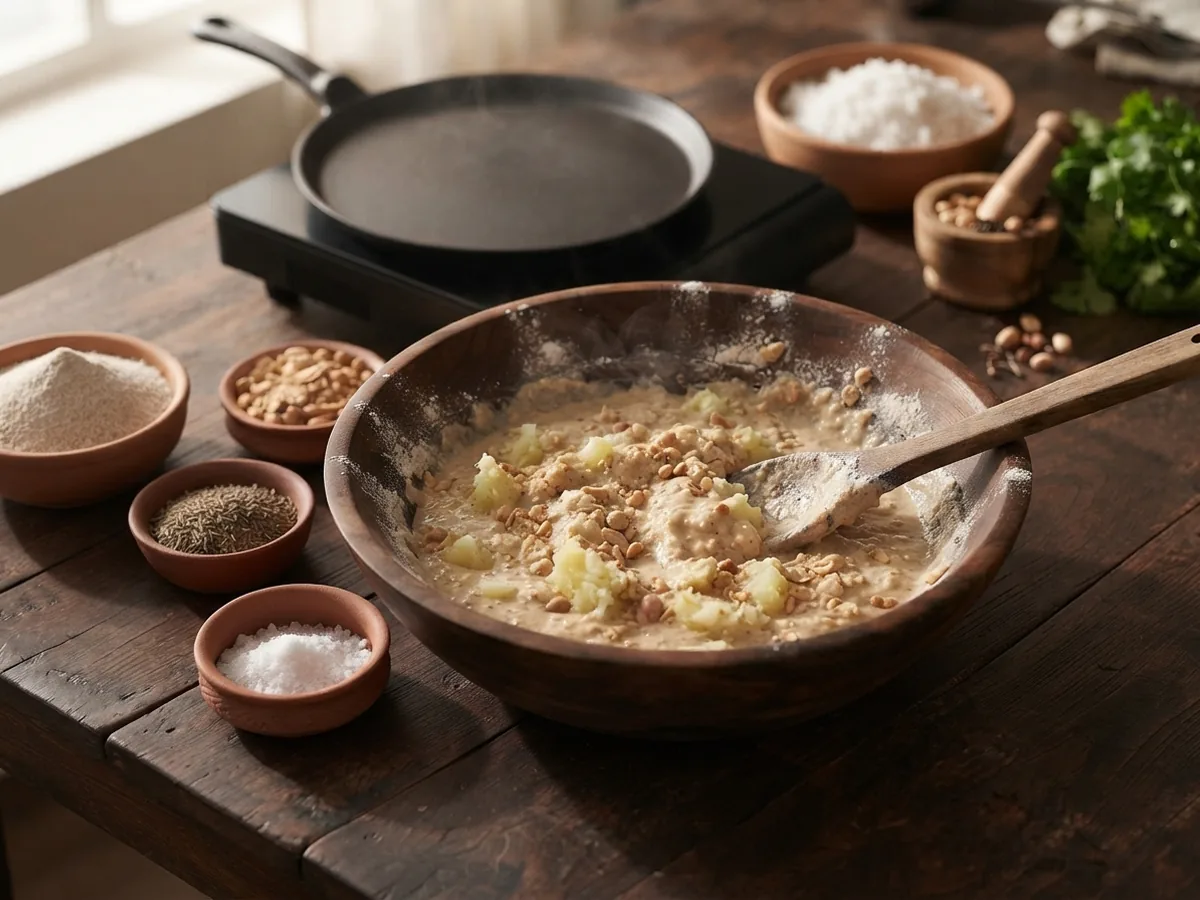
Mix the Batter
In a large mixing bowl, combine 1 cup kuttu flour, 2 grated boiled potatoes, 0.5 cup crushed roasted peanuts, 1 tsp cumin, and 1 tsp salt. Gradually add 1 to 1.25 cups of water while whisking to create a smooth, pourable batter. The texture should be similar to a thick pancake batter without any dry lumps.
Done when: The batter must be smooth and pourable like thick double cream; if it is too stiff, add a splash more water to ensure it spreads easily on the pan.
15 mins hands-on prep
-
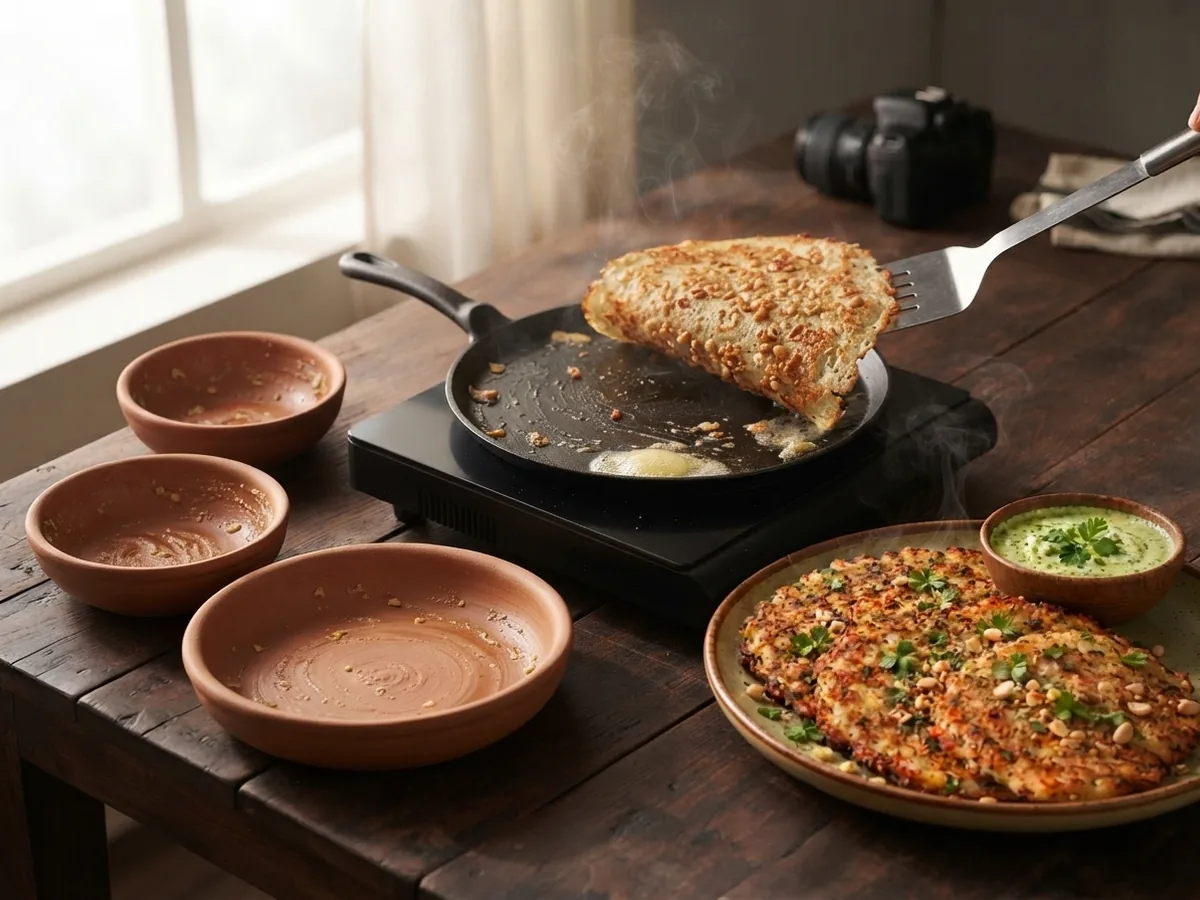
Cook the Chillas
Heat a flat tawa on medium heat and grease it lightly with a little ghee. Pour a ladle of batter onto the center and spread it gently into a circle, cooking for 2-3 minutes until the bottom is golden and crisp. Flip and cook the other side for another 2 minutes, drizzling a little extra ghee if needed.
Done when: The chilla is done when the edges are deep golden and lift easily from the tawa; avoid flipping too early, or the pancake may tear.
25 mins hands-on
Made it? Rate it
Be the first to rate it
Why It's Good for You
Kuttu (buckwheat) is a nutritious grain option often included in fasting diets, offering a good source of energy1. When prepared as a chilla, it contributes to a balanced intake of nutrients1. The addition of peanuts provides a modest portion of nuts, which are nutrient-dense and contribute to the daily fat and protein intake1,2. Peanuts are a source of energy, and incorporating them alongside vegetables helps in achieving a varied and wholesome meal1.
Including fresh coconut in the chutney adds variety and contributes to the overall mineral profile of the meal3. Coconut is a traditional ingredient that can be part of a balanced diet when consumed in moderation1. Fresh coriander and green chillies provide functional bioactive compounds and antioxidants4.
Eating a variety of wholesome foods from different groups is key to achieving nutrient adequacy1. This recipe focuses on simple, nourishing ingredients that support a balanced lifestyle1. Remember that physical activity is essential for the appropriate utilization of all nutrients from a balanced diet1. For individuals with specific health conditions, it is best to plan any dietary changes with a doctor or a registered dietitian.
Sources
4
- DIETARY GUIDELINES FOR INDIANSICMR-National Institute of Nutrition
- Dietary guidelines across different countries & comparisons to dietary guidelines for Indians, 2024 - PMCUS National Institutes of Health
- ICMR-National Institute of NutritionICMR-National Institute of Nutrition
- My plate for the day A4.cdrICMR-National Institute of Nutrition