
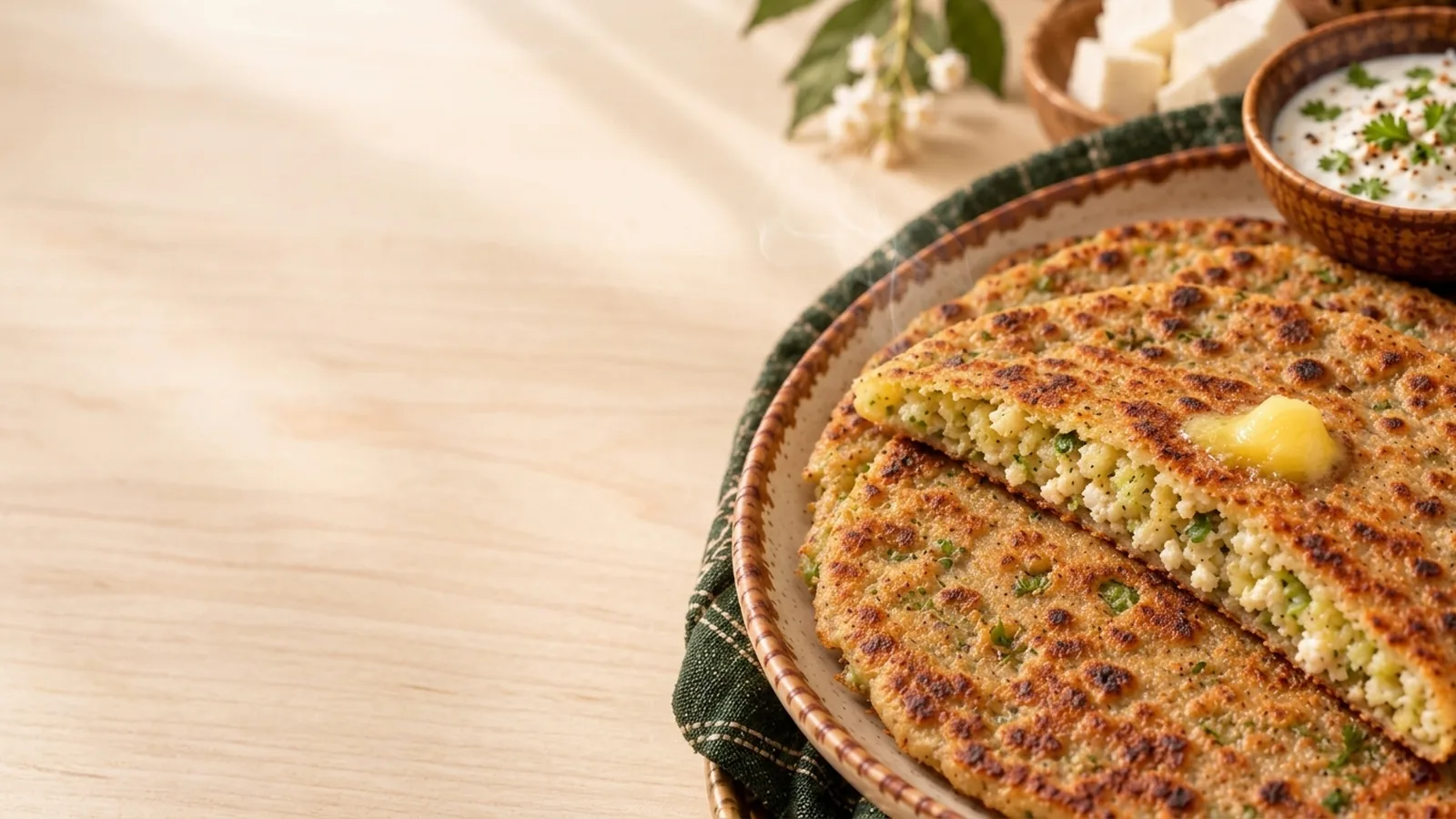
Before You Start
Mild
The 1-2 small green chillies provide the heat. To make it milder, use only one chilli or remove the seeds before chopping. For more heat, use two chillies and keep the seeds intact.
Make it with no chilli
Simply omit the green chillies entirely; the flavour remains delicious and earthy without them.
1 hr in total
1 hr hands-on (chopping and cooking).
Plan ahead: Boil the potato ahead of time until soft, then peel and cool it completely. No shortcut available for the grating or boiling.
Contains: Milk (dairy)
Vegetarian · contains dairy. We check for milk, gluten, tree nuts, peanuts, mustard, sesame and celery. Always check your own labels, especially for asafoetida (hing), which often contains wheat.
Ingredients
For the Paratha Dough & Stuffing
Can't Find Something?
- 2 cups buckwheat flour instead of 2 cup kuttu flour, sifted. This is the standard UK supermarket term for kuttu flour.
- 1 medium courgette, grated instead of 1 medium cup bottle gourd, grated. Courgette has a similar water content and texture when grated.
Make It a Meal
Serve warm with a side of plain yogurt or a fresh tomato chutney for a complete meal.
Serve warm with a side of fresh curd and a sprinkle of roasted peanuts for a balanced meal.
Good to Know
Nutrition values are approximate, per serving. IDYORA shares general wellness information — not medical advice.
Step by Step Instructions
-
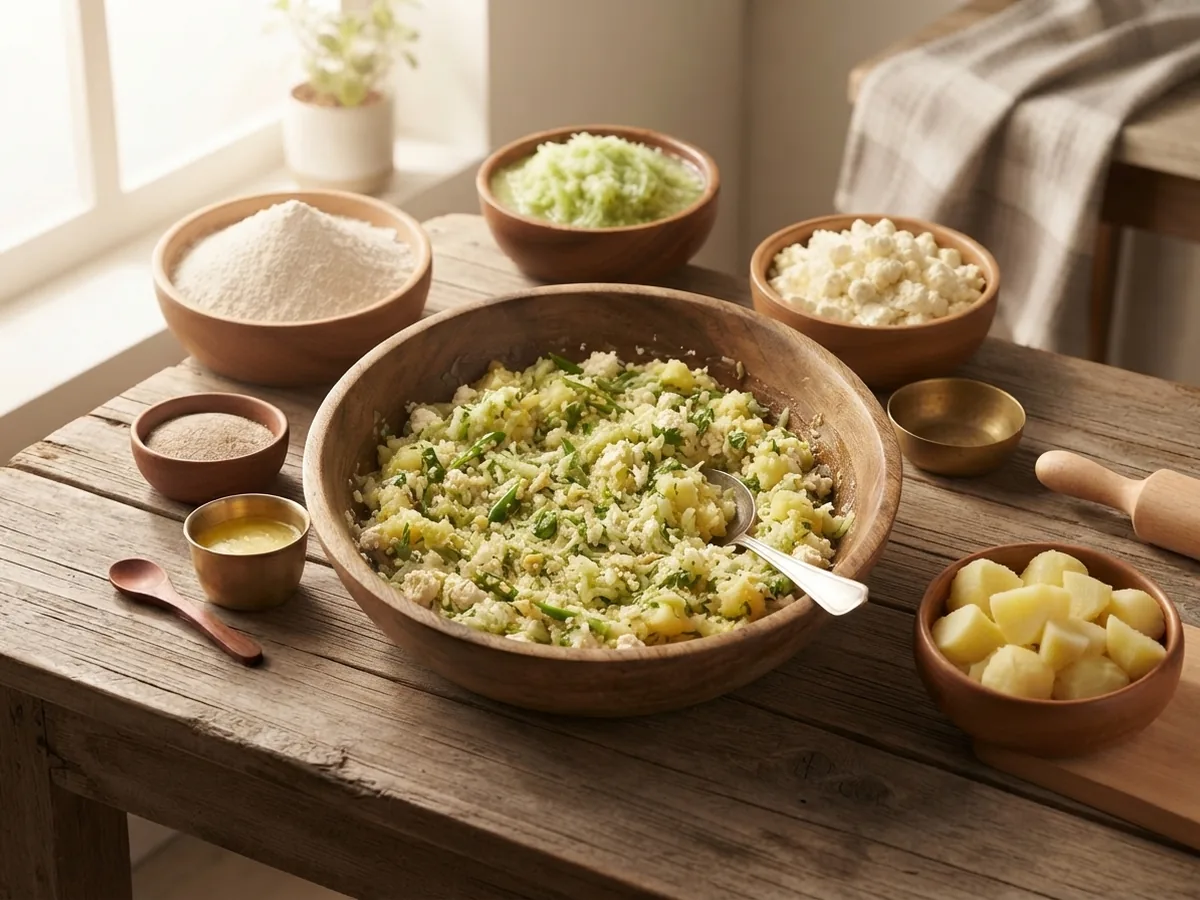
Prepare the Mix
In a large mixing bowl, combine the grated bottle gourd, crumbled paneer, and mashed boiled potato. Add the chopped green chilli and half the salt, mixing everything well to create a cohesive stuffing.
Done when: The mixture should look like a thick, combined mash; avoid leaving large chunks of potato as they will make the dough tear during rolling.
15 mins hands-on prep
-
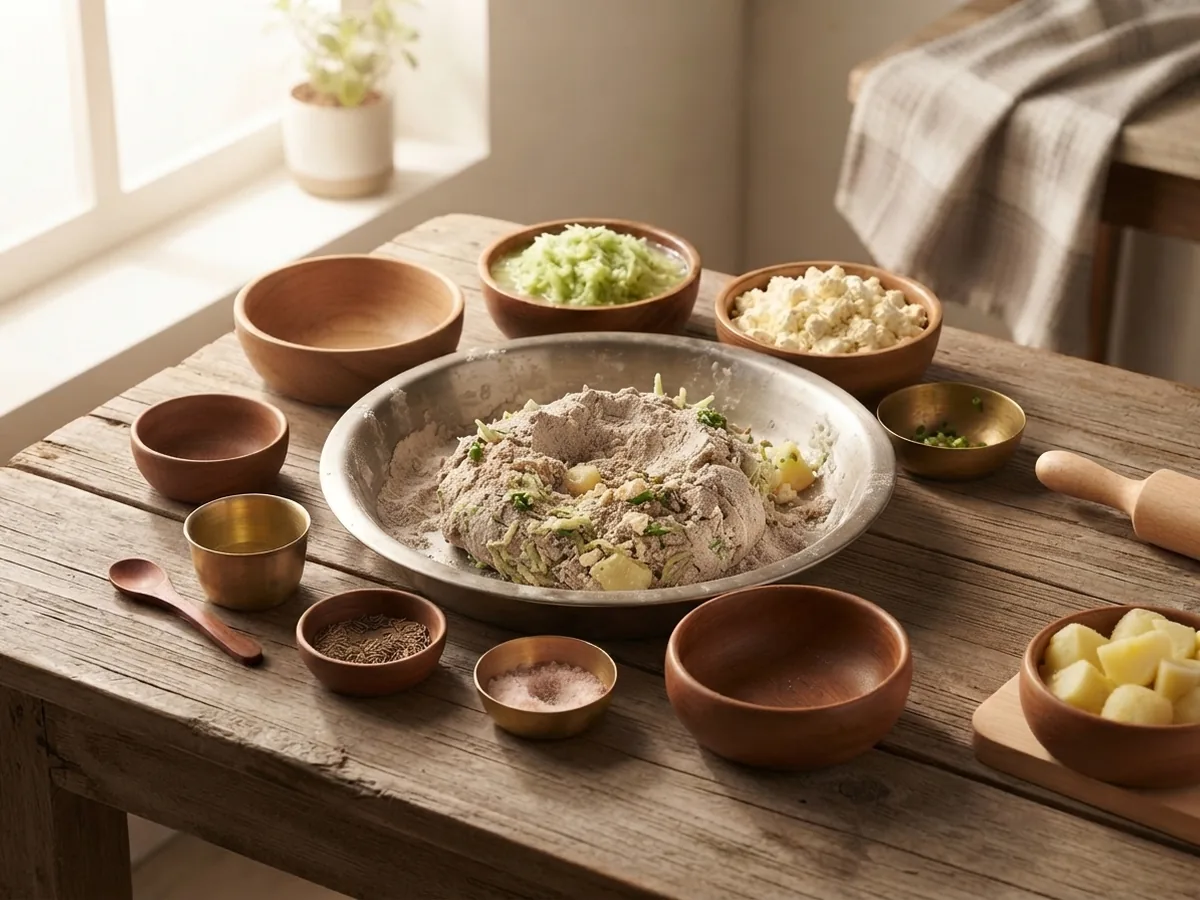
Form the Dough
Add the kuttu flour and the remaining salt to the vegetable mixture. Gradually add just enough water to bring the ingredients together into a soft, manageable dough.
Done when: The dough should be soft and hold together without being sticky; if it is too dry to bind, add a teaspoon of water at a time.
10 mins hands-on prep
-
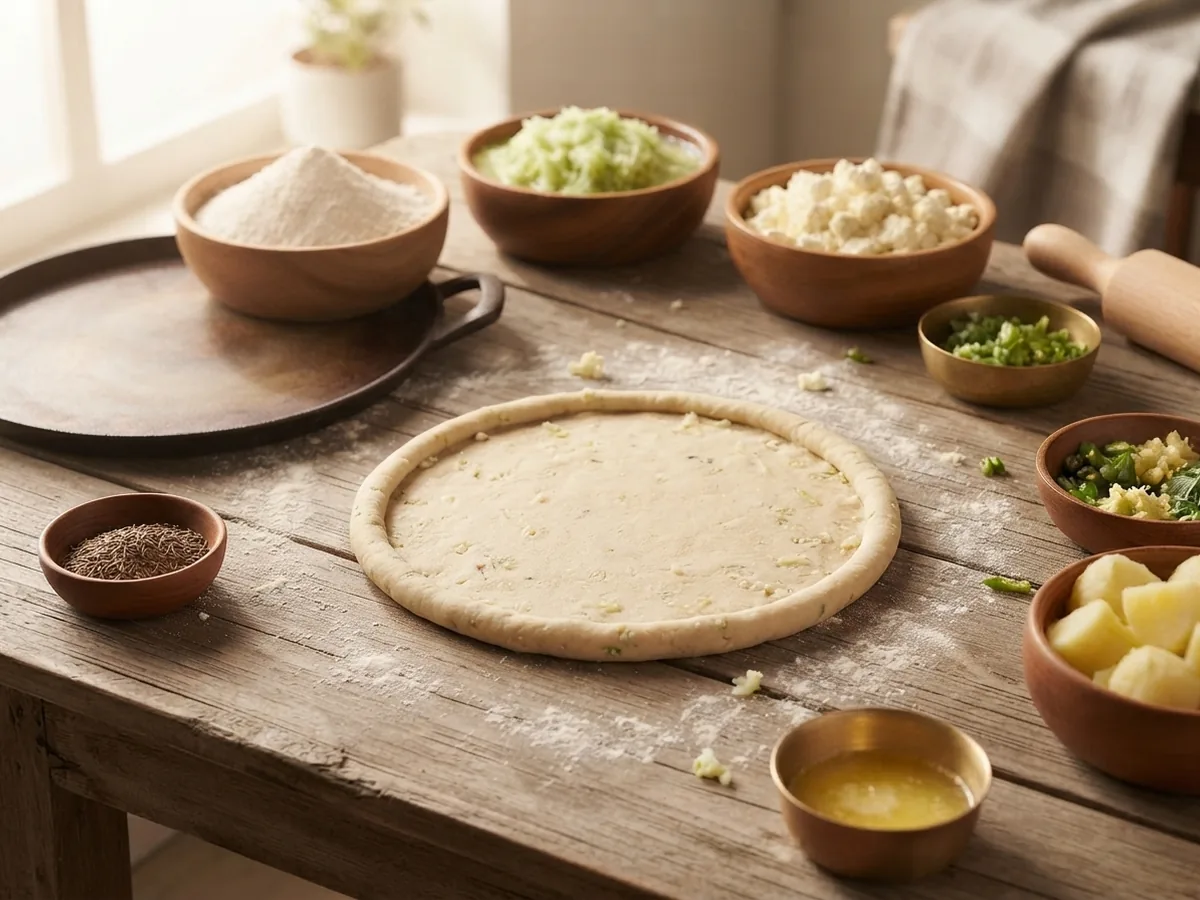
Roll the Parathas
Divide the dough into four equal portions. Using a little extra kuttu flour for dusting, gently pat or roll each portion into a 15-cm circle on a flat surface. Ensure the edges are even so they cook through uniformly.
Done when: The circles should be roughly 15-cm wide; handle gently as kuttu flour is gluten-free and can crack easily if rolled too thin or pressed too hard.
15 mins hands-on prep
-
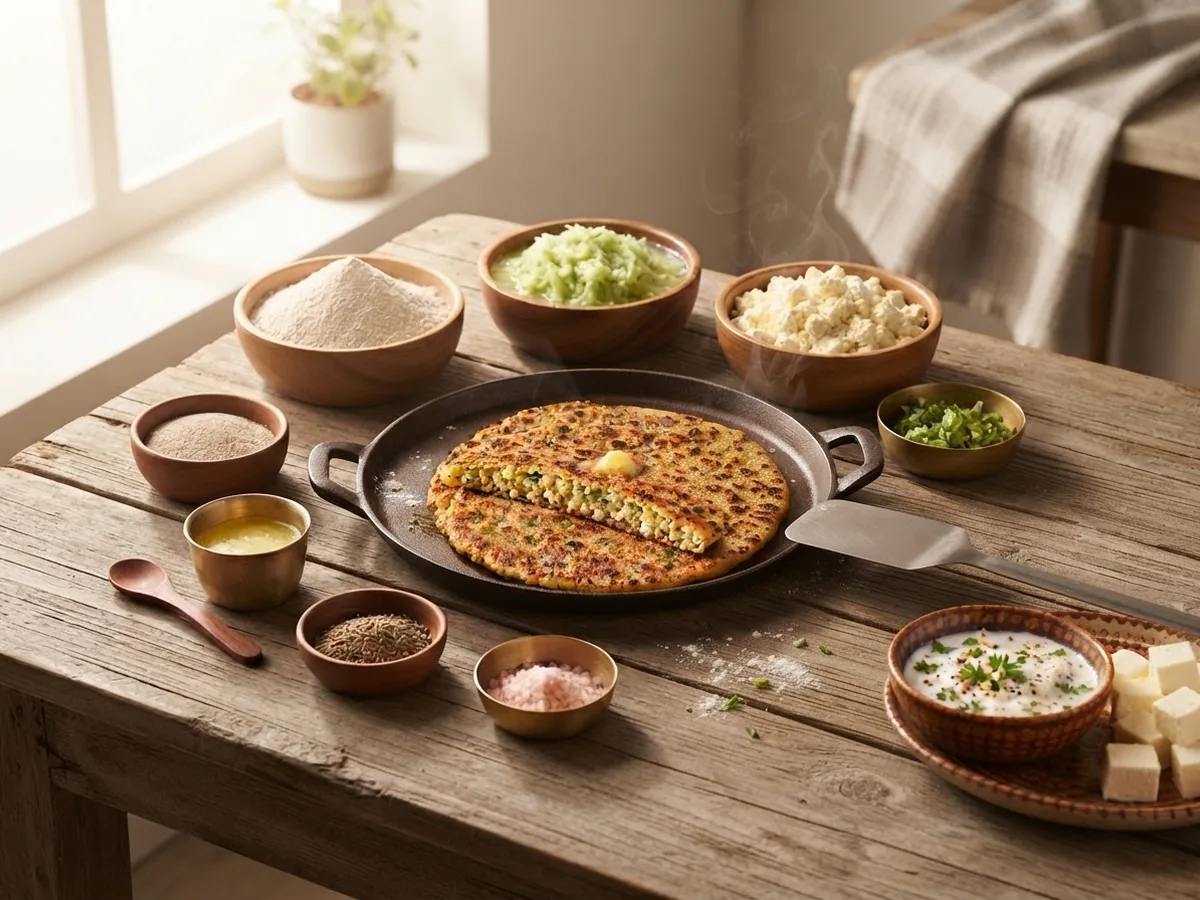
Cook the Parathas
Heat a tawa on medium heat. Place the paratha on the hot tawa and cook for 2-3 minutes, then flip it. Apply a little ghee on both sides and cook for another 2 minutes until golden brown spots appear and the paratha is cooked through.
Done when: The parathas are done when they have deep golden-brown spots on both sides and feel firm to the touch; avoid high heat as it will burn the outside while leaving the middle raw.
20 mins hands-on
“Good food is a step towards a healthier, happier you.”
Enjoy!Made it? Rate it
Be the first to rate it
Why It's Good for You
Paneer is a traditional Indian soft cheese, valued as a source of animal proteins1. It is made through heat and acid coagulation, retaining milk constituents like casein and whey proteins1. Including a variety of vegetables like bottle gourd, which provides fibre, alongside whole grains and protein sources like paneer, is a recommended way to achieve nutrient adequacy in a balanced diet2. ICMR-NIN guidelines highlight that a healthy meal should include generous amounts of vegetables, adequate whole grains, and modest portions of protein-rich foods2. While parathas are a common breakfast, their nutritional profile depends on the ingredients used; incorporating vegetables and high-quality protein sources like paneer can enhance the overall quality of the meal3. Always aim for variety from wholesome foods to support daily nutrient needs2. If you have specific health conditions, please plan your dietary changes with your doctor or a registered dietitian.
Sources
3
- Paneer—An Indian soft cheese variant: a review - PMCUS National Institutes of Health
- DIETARY GUIDELINES FOR INDIANSICMR-National Institute of Nutrition
- Nutritional evaluation of common Punjabi breakfast preparationsexa.ai, 2007