



 By

A sustainable approach to weight management within a Jain framework involves focusing on whole, plant-based foods and mindful portion control, which naturally aligns with a lower-calorie, high-fiber lifestyle. By prioritizing complex carbohydrates like whole grains and pulses, and being intentional about meal timing, you can support your wellness goals without compromising your dietary principles.
Understanding the Jain Diet and Sustainable Weight Management
The Jain diet is rooted in principles that naturally favor whole-food consumption, which can be a powerful tool for weight management. If we analyze the diet of devotees during Ayambil in terms of current scientific literature, it is a diet with fewer calories, carbohydrates, and fat1. When aiming for weight loss, the goal is not to adopt extreme measures but to create a consistent, long-term pattern of eating.
It is important to remember that weight management is highly individual, influenced by genetics, environment, and lifestyle2. Intermittent fasting has been studied as a weight loss strategy3,4. Long-term adherence to a healthy, balanced, reduced-calorie diet supports sustainable weight loss and positive health outcomes2. If you are living with a health condition, please plan any significant dietary changes with your doctor or a registered dietitian.
Principles of Mindful Eating in Jain Traditions
Mindful eating is a cornerstone of both traditional Jain practices and modern clinical nutrition. The practice of Ras parityag promotes controlling taste buds and renouncing taste1. Clinically, mindful and slow eating, eating only in response to the sensation of hunger, and avoidance of frequent snacking and skipping of meals are recommended5.
- Eat only when hungry: Mindful and slow eating, eating only in response to sensation of hunger and avoidance of frequent snacking and skipping of meals are recommended5.
- Slow down: Mindful and slow eating is recommended to help you respond more accurately to your body’s internal sensations of hunger and fullness5.
- Sunset timing: During Ayambil, a person takes food only once during day before the sunset1.
- Remove distractions: (Drop)
Focusing on Whole, Plant-Based Ingredients
A Jain-friendly weight loss plan naturally leans into high-fiber, plant-based ingredients. Asian Indian diets are high in carbohydrate, total fat, saturated fat and trans fat and low in fibre, monounsaturated fatty acids (MUFA) and ω −3 polyunsaturated fatty acids (PUFA)6.
- Choose complex carbs: Complex carbohydrates should be preferred over simple carbohydrates5.
- Prioritize pulses: Try to increase the current protein intake by 10% to a maximum of 1 gm/kg bodyweight/day5.
- Incorporate nuts and seeds: Increase in consumption of fibre through intake of fruits, vegetables, whole grain cereals, pulses and nuts should be encouraged6.
- Mind the fats: Restricted intake of saturated fats: <7% total daily calories and minimal intake of trans fats5. Opt for cooking methods like steaming, baking, shallow-fat frying, low-fat cooking, etc5.
"Long-term adherence to a healthy, balanced, reduced-calorie diet supports sustainable weight loss and positive health outcomes."2
The Role of Portion Control and Meal Timing
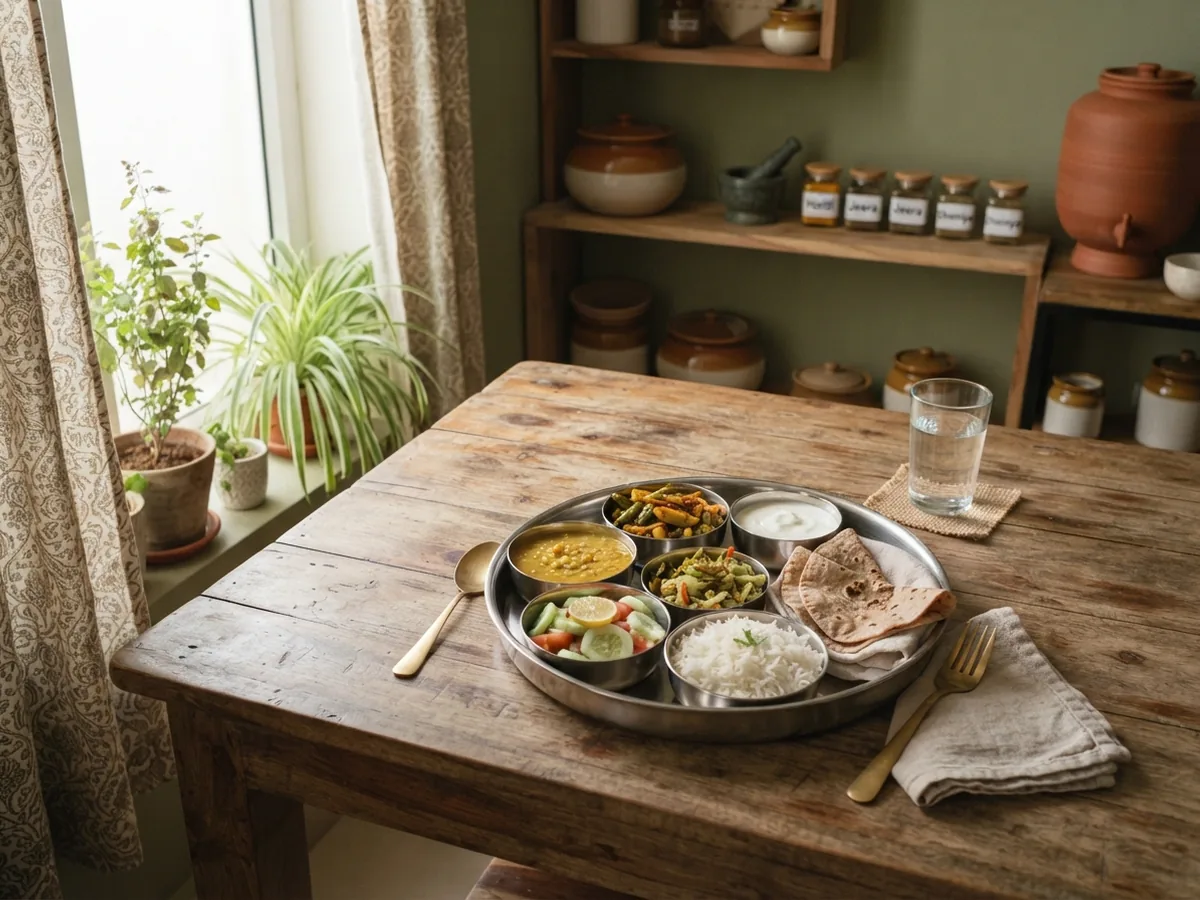
Controlling portion sizes is one of the most practical ways to manage energy intake without feeling deprived. The plate model can be used to control portion size of different major macronutrients5.
Regarding meal timing, for both adults and children, these various diets can all reduce weight provided the individual adheres to the intervention and experiences an overall reduction in energy intake2. Whether you choose to eat three balanced meals or follow a specific time-restricted window, ensure your choices are nutrient-dense. Mindful and slow eating, eating only in response to sensation of hunger and avoidance of frequent snacking and skipping of meals are recommended5.
Sample Meal Ideas to Support Your Goals
Building a plate that honors your traditions while supporting your weight goals is about variety and balance. Here are some ideas:
- Morning: A bowl of warm, steel-cut oats or broken wheat (dalia) cooked with water or a small amount of plant-based milk, topped with a few soaked almonds.
- Mid-day: A hearty bowl of moong dal or chana, served with a portion of brown rice or a multi-grain roti. Pair this with a large serving of steamed or lightly sautéed green vegetables (like beans or bottle gourd).
- Evening: A light, early dinner consisting of a vegetable-heavy soup or a bowl of sprouted moong salad (if your practice allows) and a small portion of steamed vegetables.
Aim for a salt intake of 6g per day or less5. Focus on fresh, whole ingredients rather than processed, pre-packaged items to ensure you are getting the micronutrients your body needs5.
Consulting Your Healthcare Team for Personalized Guidance
Because every individual’s body reacts differently to dietary changes, it is essential to approach weight loss with professional guidance. A registered dietitian or your doctor can help you understand your specific nutritional requirements based on your current health status and lifestyle5.
If you have a history of conditions such as diabetes, high blood pressure, or thyroid imbalances, it is especially important to consult your healthcare team before starting a new diet plan5,3. They can help you adjust your macronutrient intake—ensuring you get the right balance of carbohydrates, proteins, and fats—and monitor your progress safely5. Sustainable weight loss is a journey, not a race; by focusing on small, consistent changes, you can honor your dietary preferences while moving toward your personal wellness goals.
Sources
6
- Effect of Ayambil (A Type of Jain Intermittent Fasting) on Plasma Glucose, Lipid Profile, Anthropometric and Psychological parameters: An Observational StudyJournal article, 2024
- Obesity in South and Southeast Asia—A new consensus on care and management - PMCUS National Institutes of Health, 2022
- Effects of Intermittent Fasting on Weight Loss in Asian Indian Adults with ObesityJournal article, 2022
- Effect of Jain Fasting on Anthropometric, Clinical and Biochemical ParametersUS National Institutes of Health, 2020
- ESI Clinical Practice Guidelines for the Evaluation and Management of Obesity In IndiaUS National Institutes of Health, 2022
- Management of obesity in adult Asian IndiansUS National Institutes of Health, 2017