Smart Snacking: Easy Swaps for Traditional Namkeen
Discover simple, homemade swaps for traditional snacks. These easy alternatives help you enjoy a crunch while supporting a balanced, wholesome diet.
 By IDYORA Nutrition Desk 30 Sept 2026 5 min read
Mindful snacking is about choosing foods that provide steady energy and nourishment rather than quick spikes that leave you feeling sluggish. By swapping deep-fried namkeen for kitchen staples like roasted chickpeas, sprouts, or a handful of nuts, you can easily incorporate more protein, fiber, and essential nutrients into your day. Try starting this week by replacing one evening tea-time snack with a bowl of roasted makhana or a fresh fruit salad topped with seeds.
Why Mindful Snacking Matters
Snacking is often seen as an indulgence, but when approached with intention, it becomes a vital opportunity to support a balanced lifestyle. The ICMR-National Institute of Nutrition (ICMR-NIN) emphasizes that a healthy diet should provide the necessary calories, proteins, vitamins, minerals, and adequate fiber to keep the body functioning optimally1.
For many, the habit of snacking is driven by hunger between meals, but the quality of that snack determines how you feel for the rest of the day. An ideal healthy snack includes a combination of vegetables or fruits, seeds or nuts, and perhaps a bit of yogurt1. By focusing on variety—sourcing nutrients from different food groups—you ensure that your body receives the diverse micronutrients it needs to stay energized1.
The Problem with Traditional Namkeen
Traditional Indian namkeen, while flavorful, is often deep-fried and high in salt, which can make it less than ideal for regular consumption. Many processed snacks fall into the category of High Fat, Sugar, and Salt (HFSS) or ultra-processed foods2. Regular consumption of these is discouraged2.
Furthermore, the data shows that a significant portion of the population is consuming far more refined cereals than recommended, while intake of protective, micronutrient-dense foods like legumes, nuts, and fresh vegetables remains lower than desired1,3. The increased availability of inexpensive staple cereal crops has reduced hunger, but at the expense of diet diversity, displacing locally available foods3.
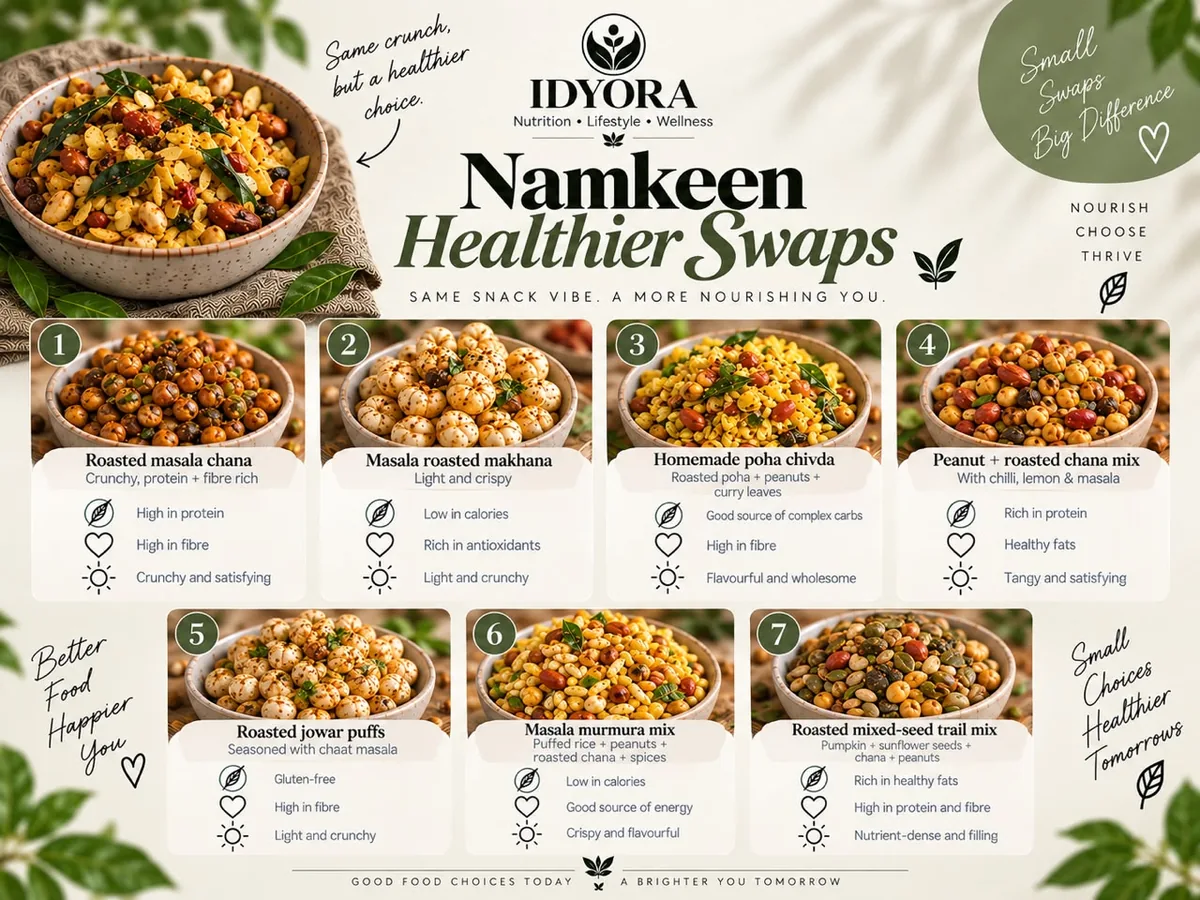
7 Healthier Swaps for Your Snack Bowl
Making the switch doesn't mean giving up the crunch you love. You can enjoy satisfying textures while choosing ingredients that better support your wellness goals.
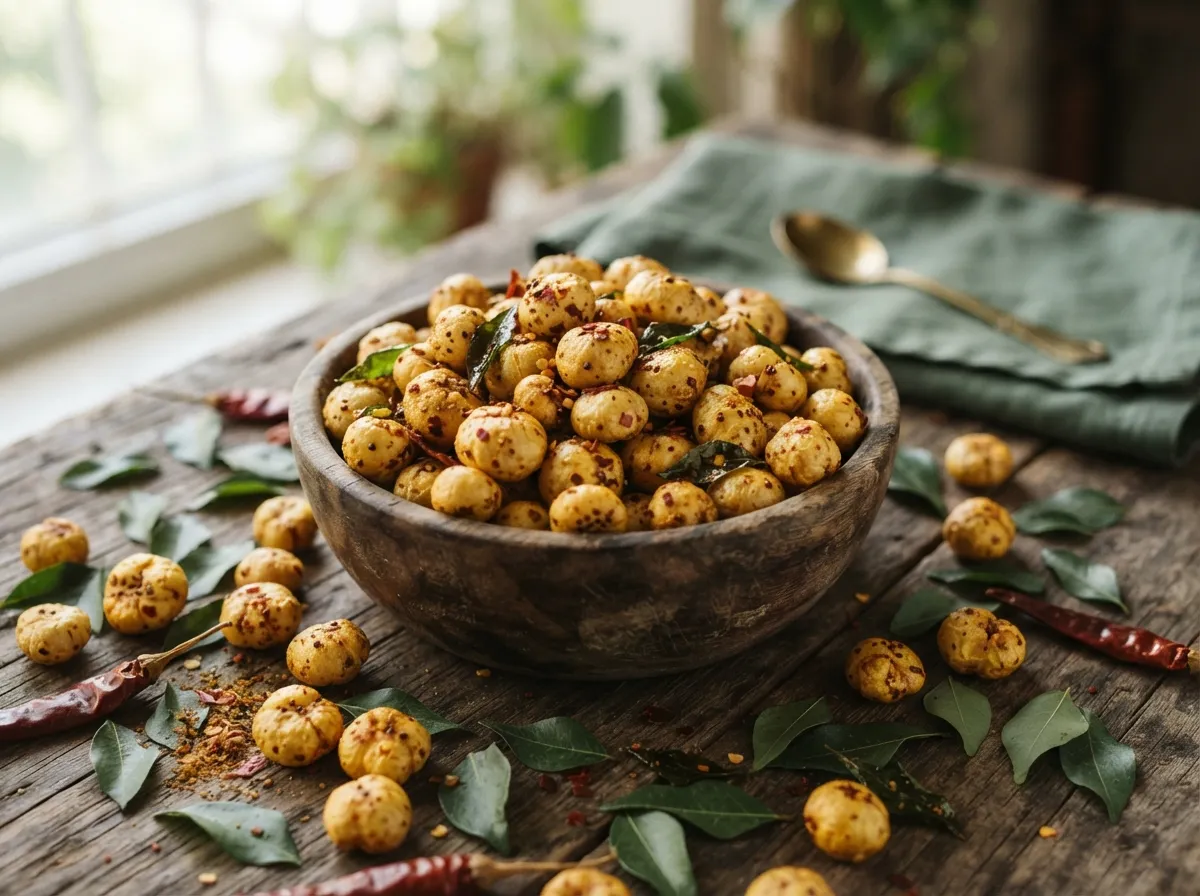
- Roasted Chickpeas (Chana): Roasted chickpeas are a source of plant protein4. - Makhana (Fox Nuts): Lightly dry-roast these with a pinch of turmeric and black salt for a satisfying, crunchy alternative to chips. - Sprouted Moong Salad: Toss sprouted moong with finely chopped cucumber, tomato, and a squeeze of lemon. Sprouting improves the bioavailability of proteins and micronutrients5. - Roasted Peanuts: A handful of peanuts provides protein4. - Fresh Fruit with Seeds: Nuts and seeds such as pumpkin seeds and flax seeds are recommended substitutes for processed snacks4. - Buttermilk (Chaas): Buttermilk is a recommended alternative to sugary drinks2. - Boiled Lobia or Beans: Roasted or boiled beans, lobia, chickpeas, and peanuts can serve as nutritious snack options1.
Tips for Preparing Snacks at Home
Preparing snacks at home gives you total control over the ingredients, particularly the amount of oil and salt used. The ICMR-NIN recommends using oils and fats in moderation and preferring fresh, minimally processed ingredients2.
When working with pulses, such as chickpeas or lentils, soaking them before cooking is a traditional practice that improves digestibility and reduces cooking time5. Adding sour agents like lemon juice, raw mango, or tamarind not only enhances the flavor but can also help lower the glycemic index of the dish5. Preparing snacks at home allows you to season with minimal oil/fats and salt for taste1.
"A healthy meal includes generous amounts of vegetables, adequate whole grains and pulses or beans, along with modest portions of nuts or seeds, complemented by a selection of fruits and plain fermented yogurt or curd1."
Balancing Your Daily Plate
Snacking should not be viewed in isolation; it is a part of your total daily intake. The "My Plate for the Day" model suggests that vegetables, fruits, and green leafy vegetables should essentially form half of your plate across the day1,3. The other half is divided between whole grains, millets, pulses, and modest portions of nuts, seeds, and dairy1,3.
When you plan your snacks, think about what you might be missing from your main meals. If you haven't had enough vegetables during lunch, an evening snack of a vegetable-based chaat can help bridge that gap. Remember that physical activity is also essential to ensure the proper utilization of the nutrients you consume1. By keeping your snacks aligned with the principles of a balanced diet, you support your body’s needs throughout the day.
Consulting Professionals for Your Dietary Needs
While these tips offer a practical way to transition toward healthier habits, every individual has unique nutritional requirements. If you are living with a specific health condition, it is important to plan any significant changes to your diet with your doctor or a registered dietitian. They can help you create a personalized plan that accounts for your medical history and specific health goals.
For instance, research into managing conditions like type 2 diabetes often involves a "Diabetes Plate Method," which focuses on specific proportions of non-starchy vegetables, proteins, and whole grains to help manage blood glucose levels effectively4. A professional can guide you on how to implement these strategies safely, ensuring that your snack choices complement your overall medical care and lifestyle, including your sleep and physical activity routines4. Always rely on qualified experts to tailor your nutrition to your personal health journey.
Sources
5
- DIETARY GUIDELINES FOR INDIANSICMR-National Institute of Nutrition
- Calendar 2025 (Open access)ICMR-National Institute of Nutrition
- s Promotion of “My Plate for the Day” and physical activity among the population to prevent all forms of malnutrition and NCDs in the countryICMR-National Institute of Nutrition
- Effectiveness of primary care-led low-carbohydrate diet and self-management advice on glycaemic control in individuals with type 2 diabetes mellitus: protocol of a cluster randomised controlled trialexa.ai, 2025
- ‘Old Is Gold’: How Traditional Indian Dietary Practices Can Support Pediatric Diabetes Management - PMCUS National Institutes of Health, 2021