French Fries Better Swaps: Elevate Your Evening Snack
Enjoy the crunch of fries with these simple, wholesome preparation tips for your next evening snack.
 By IDYORA Nutrition Desk 30 Sept 2026 5 min read
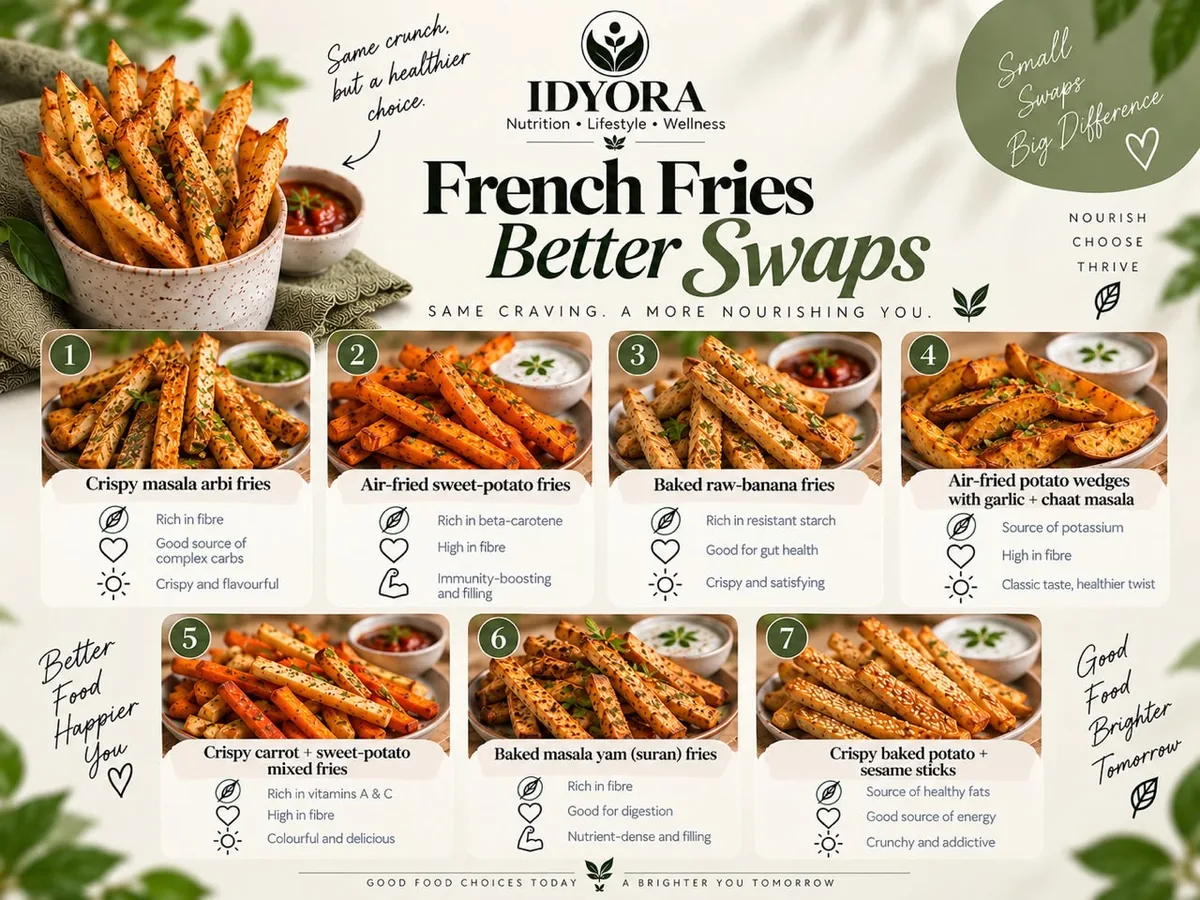
Enjoying the satisfying crunch of fries doesn't have to mean compromising on your wellness goals. By shifting from deep-frying to methods like oven-baking or using a microwave grill, you can retain the texture you love while significantly reducing fat intake1.
Why We Crave the Crunch
There is something inherently comforting about a crispy, salty snack at the end of a long day. In the Indian home, we often gravitate toward snacks that provide a satisfying texture, whether it is the crunch of a well-made pakora or the bite of a roasted chana mix. However, when it comes to classic deep-fried French fries, the method of preparation matters significantly.
Research indicates that deep-frying can lead to a substantial loss of naturally occurring health-promoting components in potatoes, such as ascorbic acid and other antioxidants1. Furthermore, a long-term study involving over 200,000 participants noted that a higher intake of French fries was associated with an increased risk of developing type 2 diabetes, whereas other forms of preparation—such as baking, boiling, or mashing—did not show this same association2,3. This suggests that the way we prepare our food is just as important as the food itself. If you are managing a health condition, it is always a good practice to plan your dietary changes in consultation with your doctor or a registered dietitian.
The Art of the Better Swap
The good news is that you do not have to give up your favorite textures to make a better choice for your body. The goal is to move toward cooking methods that preserve the integrity of the vegetable while minimizing the need for excessive oil.
Studies show that domestic alternatives like the microwave grill and the convective oven can achieve a fat reduction of up to 80% compared to traditional deep-frying1. These methods also result in a significantly lower formation of acrylamide and oxidized lipids, which are often byproducts of high-heat deep-frying1. By choosing to bake your fries at home, you are essentially opting for a method that keeps the snack lower in fat while still providing that desired crispy finish4,5.
"Small changes in our daily diet can have an important impact on risk of type 2 diabetes2. Limiting potatoes—especially limiting French fries—and choosing healthy, whole grain sources of carbohydrate could help lower the risk of type 2 diabetes across the population2."
Exploring Nutrient-Dense Alternatives to Potatoes
While potatoes are a staple, diversifying your snack plate can provide a broader range of nutrients. Sweet potatoes, for instance, are a fantastic alternative that brings natural sweetness and a vibrant color to your plate. They are rich in vitamin A and the essential mineral manganese6. When baked with a thoughtful spice blend, they offer a satisfying crunch that can be a great addition to your evening rotation6.
If you are looking to further optimize your snack time, consider the "substitution" approach. Research suggests that replacing potatoes with whole grains—such as whole grain bread or farro—may help lower the risk of type 2 diabetes2. You might try serving a smaller portion of baked potato fries alongside a bowl of sprouted moong salad or a side of whole-grain roti strips, ensuring your snack is part of a balanced diet that supports your energy levels throughout the evening.
Tips for Achieving Perfect Crispiness at Home
Achieving that golden, crispy exterior without a deep fryer is entirely possible with a few simple techniques:
- The Ice Water Soak: Soak your sliced potatoes in 8 cups of ice water5.
- Uniformity is Key: Slice your potatoes or sweet potatoes into uniform sticks. This ensures that they cook evenly, so you don't end up with some pieces burnt while others remain soft.
- Spice Wisely: Season your fries with your preferred blend of spices for added flavor.
- Use Minimal Oil: Use 1 Tbsp of vegetable oil for a batch of 4 large potatoes5.
- Proper Spacing: Ensure your fries are spread in a single layer on your baking tray with enough space between them. If they are crowded, they will steam rather than crisp up.
Pairing Your Fries with Balanced Meals
To make your snack time more substantial and supportive of your overall nutrition, think about what you are pairing your fries with. If you are having a small serving of baked fries, consider balancing the plate with protein and fiber.
- Add a Protein Boost: Pair your fries with a side of dahi (yogurt) dip or a serving of roasted chickpeas as part of a balanced diet.
- Include Fresh Greens: A side of cucumber and tomato kachumber or a small bowl of steamed sprouts adds freshness and fiber to your snack time.
- Mindful Portions: Small changes in our daily diet can have an important impact on risk of type 2 diabetes2. Focus on enjoying your snack in a moderate portion as part of a balanced, varied diet.
By embracing these simple kitchen swaps, you can continue to enjoy the ritual of a crunchy evening snack while nourishing your body with better, more intentional choices. Whether it is a batch of oven-baked sweet potato wedges or a spiced potato fry made with minimal oil, these small adjustments help you bring more variety and flavor to your home cooking.
Sources
6
- Domestic low‐fat “frying” alternatives: Impact on potatoes compositionUS National Institutes of Health
- Potatoes may increase risk of type 2 diabetes—depending on their preparation | Harvard T.H. Chan School of Public HealthHarvard T.H. Chan School of Public Health, 2025
- Total and specific potato intake and risk of type 2 diabetes: results from three US cohort studies and a substitution meta-analysis of prospective cohortsThe BMJ
- Baked French Fries | NHLBI, NIHUS National Institutes of Health
- Delicious Oven-Baked French FriesUS National Institutes of Health
- Potato Snacks in Bangladesh: Unhealthy Snack with Higher Fat Content and Alternative Healthier Optionsexa.ai, 2014