Milkshake Healthier Swaps: Indulgent Sips Without the Guilt
Swap sugary milkshakes for homemade smoothies. Use these simple tips to include more fruits, vegetables, and fiber in your daily balanced diet.
 By IDYORA Nutrition Desk 30 Sept 2026 5 min read
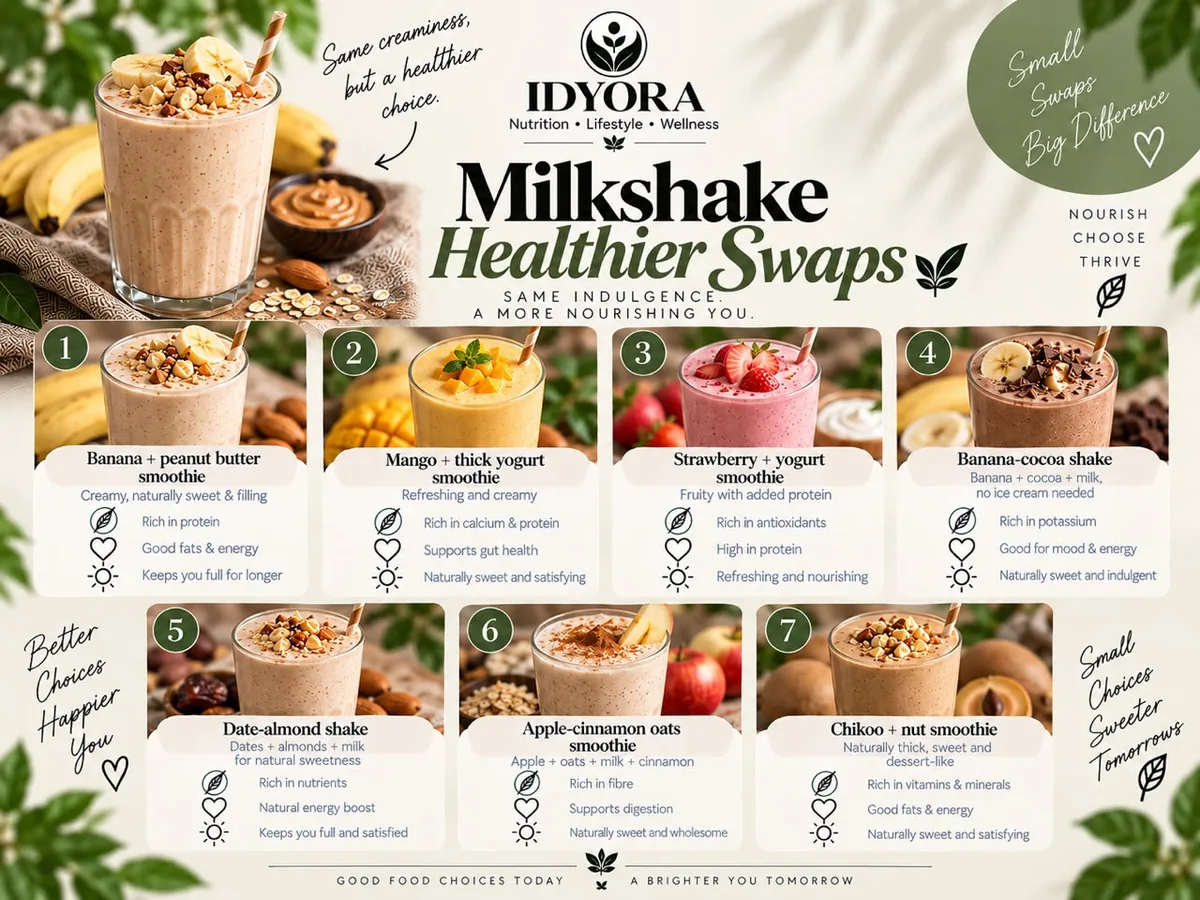
Transitioning from sugar-laden milkshakes to homemade smoothies is a simple way to enjoy a creamy, satisfying drink. By swapping refined sugars for whole fruits and incorporating fiber-rich additions, you can enjoy a refreshing beverage that fits perfectly alongside your daily dal, sabzi, and roti meals. Try replacing your evening tea-time snack with a homemade smoothie this week to see how these small, intentional swaps can be part of a balanced diet.
Why Rethink Your Daily Milkshake?
We often turn to milkshakes for a quick, indulgent treat, but many commercial versions are packed with excessive added sugars. Research suggests that high intake of added or natural sugars can contribute to dental cavities, obesity, and diabetes1. Furthermore, liquid or semi-liquid calories are less filling, which may lead to increased calorie consumption1.
However, this doesn't mean you have to give up blended drinks entirely. Smoothies can be an excellent vehicle for increasing your intake of fruits, vegetables, and dairy—foods that many of us don't get enough of in our daily diets1.
The Art of the Healthy Swap
The primary difference between a traditional milkshake and a healthy smoothie lies in the form of the ingredients. While juicing removes the pulp, blending whole fruits keeps the fiber intact2. Fiber is essential for a healthy digestive tract, as it helps create bulk and slows down both digestion and the absorption of sugar1.
Even though some public health guidance suggests limiting fruit juices, recent studies indicate that consuming blended whole fruits may not have an adverse effect on glycaemic response2. In some cases, a blended mixture of fruits may elicit a more favourable response than the same fruit consumed whole2. If you are managing a specific health condition, such as diabetes or metabolic concerns, please plan any significant dietary changes with your doctor or a registered dietitian.
Key Ingredients for Creamy, Nutrient-Dense Smoothies
To recreate that signature milkshake texture without the excess sugar, look toward whole-food fats and proteins.
- Whole Fruits: Using frozen fruits, such as berries or bananas, is a way to prepare smoothies3.
- Dairy and Plant-Based Alternatives: Cow’s milk remains a traditional source of protein, calcium, and vitamin B124. Replacing 500 mL/d of cow’s milk with soy drink may reduce LDL cholesterol and blood pressure4.
- Creative Additions: You can even boost the mineral content of your smoothies in unexpected ways. For instance, some experimental research suggests that incorporating powdered eggshell into smoothies can be a cost-effective way to address calcium deficiencies5.
- Vegetables: Smoothies may be an effective way to increase the amount of fruits and vegetables in our diets1.
"Smoothies are generally composed of blended whole fruit, which has two parts: the juice and the pulp. The pulp is where the fiber is located1. Fiber creates bulk and thus contributes to a healthy digestive tract by slowing digestion and sugar absorption1."
Balancing Your Smoothie for Better Satiety
One of the challenges with liquid meals is ensuring they keep you full until your next meal. Research indicates that individuals who substitute a cereal and milk breakfast for a fruit smoothie should be mindful that energy-dense beverages may result in increased daily energy intake6. To maintain satiety, consider these tips:
- Focus on Fiber: Fiber creates bulk and contributes to a healthy digestive tract by slowing digestion and sugar absorption1.
- Include Protein: Ingredients like Greek yogurt, cow’s milk, or soy-based drinks are sources of protein4,5.
- Watch the Volume: Public health guidance in some regions suggests limiting smoothies to 150 ml per day2.
Making Smoothies Part of a Balanced Routine
A smoothie is most effective when it complements the rest of your day. Think of it as an addition to your home-cooked thali rather than a replacement for your main meals. By incorporating a wider variety of fruits and vegetables into your diet, you support the body’s ability to repair damage and keep systems like your immune system running smoothly1.
Consistency is key. If you are new to this, start by replacing one sugary beverage per week with a homemade smoothie. Use frozen berries, half a banana, and a splash of milk or yogurt to start. As you become more comfortable, you can experiment with different combinations, keeping in mind that smoothies can be a good way to increase consumption of foods like fruit, vegetables, and dairy1.
Quick Smoothie-Inspired Breakfast Ideas
If you are looking for inspiration, here are two simple, balanced combinations to try:
- The Berry-Yogurt Blend: Combine 120 ml of low-fat milk or a plant-based alternative with half a frozen banana and 120 ml of mixed frozen berries3. This provides a refreshing start to the day and is a great way to use up frozen fruit stock.
- The Citrus-Protein Splash: For those looking for a brighter flavor, blend half a cup of low-fat milk with your choice of citrus fruits. These combinations are designed to be simple, appealing, and easy to prepare in a busy Indian kitchen3.
Remember, the best smoothie is one that you enjoy and that fits into your lifestyle. By focusing on whole ingredients and being mindful of portion sizes, you can enjoy the creamy indulgence of a milkshake while supporting your long-term wellness goals. If you have specific health goals or conditions, always consult with your doctor or a registered dietitian before making large changes to your routine.
Sources
6
- Smoothies - Helpful or Harmful?exa.ai, 2018
- Not just a health kick: time to re-evaluate the role of smoothies in glycaemic response and healthy eating | European Journal of Clinical NutritionNature, 2025
- Evaluating a Smoothie-Based Nutrition Education Program to Improve Nutrition Security in Rural Adolescents - PMCUS National Institutes of Health
- Impact of Plant-Based Drinks on Cardiometabolic Outcomes: A Systematic Review and Network Meta-analysis - PMCUS National Institutes of Health
- Comparative Nutrients Composition of Smoothies Made from Fruits, Plant-Based Milk, and Eggshell Powderexa.ai, 2026
- The influence of a fruit smoothie or cereal and milk breakfast on subsequent dietary intake: a pilot studyUS National Institutes of Health