Intermittent Fasting with an Indian Diet: A Practical Guide
Discover how to integrate time-restricted eating into your daily routine while enjoying wholesome, traditional Indian meals.
 By Idyora Team 25 Sept 2026 5 min read
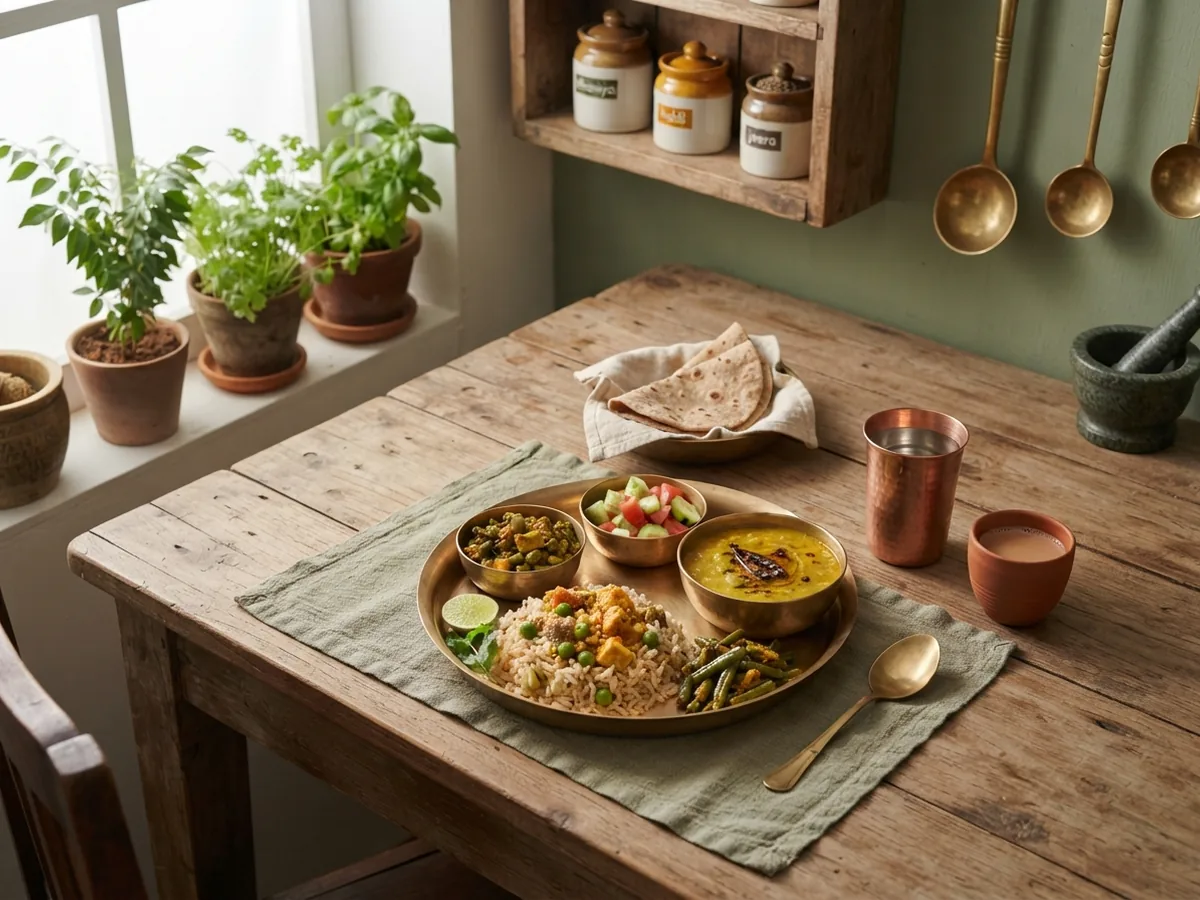
Intermittent fasting is a practical, culturally aligned approach for many Indians because it mirrors traditional practices of fasting for health or spiritual reasons1. By focusing on when you eat, you can enjoy familiar, home-cooked staples like dals, sabzis, and rotis. To get started, try narrowing your eating window, prioritize whole, unprocessed ingredients, and ensure your meals are balanced with protein and fiber.
Understanding Time-Restricted Eating in an Indian Context
Time-restricted eating (TRE) is a form of intermittent fasting that involves alternating between periods of eating and fasting2. Circadian clocks are a biological timing system that coordinates the timing of our daily behaviours and physiology, and when these clocks are out of sync, health is negatively affected3.
For many in India, fasting is already a deeply ingrained cultural and religious practice, often viewed as a way to purify the body1. Research suggests that fasting and time-restricted eating may be more easily integrated into the South Asian culture1. Research also indicates that these approaches are safe and effective for improving metabolic health in urban populations3. If you are living with a condition like diabetes, please plan any significant changes to your eating patterns with your doctor or a registered dietitian.
Structuring Your Eating Window for Sustained Energy
A common and practical approach is to aim for a 14-hour fasting window, which has been studied as a strategy for women to improve metabolic outcomes4. During your fasting hours, you may consume water, herbal teas, or black coffee, provided they are free of sugar and milk2.
When you break your fast, the composition of your meal matters as much as the timing. These guidelines cater to both vegetarian and non-vegetarian dietary preferences, ensuring a balance of macronutrients and micronutrients while incorporating traditional Indian food choices2:
- Carbohydrates: 45–55% of total calories from whole grains and high-fiber foods2,4.
- Proteins: 20–25% of total calories2,4.
- Fats: 20–30% of your total daily calories2.
These guidelines cater to both vegetarian and non-vegetarian dietary preferences, ensuring a balance of macronutrients and micronutrients while incorporating traditional Indian food choices2.
Prioritizing Nutrient Density in Your Daily Meals
Focus on whole, unprocessed foods rich in nutrients2. Diets that emphasize minimally processed, plant-forward foods and reduce refined carbohydrates have been associated with improvements in weight, BMI, lipid profiles, and glycemic control1.
"A culturally adaptable lacto-vegetarian diet combined with a 14-hour time-restricted fasting regimen safely improves metabolic control and insulin sensitivity in women, offering a practical, women-centric strategy."4
To build a nutrient-dense plate, consider these traditional staples: - Proteins: Include 1 cup of dal (approx. 150 g) or 1 serving of soy chunks in your main meals2. Paneer bhurji (150 g) or 1 cup of cooked sprouts are also options for your first meal of the day2. - Vegetables: 1 cup mixed vegetable curry or sabzi2. - Whole Grains: Opt for one multigrain roti or a small bowl of quinoa (approx. 50 g)2. - Healthy Fats: Use moderate amounts of ghee or olive oil (about 1 tsp per meal)2.
Practical Tips for Managing Hunger During Fasting Hours
It is natural to feel hungry when you first begin a new fasting schedule. Staying well-hydrated is essential; aim for at least 2–3 litres of water daily2. If you find yourself struggling during the fasting window, herbal teas can be a comforting, calorie-free way to manage appetite2.
Between your main meals, choose snacks that provide sustained energy rather than quick spikes. A handful of roasted chana (30 g) or 10 almonds are excellent protein-rich options to keep you satisfied2. Pairing these with a glass of buttermilk or coconut water can also help you meet your hydration goals2. Remember, the goal is to listen to your body’s hunger cues while staying within your chosen window.
Important Considerations for Long-Term Wellness
While intermittent fasting can be a powerful tool, it should be part of a broader, balanced lifestyle. Research shows that participants who adopt these habits often report improved sleep cycles, better mood, and increased overall energy4,5,6.
However, consistency is more important than perfection. If you have a high level of motivation, you might find more structured fasting cycles easier to maintain3. If you are managing a health condition, remember that dietary interventions must be tailored to your individual needs; always consult with a healthcare professional before making changes4,6. Furthermore, avoid refined sugars, trans fats, and excessive salt, as these do not support your long-term wellness goals2.
Planning Your Meals: A Balanced Approach
To make this transition easier, try planning your day around a consistent 12 PM to 8 PM eating window2.
- 12 PM (Break-the-Fast): Start with a protein-rich meal, such as 1 cup of paneer bhurji or sprouts, paired with one multigrain roti and a cup of mixed vegetable sabzi2. A small bowl of curd (150 g) can be a probiotic-rich addition2.
- 3 PM (Snack): A small snack like 30 g of roasted chana or 10 almonds, along with a seasonal fruit like a guava or orange, helps bridge the gap until dinner2.
- 6 PM (Main Meal): Focus on a hearty, fiber-rich dinner consisting of 1 cup of dal or soy chunks, a portion of seasonal vegetables, and a small serving of grains to round out your daily intake2.
By focusing on these traditional, wholesome ingredients, you can integrate time-restricted eating into your life in a way that feels natural, satisfying, and sustainable.
Sources
6
- Culturally Informed Dietary Approaches for Cardiometabolic Risk Reduction in South Asians: An Evidence-Based Review - PMCUS National Institutes of Health, 2026
- Comprehensive Dietary Guidelines for Intermittent Fasting: Tailored for Indian Adults (60-70 kg)Journal article, 2025
- Assessment and Comparison of Time-Restricted Meal and Intermittent Fasting on Health Status of Urban Population of Lucknow City: A Chrono-Nutrition ApproachJournal article, 2026
- Effect of a lacto-vegetarian diet combined with 14-hour time-restricted eating on metabolic outcomes in women with Type 2 diabetes: a 24-week randomized controlled trial | Nutrition & DiabetesNature, 2026
- Effects of Intermittent Fasting on Weight Loss in Asian Indian Adults with ObesityJournal article, 2022
- Feasibility and preliminary evaluation of a lacto-vegetarian diet combined with intermittent fasting in women with type 2 diabetes: A pilot randomized controlled trialJournal article, 2026