A Guide to a Balanced Vegan Indian Meal Plan
Discover how to embrace plant-based eating while honoring traditional Indian flavors with this guide to building a balanced, everyday vegan thali.
 By Idyora Team 25 Sept 2026 5 min read
Transitioning to a vegan diet in an Indian kitchen is often simpler than it seems, as our culinary traditions are already deeply rooted in plant-based staples like dals, legumes, seasonal sabzis, and whole grains. By focusing on whole, minimally processed ingredients and ensuring you get a variety of nutrients, you can create a nourishing, balanced meal plan that honors your heritage. To start this week, try swapping your evening snack for a handful of roasted chana or nuts, and ensure your dinner plate is half-filled with colorful, non-starchy vegetables.
Understanding the Vegan Shift in Indian Cooking
Indian cuisine is uniquely positioned for a plant-based transition because of its historical reliance on grains, pulses, and vegetables. A well-planned vegan diet, which consists entirely of plant-derived foods like fruits, vegetables, legumes, grains, seeds, and nuts, can be a nutritious way to support your overall health1. Research suggests that diets emphasizing whole, minimally processed plant-based foods are often associated with improvements in weight, lipid profiles, and glycemic control2.
However, it is vital to approach this shift with intention. While traditional Indian diets are plant-centric, the modern urban environment has introduced a rise in ultra-processed vegan substitutes that are energy-dense but often deficient in essential micronutrients3.
Key Nutrients to Consider in a Plant-Based Diet
When removing dairy from your diet, it is important to be mindful of certain nutrients that may become harder to obtain. A well-planned vegan diet requires special attention to protein, iron, calcium, vitamin B12, vitamin D, and omega-3 fatty acids1. In the Indian context, "hidden hunger"—a state of micronutrient deficiency—can occur if a vegan diet is too restrictive or lacks variety3.
- Vitamin B12: This nutrient requires special attention in a vegan diet, and routine supplementation is recommended, especially for children and pregnant or lactating women3.
- Protein: Some individuals following a vegan diet may not reach a minimum protein intake, making it a point of consideration3. Aim to include a variety of lentils, beans, and legumes in your daily meals2.
- Calcium and Vitamin D: Bone health is a priority. If fortified plant-based products or adequate sun exposure are insufficient, consider discussing calcium and vitamin D supplementation with your healthcare provider3.
"A healthy meal includes generous amounts of vegetables, adequate whole grains and pulses or beans, along with modest portions of nuts or seeds, complemented by a selection of fruits and plain fermented yogurt or curd4."
Note: For vegans, you can replace the curd mentioned in the ICMR-NIN guidelines with fermented plant-based alternatives or simply focus on increasing your intake of leafy greens and legumes to meet your nutritional goals.
Building Your Perfect Vegan Thali
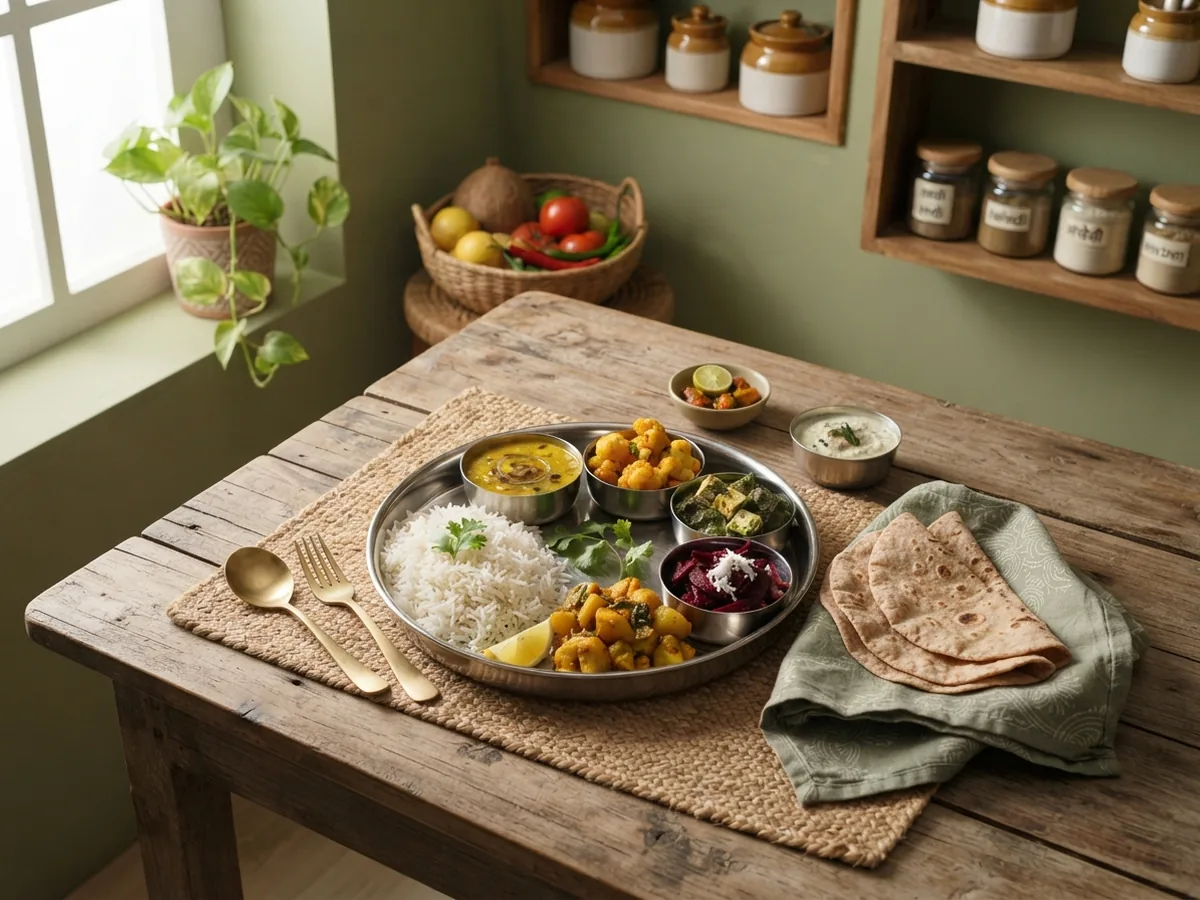
The 2024 ICMR-NIN Dietary Guidelines offer a "My Plate for the Day" model that harmonizes ethical food choices with nutritional adequacy3. To create a balanced thali, vegetables and fruits should comprise half of the plate, and the remainder should consist of cereals/millets, pulses, nuts and seeds, and limited visible fats3.
- Cereals and Millets: Limit these to about 45% of your total energy intake4. Opt for whole grains like brown rice, jowar, bajra, or ragi instead of refined white rice or maida.
- Pulses and Legumes: These are the backbone of vegan Indian cooking. A plant-centric approach with an emphasis on legumes is a recommended dietary pattern2.
- Vegetables: Prioritize non-starchy vegetables. These should form half of your plate4,2.
- Fats: The guidelines recommend limited visible fats3.
Tips for Minimizing Ultra-Processed Foods
A growing concern is that many urban vegans rely heavily on ultra-processed vegan substitutes, including refined snacks and sugary beverages, which displace nutrient-dense traditional foods3.
- Cook from Scratch: Return to the basics of the Indian kitchen. Soaking and sprouting your dals and grains is a traditional practice.
- Choose Whole over Refined: If you are craving a snack, choose a handful of roasted nuts, seeds, or homemade makhana (foxnuts) instead of store-bought, refined flour crackers.
- Read Labels: If you do purchase packaged items, look for short ingredient lists. If a product contains ingredients you wouldn't use in your own kitchen, it is likely an ultra-processed food.
Practical Steps for a Sustainable Transition
Transitioning to a vegan lifestyle should be a sustainable, long-term change rather than a sudden, restrictive jump. Start by slowly diversifying your food groups. The ICMR-NIN recommends sourcing nutrients from at least eight different food groups daily to ensure you are not missing out on key micronutrients3,4.
- Plan Your Meals: Spend time on the weekend planning your sabzis and dals. Having pre-soaked legumes or pre-chopped vegetables can make weekday cooking much easier.
- Experiment with Flavors: Use traditional spices like turmeric, cumin, coriander, and mustard seeds to add flavor without needing excess oil or salt.
- Stay Consistent: Consistency is more important than perfection. If you have a day where you struggle to meet all your nutritional targets, simply focus on returning to your balanced, whole-food routine the next morning.
Consulting Professionals for Personalized Nutrition
Every individual has unique nutritional requirements based on their age, activity level, and health history. Appropriate dietary habits through all stages of life are essential for the maintenance of holistic health4.
A professional can help you navigate the complexities of a vegan diet to ensure you meet your requirements for vitamins and minerals1. They can also help you interpret your blood work and determine if supplementation is necessary for your specific lifestyle. Remember, the goal of any diet should be to support your body's needs throughout all stages of life, from childhood through to old age4. By working with a professional, you can create a personalized plan that is both culturally relevant and nutritionally sound.
Sources
4
- Vegan diet: nutritional components, implementation, and effects on adults’ health - PMCUS National Institutes of Health, 2023
- Culturally Informed Dietary Approaches for Cardiometabolic Risk Reduction in South Asians: An Evidence-Based Review - PMCUS National Institutes of Health, 2026
- Navigating Vegan Nutrition: Challenges of Hidden Hunger and Ultra-Processed Foods in the Indian ContextJournal article, 2026
- DIETARY GUIDELINES FOR INDIANSICMR-National Institute of Nutrition