The Olive Oil Myth: Why Portion Control Still Matters
Learn how to balance olive oil in your daily Indian cooking as part of a balanced diet and healthy lifestyle.
 By Idyora Team 25 Sept 2026 5 min read
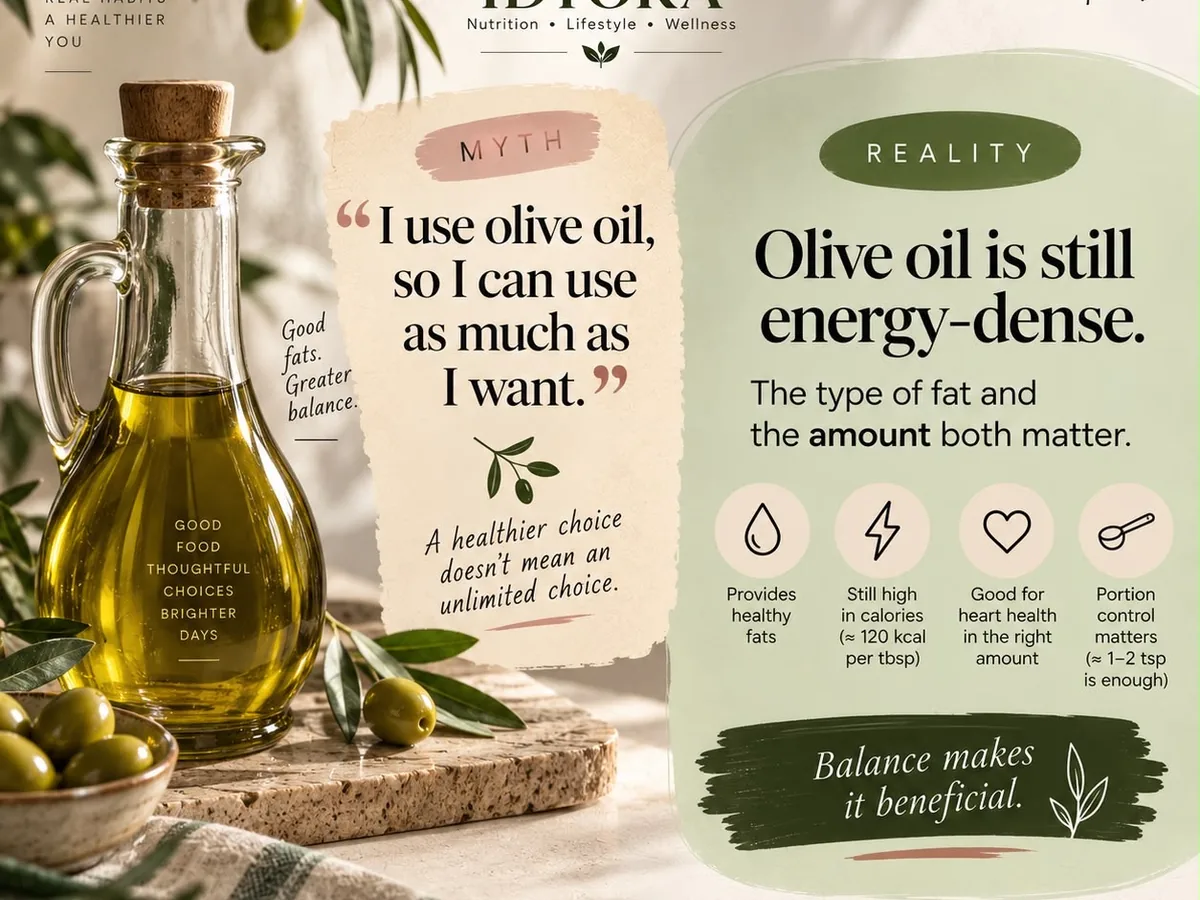
Olive oil is a wonderful addition to your kitchen, but it is important to remember that its energy density has raised concerns about weight gain1. To balance its inclusion in your Indian cooking, try using it as a finishing drizzle on dals or salads, measuring it with a teaspoon rather than pouring it directly from the bottle, and opting for smaller amounts in your daily sabzis.
The Olive Oil Popularity Surge
In recent years, olive oil has transitioned from a specialty item to a staple in many Indian households. It is rich in monounsaturated fatty acids (MUFA) and contains polyphenols and other antioxidants2. Research suggests that oils rich in unsaturated fat are to be preferred over oils and fats rich in saturated fat2. Prospective cohort studies indicate that the intake of olive oil may be associated with a reduced risk of cardiovascular disease, type 2 diabetes, and total mortality2.
Understanding Energy Density in Healthy Fats
While olive oil is a high-quality fat, it is helpful to remember that all fats are energy-dense. When we talk about energy density, we are referring to the number of calories relative to the weight or volume of the food. Because olive oil is pure fat, it is highly energy-dense1. Its energy density has raised concerns about weight gain1.
Why 'Healthier' Does Not Mean 'Unlimited'
It is a common misconception that because a food is considered healthy, it can be consumed without restraint. The intake of olive oil may be associated with reduced risk of cardiovascular disease, type 2 diabetes, and total mortality2.
"The intake of olive oil may be associated with reduced risk of cardiovascular disease, type 2 diabetes, and total mortality in prospective cohort studies2."
Findings from the PREDIMED trial showed that higher olive oil intake in the context of an unrestricted caloric Mediterranean diet was not associated with weight gain or higher waist circumference1. The key takeaway from clinical practice is that health outcomes are most improved when dietary interventions are evidence-based and quantitative3. If you are managing a specific health condition, it is always best to plan your dietary changes with your doctor or a registered dietitian to ensure your intake matches your personal needs.
Practical Tips for Measuring Your Daily Intake
In the rush of Indian home cooking, it is easy to "eyeball" oil while tempering a tadka or sautéing vegetables. However, this often leads to using much more than intended. To manage your portions:
- Use a Measuring Spoon: Instead of pouring directly from the bottle, use a teaspoon or tablespoon to measure your oil. This simple habit creates awareness of exactly how much you are using.
- The Drizzle Technique: Use olive oil as a "finishing" oil. Add it to your cooked dal, steamed vegetables, or salads right before serving. This allows you to enjoy the flavor and quality of the oil without exposing it to high heat, which can sometimes degrade its delicate compounds.
- Choose the Right Oil for the Job: While extra virgin olive oil is excellent for dressings and finishing, smoke points can vary widely depending on the oil3.
- Prioritize Variety: Your body benefits from a variety of fats. Continue to include other sources like nuts, seeds, and traditional staples like mustard or peanut oil, as cooking oil choice is significantly associated with cardiometabolic risk4.
Incorporating Olive Oil into Indian Kitchens
Integrating olive oil into an Indian kitchen doesn't mean you have to abandon traditional recipes. It is about making small, sustainable swaps. For instance, you might use olive oil for light sautéing of vegetables or in salad dressings for a side kachumber.
When preparing traditional dishes, consider the overall fat profile of your meal. If you are already using nuts or seeds in a curry, you may need less oil overall. Research indicates that cooking oil choice is an under-recognized dietary factor influencing cardiometabolic disease in India4. Always remember that while olive oil is a beneficial choice, it is just one part of a diverse diet that should also include plenty of vegetables, legumes, whole grains, and minimally processed proteins3.
Finding Your Personal Balance
Ultimately, wellness is not about perfection or eliminating specific fats, but about finding a balance that works for your lifestyle and health goals. There is no single "perfect" oil, and the most beneficial diet is one that you can maintain consistently.
If you are looking to make changes to your diet, especially if you are living with a condition like diabetes or high blood pressure, please consult with your healthcare provider or a registered dietitian. They can help you determine the right amount of fat for your specific caloric needs and ensure your dietary pattern is tailored to your body. By being mindful of portions and focusing on the quality of your overall diet, you can enjoy the benefits of olive oil while keeping your cooking practical, delicious, and aligned with your long-term health.
Sources
4
- Changes in olive oil consumption and long-term body weight changes in 3 United States prospective cohort studies - PMCUS National Institutes of Health
- Fats and oils – a scoping review for Nordic Nutrition Recommendations 2023 - PMCUS National Institutes of Health
- Nutrition and physical activity: An Obesity Medicine Association (OMA) Clinical Practice Statement 2022US National Institutes of Health, 2022
- Abstract 22: Cooking Oil Choice and Cardiometabolic Risk Among Asian Indians: Evidence from the Indian Council of Medical Research-India Diabetes (ICMR-INDIAB) National StudyJournal article, 2026