The Rice Debate: Why You Don't Need to Give Up Your Favorite Staple
Rice is a traditional staple that can be part of a balanced diet. Learn how to pair it with diverse food groups for a well-rounded Indian meal.
 By IDYORA Nutrition Desk 29 Sept 2026 5 min read
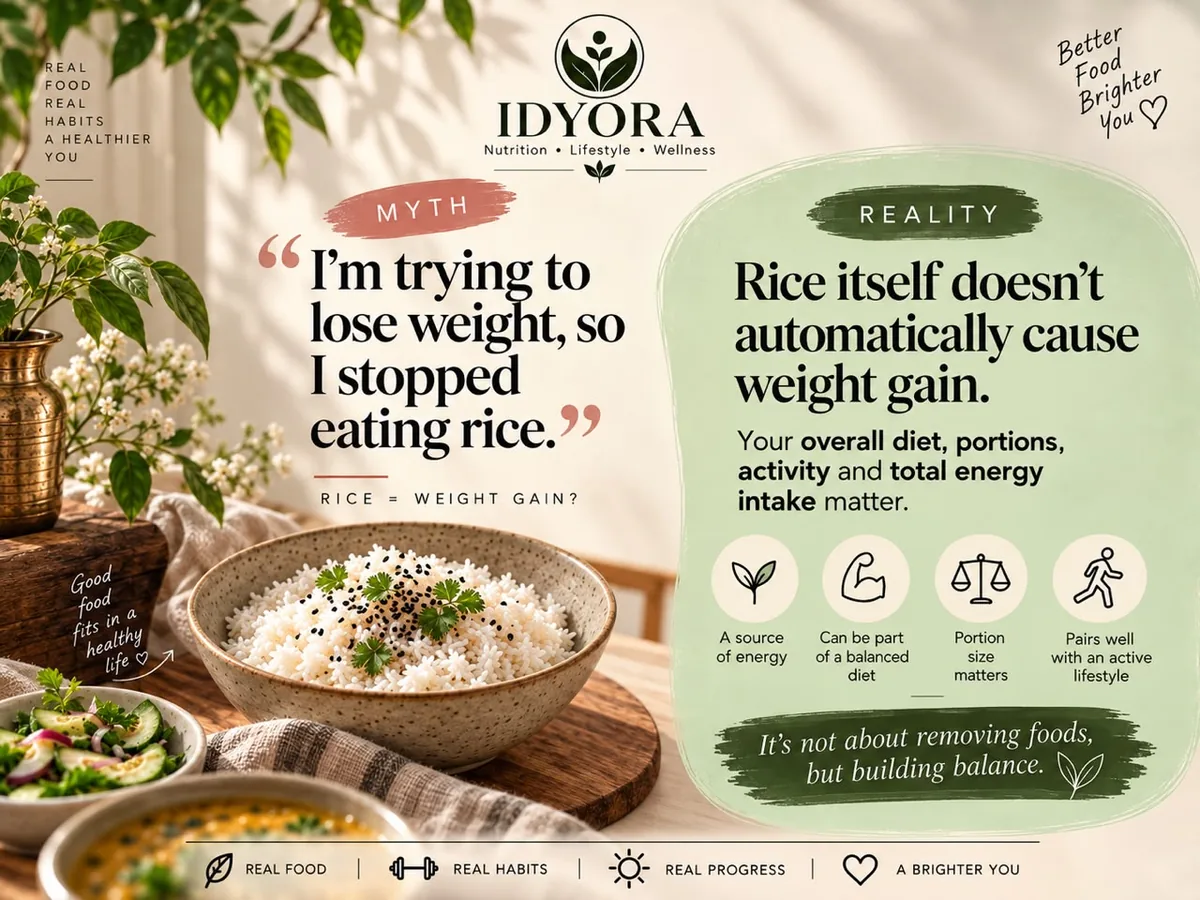
You don’t have to part ways with your bowl of rice to eat well. Rice is a deeply ingrained part of our heritage, and rather than eliminating it, the key lies in how we balance it with other essential food groups like dals, fresh sabzis, and proteins. Try these simple steps this week: add an extra portion of green vegetables to your lunch, swap one serving of white rice for a mix of brown rice or millets, and always ensure your plate includes a source of protein like lentils or curd.
The Common Myth: Why We Fear Rice
In recent years, rice has often been the subject of debate regarding its role in our daily meals. However, the reality of nutrition is far more nuanced. Rice has been a staple in Indian households for generations, serving as a reliable energy source. The concern often stems from modern, sedentary lifestyles and a shift toward diets that rely too heavily on refined carbohydrates while lacking in dietary diversity. Rather than viewing rice as an issue, it is more helpful to look at the overall composition of our meals and ensure we are including a wide variety of nutrients to support our long-term health.
Understanding Energy Balance and Portions
When we look at dietary patterns across India, the ICMR-National Institute of Nutrition (ICMR-NIN) emphasizes that a balanced diet should source nutrients from a minimum of 8 to 10 food groups daily1. Currently, the population across India sources nutrients from not more than 4 to 5 food groups per day1.
The "My Plate for the Day" guideline, developed by the ICMR-NIN, provides a practical framework for a balanced 2,000-calorie diet2. According to these recommendations, cereals and millets should not occupy more than 44% of your total daily energy intake2. To maintain balance, half of your plate should consist of vegetables, fruits, green leafy vegetables, and roots2,1. By shifting our focus from simply cutting out one food item to ensuring we meet these diverse food group requirements, we can create a sustainable way of eating that supports our body’s needs. If you are living with a specific health condition, please plan any significant dietary changes with your doctor or a registered dietitian to ensure your plan is safe and appropriate for you.
The Role of Rice in a Traditional Indian Meal
White rice is one of the main grains eaten in southern regions of India, often boiled and served with dal, or ground and fermented to make dishes such as idlis or dosas3. However, the quality of the carbohydrates we choose matters. Research indicates that replacing white rice with brown rice can help reduce 24-hour glucose and fasting insulin responses among overweight Asian Indians4.
In a study comparing different rice-based diets, participants who consumed brown rice saw a 19.8% lower incremental area under the curve (a measure of glycemic response) compared to those who consumed white rice4. While white rice is a traditional mainstay, incorporating whole, ancient grains—such as brown rice, millet, barley, or amaranth—can be a nutritionally advantageous strategy for the modern Indian diet3. These grains provide more fiber and protein compared with those in white rice3.
Practical Tips for Building a Balanced Plate
Building a plate that supports your wellness goals doesn't require complex calculations. You can start by following the "My Plate" visual guide:
- Fill half your plate with protective foods: Prioritize 400g of vegetables (including green leafy vegetables) and 100g of fruit per day2,1.
- Mind your cereal portions: Aim for approximately 250g of cereals or millets per day, ensuring they don't exceed about 44% of your total energy2,1.
- Include protein at your meals: Pulses, eggs, and flesh foods can account for around 14% of total energy2.
- Incorporate nuts and seeds: The ICMR-NIN recommends an intake of 30g of nuts and seeds per day2,1.
"The traditional practices of season-specific, diverse food intake are fading away. For good health, nutrients must be sourced from a minimum of 8 to 10 food groups in a day." — ICMR-National Institute of Nutrition1.
Pairing Rice with Fiber and Protein
One way to enjoy rice is to pair it with fiber and protein. For instance, in a study, the addition of 50g of legumes per day to a brown rice diet further decreased the glycemic response by 22.9% compared to a white rice-only diet4.
By mixing your rice with dal, adding a side of sprouts, or serving it with a portion of cooked seasonal vegetables, you are incorporating fiber and protein into your meal. This aligns with the ICMR-NIN recommendations to include pulses and vegetables as essential components of a healthy, balanced plate2,1.
Consulting Professionals for Personalised Guidance
While general guidelines like the "My Plate for the Day" are excellent starting points, nutrition is highly individual. Factors such as your age, activity level, and existing health status play a significant role in determining what your body needs.
If you are looking to manage a health condition or simply want to optimize your energy levels, it is essential to consult with a registered dietitian or a qualified medical professional. They can help you translate these broad guidelines into a personalized plan that respects your cultural preferences, your family's cooking style, and your specific health goals. Remember, the goal is not to follow a restrictive, temporary diet, but to build a sustainable, lifelong relationship with food that celebrates the diversity and warmth of Indian home cooking. By focusing on the quality of your grains and the diversity of your plate, you can continue to enjoy your favorite staple while supporting your overall well-being.
Sources
4
- s Promotion of “My Plate for the Day” and physical activity among the population to prevent all forms of malnutrition and NCDs in the countryICMR-National Institute of Nutrition
- What India Eats Report Shorter Version 25-9-20.cdrICMR-National Institute of Nutrition
- Incorporation of Whole, Ancient Grains into a Modern Asian Indian Diet: Practical Strategies to Reduce the Burden of Chronic DiseaseUS National Institutes of Health, 2011
- Effect of Brown Rice, White Rice, and Brown Rice with Legumes on Blood Glucose and Insulin Responses in Overweight Asian Indians: A Randomized Controlled Trialexa.ai, 2014