Nourishing Your Body: Simple Indian Foods to Support Iron Levels
Support your iron levels with everyday Indian staples like dals, greens, and grains. Learn simple ways to combine foods for better iron absorption.
 By IDYORA Nutrition Desk 8 Oct 2026 5 min read
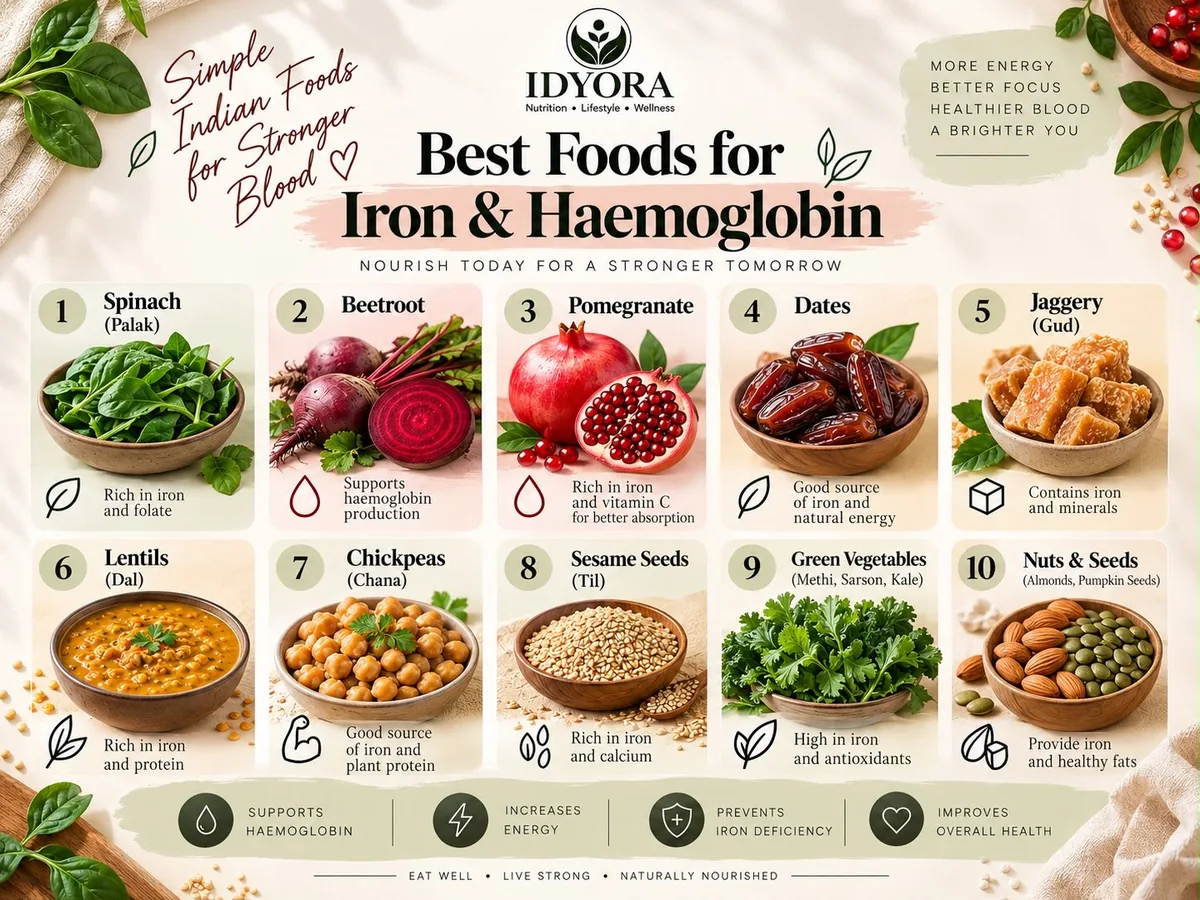
Iron is very important because it helps your body to make haemoglobin1. You can support your iron levels by incorporating everyday staples like dals, leafy greens (saag), whole grains, and nuts into your meals2,3. To get started this week, try squeezing a little fresh lemon juice over your dal or pairing your rotis with a side of fresh salad to help your body make better use of the iron in your food4,3.
Understanding the Role of Iron in Our Daily Energy
Iron is essential because it helps your body function properly, builds muscles, and supports the blood3. Iron is very important because it helps your body to make haemoglobin1. Because iron is not easily absorbed by the body, we all need a regular, reliable supply of it through a well-balanced diet1.
It is important to remember that iron needs can vary based on life stages. For example, women and older girls may require more iron-rich foods due to iron loss during menstruation3. While a varied diet is the best way to support your needs, if you are planning significant changes to your diet or have specific health concerns, please consult with your doctor or a registered dietitian to ensure your plan is right for you.
Top 10 Indian Kitchen Staples for Iron Intake
Our Indian kitchens are naturally stocked with excellent sources of iron. These can be divided into plant-based (non-heme) sources and animal-based (heme) sources, the latter of which are generally more easily used by the body5,3.
- Legumes and Pulses: Lentils, chickpeas, rajmah, moth beans, and horse gram are sources of iron2,3.
- Dark Green Leafy Vegetables: Spinach, methi, amaranth, and drumstick leaves are excellent choices to include in your sabzis2,3.
- Whole Grains: Whole wheat flour, ragi, bajra, and jowar are sources of iron2,3.
- Nuts and Seeds: Til (sesame), pumpkin seeds, pistachios, cashews, and groundnuts are sources of iron2,6.
- Dried Fruits: Raisins, black dates, and apricots are sources of iron1,2.
- Organ Meats: For non-vegetarians, chicken liver is a source of iron2,5.
- Poultry: Chicken and turkey are reliable sources of heme iron1,5.
- Fish: Mackerel, sardines, and tuna are excellent options for those who include seafood in their diet1,5.
- Eggs: A versatile staple that provides iron3,2.
- Fortified Foods: Some breakfast cereals and enriched grains can be a helpful, practical way to boost your daily intake1,5.
"The increase in iron intake should be coupled with efforts to combine appropriate foods in the diet to enhance the bioaccessibility of iron and reduce inhibitory factors4."
The Secret to Better Absorption: Pairing Iron with Vitamin C
One of the most practical lessons in nutrition is that what you eat with your iron-rich food is just as important as the food itself. Plant-based (non-heme) iron is more difficult for the body to absorb than the iron found in animal products1,5. However, you can significantly enhance this process by pairing your iron sources with Vitamin C5,3.
Research has shown that including Vitamin C-rich foods—such as oranges, lemons, amla, or guava—with your meals can help your body make better use of the iron present4,2,3. For example, studies found that adding 120g of orange or 250ml of lemonade to a meal of rice and dal can increase iron bioaccessibility4. Conversely, certain items can act as inhibitors. Tea and coffee, for instance, can reduce iron absorption; it is recommended to wait one to two hours after a meal before consuming these beverages4,3. Similarly, very high amounts of calcium, particularly from supplements, may interfere with iron absorption2,5.
Practical Tips for Everyday Cooking
Supporting your iron levels doesn't require complex recipes; it is often about small, consistent habits in your daily cooking.
- The Lemon Squeeze: Make it a habit to squeeze fresh lemon juice over your dal, sabzi, or sprouts just before serving. This simple act of adding Vitamin C can help improve the bioaccessibility of the iron in your meal4,3.
- Mind the Tea Timing: If you enjoy a cup of chai, try to have it at least an hour before or after your main meals to avoid it acting as an inhibitor to iron absorption3.
- Wholesome Rotis: Opt for rotis made from whole wheat, ragi, or bajra flour instead of refined flour to increase your daily intake of non-heme iron2,3.
- Smart Snacking: Instead of reaching for processed snacks, keep a small bowl of roasted chana, groundnuts, or a handful of raisins and seeds nearby2,1.
- Cook with Care: When preparing meat or poultry, choose lean cuts and use methods like steaming, roasting, or grilling rather than frying1.
Planning Your Meals for Long-Term Wellness
Consistency is the key to long-term wellness. Rather than focusing on one "perfect" meal, aim to include at least three portions of iron-rich foods throughout your day1.
A balanced approach might look like this: a breakfast featuring ragi porridge or an egg dish, a lunch of rice or whole-wheat chapati paired with a dal and a portion of green leafy vegetables, and a dinner that includes lean protein or legumes. Remember to include a piece of seasonal fruit, like a guava or a slice of orange, with your meals to support absorption3.
By focusing on variety and mindful combinations, you can make these iron-rich staples a permanent and delicious part of your kitchen. If you ever feel that your energy levels are consistently low, or if you are managing a specific health condition, please reach out to a healthcare professional or a registered dietitian to tailor your nutrition plan to your specific needs.
Sources
6
- Haemoglobin and iron: information for blood donors - Blood Donor Counselling: Implementation Guidelines - NCBI BookshelfUS National Institutes of Health
- exa.aiexa.ai, 2020
- Iron makes our bodies strongFAO
- Effect of inclusion of key foods on in vitro iron bioaccessibility in composite mealsexa.ai, 2016
- Iron • The Nutrition SourceHarvard T.H. Chan School of Public Health, 2019
- [Table], Table. Iron Content of Selected Foods - StatPearls - NCBI BookshelfUS National Institutes of Health