Decoding 'No Sugar Added': A Guide to Smarter Label Reading
Don't be misled by front-of-package claims. Learn how to look past the 'No Sugar Added' label to understand what is truly in your food.
 By IDYORA Guides Desk 8 Oct 2026 5 min read
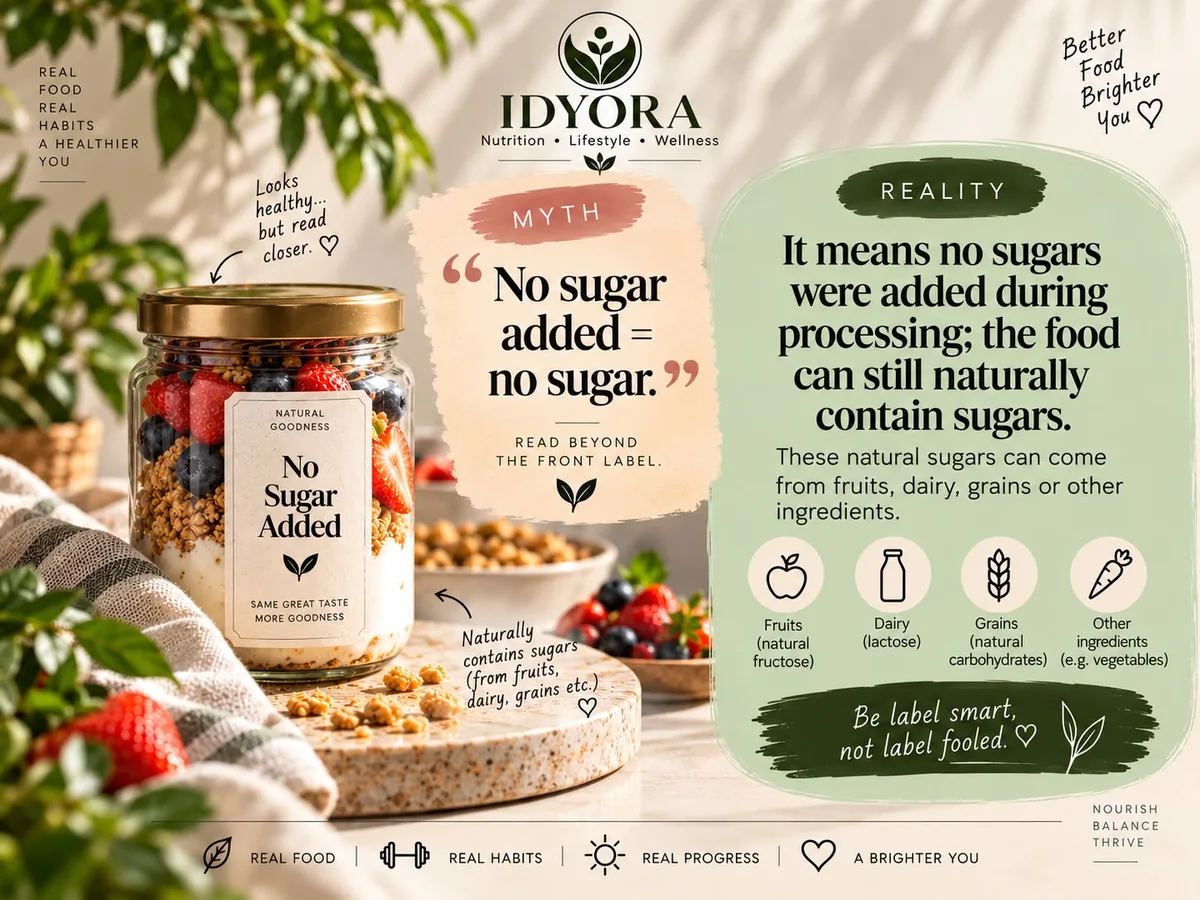
When you walk down the grocery aisle, a "No Sugar Added" label often feels like a green light for a healthier choice. However, these front-of-package claims can be misleading, as they often mask the presence of other sweeteners or high-calorie ingredients that don’t necessarily support a balanced diet. Whether you are prepping a simple dal, stir-frying sabzis, or choosing a snack for your kids, the best approach is to look past the marketing and scan the actual ingredient list. Try this simple step this week: flip every packaged item you pick up, look for the "Added Sugars" line on the Nutrition Facts label, and compare it against similar products to see which one truly offers the best nutritional profile.
The Myth of 'No Sugar Added'
According to regulatory standards, the "No Added Sugars" label means that no sugar or sugar-containing ingredient, such as jam, jelly, or concentrated fruit juice, was added during processing1.
Crucially, this label does not mean the product is low in calories or devoid of sweetness1,2. Research indicates that consumers often expect a meaningful reduction in calories when sugar reduction claims are made and may feel deceived if that reduction does not occur2. "No added sugar" labels seem to have only very small effects on consumer product perceptions, suggesting they may play a minor role in guiding food choices3.
Natural vs. Added Sugars: What’s the Difference?
To manage your intake, it helps to distinguish between the types of sugars found in your food. "Total Sugars" on a nutrition label includes every type of sugar present—both the ones that occur naturally in foods like milk or fruit, and the ones added during manufacturing4,5.
Natural sugars, such as the lactose found in plain milk, are naturally occurring4. For instance, a cup of plain dairy milk might show 12 grams of total sugar, but it contains zero added sugars4. Conversely, "Added Sugars" are those introduced during processing, such as white table sugar, syrups, or honey6. Your body does not require any carbohydrates from added sugar6. Because foods high in added sugars tend to be higher in calories and are associated with health concerns, health authorities recommend being mindful of these specific ingredients4,5. If you have specific health conditions, it is always best to plan your dietary changes with your doctor or a registered dietitian.
Why You Should Always Flip the Package
The most reliable way to understand what you are eating is to ignore the front-of-package marketing and flip the container to the back. Since the rollout of updated nutrition labels, it has become much easier to spot the difference between naturally occurring and added sugars6.
"The updated Nutrition Facts label now lists both 'Total Sugars' and underneath 'Added Sugars'6."
This distinction is vital. For example, a flavored yogurt might show 20 grams of total sugar, but if you look closer, you might find that 10 grams are naturally occurring lactose, while the other 10 grams are from added sweeteners4. By checking the "Added Sugars" line, you can quickly compare two similar products—like two brands of breakfast cereal or pasta sauce—and choose the one with the lower value4.
When looking at the percent Daily Value (%DV), keep these guidelines in mind:
- 5% DV or less of added sugars per serving is considered low, which is a great target for a heart-healthy diet4.
- 20% DV or more of a nutrient is considered high4.
Remember, the serving size listed on the package is a reference point, not a recommendation for how much you should eat4.
How to Read an Ingredient List Like a Pro
If you want to know exactly what is in your food, the ingredient list is your best friend. Manufacturers are required to list ingredients in descending order by weight. The specific types of added sweeteners will be shown in the ingredients list4.
Be aware that there are many names for added sweeteners. If you are trying to limit these, look for terms like:
- Dextrose, fructose, or maltose
- Corn syrup or rice syrup
- Fruit juice concentrates
- Molasses or brown rice syrup
The Dietary Guidelines for Americans suggest limiting added sugars to less than 10% of your total daily calories6. For a 2,000-calorie diet, that is about 50 grams or 12 teaspoons of sugar per day6. The American Heart Association suggests even stricter limits: no more than 6 teaspoons (24 grams) per day for most women, and no more than 9 teaspoons (36 grams) for most men6.
Simple Ways to Sweeten Your Meals Naturally
Instead of relying on processed foods with "No Sugar Added" claims, you can bring natural sweetness into your kitchen using whole foods. Indian home cooking is full of ways to enhance flavor without relying on added sugars:
- Use Whole Fruit: Instead of sweetened yogurt, stir in fresh, sliced seasonal fruits like mangoes or pomegranate pearls. The natural sweetness and fiber make for a much more satisfying snack.
- Warm Spices: Ingredients like cinnamon, cardamom, and nutmeg can add a perception of sweetness to your morning porridge or oats without adding a single gram of sugar.
- Dairy: Plain, unsweetened dahi (curd) is a wonderful base. If you need a touch of sweetness, a small amount of fresh fruit or even a few soaked raisins can do the trick.
- Focus on Whole Foods: The best way to avoid added sugar is to prepare meals from scratch using fresh vegetables, dals, and whole grains. When you control the ingredients, you don't have to worry about hidden sweeteners.
By focusing on whole, unprocessed ingredients, you can enjoy the rich, traditional flavors of home-cooked food while keeping your added sugar intake in check. If you are managing a health condition, always consult with your doctor or a registered dietitian to ensure your dietary choices align with your specific needs.
Sources
6
- [Table, FDA Regulatory Requirements for Nutrient Content Claims]. - Front-of-Package Nutrition Rating Systems and Symbols - NCBI BookshelfUS National Institutes of Health
- Consumer understanding of sugars claims on food and drink productsWiley
- Do “no added sugar” labels impact sugar content estimation and healthiness perception? An experimental online studyexa.ai, 2022
- Understanding Food Labels • The Nutrition SourceHarvard T.H. Chan School of Public Health, 2021
- Perspective: Total, Added, or Free? What Kind of Sugars Should We Be Talking About? - PMCUS National Institutes of Health
- Added Sugar • The Nutrition SourceHarvard T.H. Chan School of Public Health, 2013