Filling Handheld Swaps: Elevate Your Daily Snacks
Elevate your daily snacks with simple, nutrient-dense swaps that keep you satisfied and energized throughout your busy day.
 By Idyora Team 28 Sept 2026 5 min read
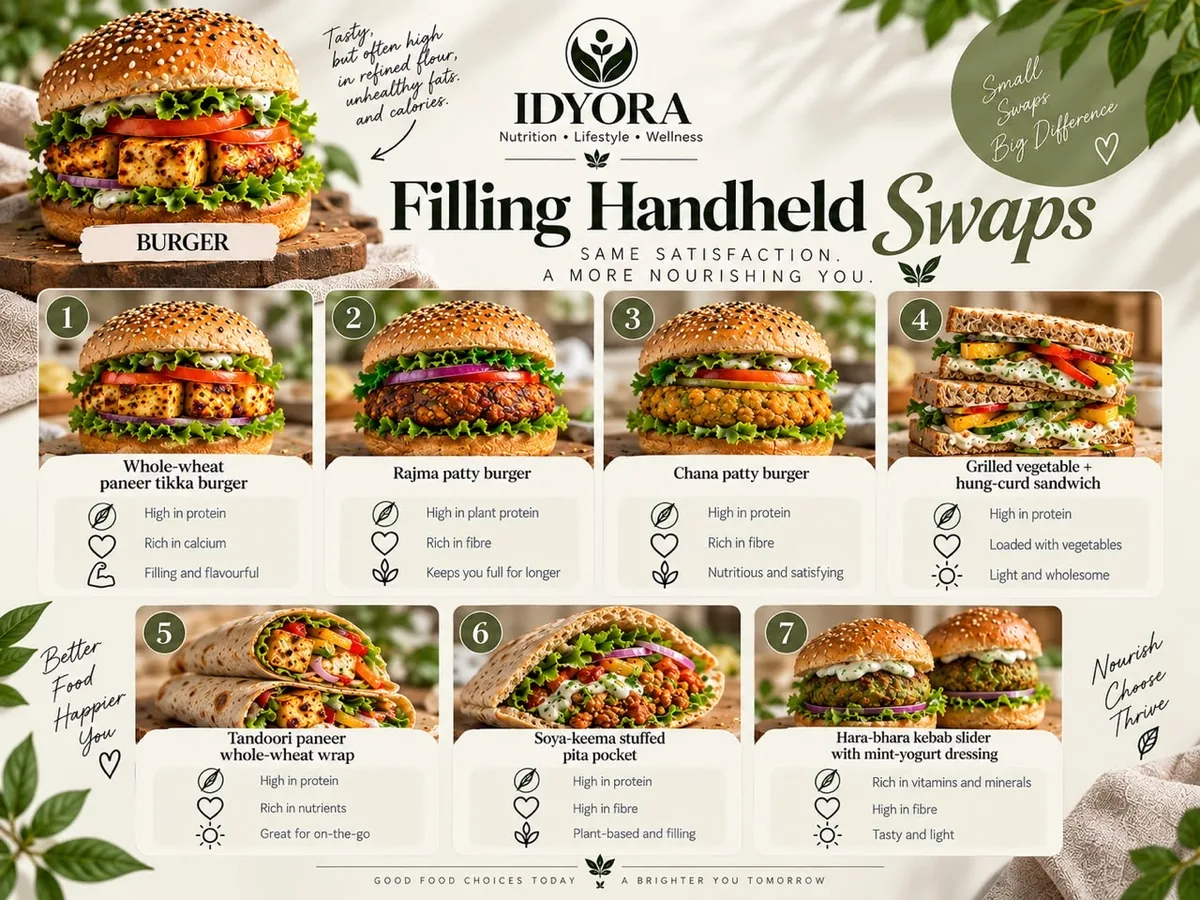
Elevating your daily snacks is about choosing nutrient-dense, filling swaps that keep your energy steady throughout the day. By replacing refined carbohydrates with protein-rich or fiber-packed alternatives—like swapping a plain biscuit for a handful of roasted chana or opting for yogurt with nuts—you can enjoy satisfying, wholesome options. Try starting this week by choosing one "handheld" snack swap each day, such as replacing a packaged snack with a bowl of sprouts or a cup of curd.
Why Mindful Swapping Matters
Research indicates that Indian diets are currently characterized by high intakes of low-quality carbohydrates and low intakes of protein1. When we choose snacks that are high in refined carbohydrates, we miss the opportunity to nourish our bodies with the essential nutrients needed to sustain energy levels.
Mindful swapping is not about deprivation; it is about shifting the balance toward foods that support your body. By focusing on the quality of what we eat, we can foster a more sustainable approach to nutrition that fits seamlessly into our daily lives.
Choosing Better Bases for Your Meals
The foundation of a satisfying snack often lies in the base ingredients we choose. While traditional staples like rice and wheat are common, incorporating a wider variety of whole grains and legumes can make a significant difference. Research indicates that replacing refined cereals with whole wheat or millet flour without decreasing overall carbohydrate quantity does not necessarily lower the risk for certain metabolic conditions1.
Instead, look toward incorporating more legumes and pulses. Clinical practice guidelines frequently highlight the importance of legumes and pulses as part of a beneficial dietary pattern2. These ingredients provide a more robust base for your daily snacks, offering a sense of fullness that refined flour snacks often lack.
Incorporating Plant-Based Proteins
One of the most effective ways to upgrade your snacking is to prioritize protein. Research shows that replacing refined carbohydrates with plant-based or dairy proteins is associated with a lower likelihood of prediabetes and other metabolic risks1. In an Indian context, this is wonderfully practical.
- Roasted Legumes: Keep a jar of roasted chana (chickpeas) or moong handy. They are excellent, shelf-stable, handheld snacks.
- Sprouts: A quick chaat made from steamed sprouted moong or moth beans adds a fantastic protein boost to your afternoon.
- Nuts and Seeds: A small handful of almonds, walnuts, or pumpkin seeds provides healthy fats and protein, which are components of dietary patterns associated with a lower risk of cardiovascular disease3.
"Public health strategies that reduce overall carbohydrates and saturated fat while increasing intake of plant and dairy proteins could mitigate the risk of metabolic diseases in India1."
Adding Fiber and Freshness to Every Bite
Fiber is the unsung hero of a satisfying snack. Research indicates that fiber intake in India currently provides only a small fraction of daily energy4. To change this, try to "add in" rather than "take away." If you are having a snack, pair it with a fresh vegetable or fruit.
Dietary patterns characterized by higher consumption of vegetables and fruits are associated with a decreased risk of all-cause mortality5. They add volume, texture, and essential micronutrients to your day without the heaviness of processed snacks. Consider keeping pre-cut cucumbers, carrots, or a piece of seasonal fruit ready to go. When you pair these with a source of protein, like a small cup of yogurt or a handful of nuts, you create a balanced, handheld snack that keeps you satisfied until your next meal.
Tips for Sustainable Healthy Eating
Sustainability in nutrition comes from consistency, not perfection. You do not need to overhaul your entire pantry overnight. Start by looking at your current habits and identifying one or two places where a swap can be made.
- Embrace Dairy: For those who consume dairy, it can be a valuable part of a balanced diet. Increased consumption of fermented dairy, such as homemade curd or buttermilk, has been associated with a lower risk of metabolic syndrome in Asian Indian adults6.
- Prioritize Quality: When choosing snacks, look for whole, unprocessed options. Research suggests that balancing protein and fat intake is a useful approach for assessing dietary quality4.
- Plan Ahead: We often reach for less-than-ideal snacks when we are hungry and unprepared. Keeping healthy, handheld options like roasted makhana or a bowl of curd in the fridge makes the "better" choice the "easier" choice.
Consulting Professionals for Personalized Nutrition
While these general principles provide a solid foundation for healthy eating, your nutritional needs are unique to you. Factors such as your activity level, age, and any existing health conditions mean that one size rarely fits all.
If you are living with a specific health condition, it is helpful to discuss your dietary patterns with your doctor or a registered dietitian. They can help you interpret research-backed guidelines and tailor them to your specific lifestyle, ensuring that your snack swaps are not only delicious and filling but also perfectly suited to your health goals. Remember, small, consistent changes made with professional guidance are the most effective way to support your long-term wellness.
Sources
6
- Dietary profiles and associated metabolic risk factors in India from the ICMR–INDIAB survey-21exa.ai, 2025
- Commonalities among Dietary Recommendations from 2010 to 2021 Clinical Practice Guidelines: A Meta-Epidemiological Study from the American College of Lifestyle MedicineUS National Institutes of Health
- Dietary Patterns and Risk of Cardiovascular Disease: A Systematic ReviewUS National Institutes of Health
- Macronutrient Intake and Dietary Patterns in Indian Adults with and without Type 2 Diabetes: Findings From the Multicentric I-STARCH-1 Study | medRxivmedrxiv.org, 2025
- Dietary Patterns and All-Cause Mortality: A Systematic Review - NCBI BookshelfUS National Institutes of Health
- Higher Intake of Dairy Is Associated with Lower Cardiometabolic Risks and Metabolic Syndrome in Asian Indians - PMCUS National Institutes of Health, 2022