Beyond the Packet: Simple Swaps for Your Noodle Cravings
Satisfy your masala noodle cravings with these simple, nourishing, and protein-packed additions for a more balanced everyday meal.
 By Idyora Team 28 Sept 2026 6 min read
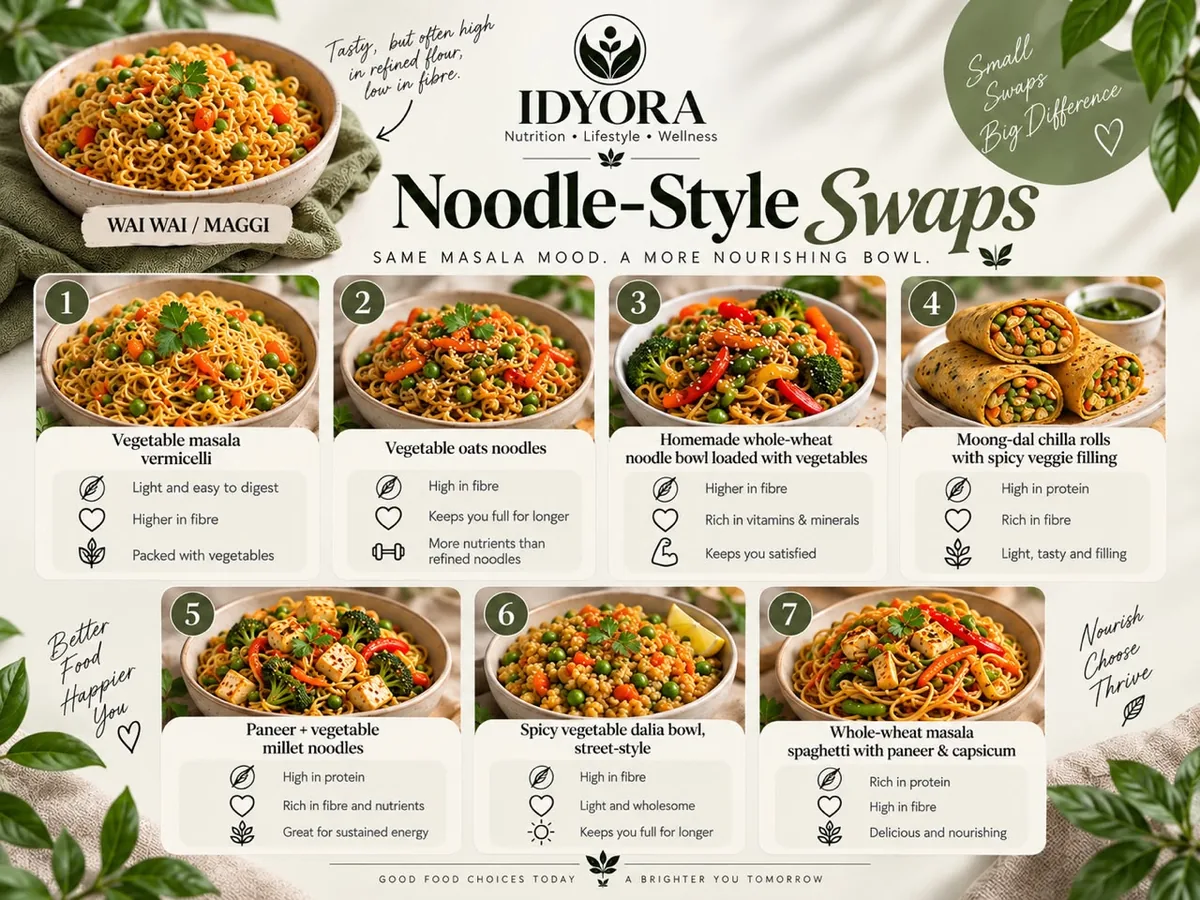
The secret to satisfying a noodle craving lies in capturing that familiar, savory masala punch while building a foundation of ingredients that keep you feeling satisfied for longer. By swapping out refined ingredients for fiber-rich grains and adding a generous heap of seasonal vegetables, you can easily transform a quick meal into a nourishing bowl that feels just as comforting as the original. This week, try swapping your usual noodles for a vermicelli made of brown rice or finger millet, and toss in a handful of finely chopped beans or carrots to see how simple it is to upgrade your pantry staples.
Why We Crave the Masala Noodle Experience
There is a distinct psychological comfort in a bowl of masala noodles. It is rarely just about hunger; it is about the sensory experience—the warmth, the specific blend of spices, and the ease of preparation. For many of us, these noodles represent a nostalgic "quick fix" that has been part of our kitchen culture for decades. The salt, the umami, and the specific texture of the noodles create a flavor profile that is deeply ingrained in our palate.
Understanding this craving is the first step toward making a shift. We often reach for these packets when we are tired, pressed for time, or simply seeking a familiar taste of home. Because these meals are designed to be shelf-stable and hyper-palatable, they are difficult to replicate exactly. However, by acknowledging that we are looking for comfort and spice rather than just convenience, we can begin to recreate that experience using ingredients that support our daily energy levels. The goal isn't to banish the craving, but to elevate the ingredients so that your meal supports your well-being, helping you feel energized rather than sluggish after eating.
The Power of Adding Vegetables
The most effective way to improve any noodle dish is to treat the noodles as a base rather than the main event. When you fill your bowl with a variety of textures and colors, you naturally increase the volume of your meal without needing to rely solely on processed carbohydrates. In an Indian kitchen, we have an incredible bounty of seasonal produce that can be quickly sautéed or steamed to add crunch and fiber to your bowl.
Think beyond the standard peas and corn. Finely shredded cabbage adds a wonderful sweetness and bite, while thinly sliced capsicum provides a vibrant aroma that pairs beautifully with masala spices. If you have leftover sabzi—perhaps a dry gobi or beans preparation—toss it in at the last minute. This not only reduces food waste but also infuses your noodles with the familiar home-cooked flavors of your daily rotis and dals. By prioritizing vegetables, you ensure that every bite is packed with essential components that help you feel full and satisfied, making it easier to enjoy a smaller portion of the noodles themselves.
Swapping Refined Flour for Whole Grains and Millets
The base of most instant noodle packets is refined wheat flour, which is processed to be shelf-stable and quick-cooking. To make a more nourishing choice, look toward the diverse grains available in our traditional Indian pantry. Millets like ragi (finger millet), jowar (sorghum), and bajra (pearl millet) are excellent alternatives that offer a more robust texture and a nutty flavor.
"The true magic of a nourishing bowl lies in the texture—by swapping refined bases for whole grains, you add a depth of flavor that turns a simple snack into a wholesome meal."
You can find vermicelli made from brown rice, ragi, or even red rice in most local markets today. These grains provide a different mouthfeel, often requiring a bit more chewing, which can actually help you become more mindful of your meal. If you are experimenting with these for the first time, keep the spice profile similar to what you enjoy—perhaps a dash of turmeric, coriander powder, and a hint of garam masala. When you make the switch to whole grains, you are choosing ingredients that provide a steady release of energy, which is a great way to support your body throughout the day. If you are managing a condition like diabetes or PCOS, it is always a good idea to discuss these grain transitions with your doctor or a registered dietitian to see how they fit into your overall meal plan.
Protein-Packed Alternatives for Sustained Energy
Adding a protein source is the easiest way to turn a bowl of noodles into a more substantial meal. Whether you stir in some paneer, chickpeas, or a soft-boiled egg, including protein is a great way to make your bowl feel more satisfying and complete.
Consider adding a handful of boiled chana (chickpeas) or moong dal to your noodle bowl. These legumes blend seamlessly with masala flavors and provide a beautiful, earthy texture. If you prefer non-vegetarian options, a few pieces of shredded chicken or a hard-boiled egg can make a world of difference. For a plant-based boost, crumbled paneer or firm tofu works exceptionally well, absorbing the spices and adding a creamy element to the dish. Including a protein component in your bowl is a simple way to make your meal more satisfying and balanced.
Making the Shift: Practical Tips for Your Kitchen
Changing your cooking habits doesn't have to happen overnight. Start by making small, manageable adjustments that don't feel like a chore. If you love the masala packet, try using only half of it and seasoning the rest of the dish with your own fresh spices—turmeric, cumin, red chili powder, and a squeeze of lemon juice. This allows you to control the sodium while keeping the flavor profile you love.
Keep your pantry stocked with "quick-cook" healthy staples. Having a stash of whole-grain vermicelli, pre-chopped frozen vegetables, and canned or pre-boiled legumes means you can still put together a meal in under ten minutes. When you are in a rush, don't feel pressured to make a gourmet meal. A simple bowl of ragi vermicelli tossed with a little ginger, garlic, and whatever green vegetable is in your fridge is a perfectly valid and nourishing dinner. Remember, consistency is more important than perfection. If you find yourself reaching for the original packet once in a while, don't worry—it’s about the overall pattern of your diet, not a single meal.
How to Keep Your Noodle Bowls Balanced
A truly balanced bowl follows a simple formula: a portion of whole grains, a generous serving of vegetables, and a source of protein, all tied together with healthy fats. To finish your dish, add a drizzle of cold-pressed oil or a small spoonful of ghee right before serving. This not only enhances the flavor but also helps with the absorption of fat-soluble vitamins from the vegetables you’ve added.
Finally, pay attention to how you eat. If you are eating in front of a screen, you might miss the signals that you are full. Try to sit down at the table, take a few deep breaths, and enjoy the aroma of the spices. If you have specific health goals or are managing conditions like high blood pressure or thyroid concerns, remember that your dietary needs are unique. Always plan your meal changes with your doctor or a registered dietitian to ensure your choices support your long-term wellness. By approaching your noodle cravings with a mix of creativity and nutrition, you can continue to enjoy the comfort of a masala-spiced bowl while nourishing your body in the best way possible.