
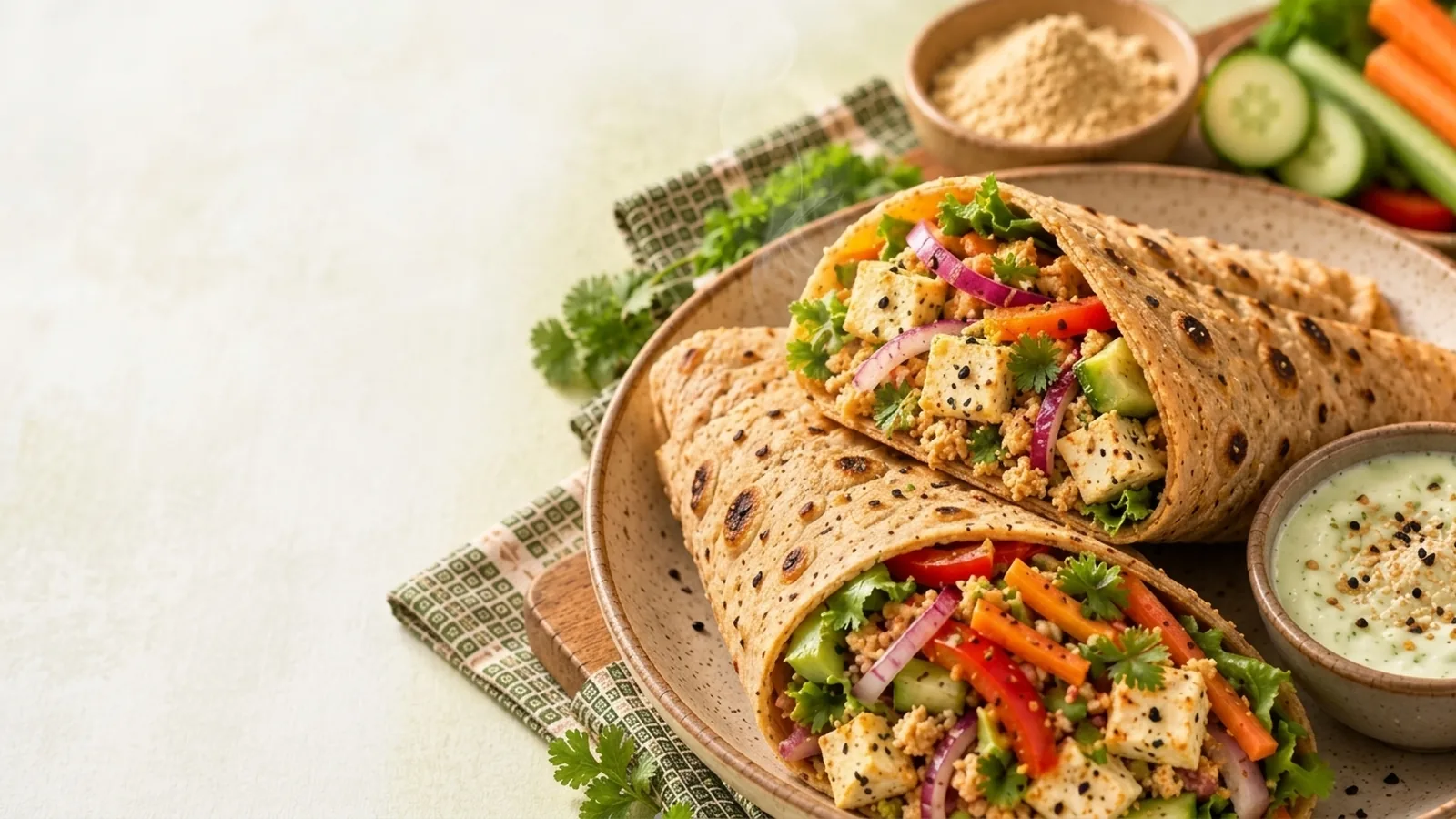
Before You Start
No chilli heat
This recipe contains no chilli ingredients and is mild by design. To add heat, stir in 0.5 tsp of red chilli powder or finely chopped fresh green chillies with the onions.
20 mins in total
20 mins hands-on (chopping and cooking).
Plan ahead: If using dry sattu powder, mix with water to form a thick, spreadable paste before starting; no overnight soaking required.
Contains: Milk (dairy), Gluten (wheat)
Vegetarian · contains dairy. We check for milk, gluten, tree nuts, peanuts, mustard, sesame and celery. Always check your own labels, especially for asafoetida (hing), which often contains wheat.
Ingredients
For the Filling
For the Assembly
Can't Find Something?
- 1/2 cup roasted gram flour (besan) lightly toasted in a dry pan instead of ½ cup sattu, cooked. Provides a similar nutty, earthy flavour and thick texture.
- 2 tbsp thick Greek-style natural yogurt instead of 2 tbsp curd. Provides the same creamy, tangy binding agent for the wrap.
Make It a Meal
Serve as a complete meal on its own, or pair with a side of plain yogurt or a simple tomato salad.
Serve warm with an extra side of curd or mint chutney for a complete lunch experience.
Good to Know
Nutrition values are approximate, per serving. IDYORA shares general wellness information — not medical advice.
Watch the Recipe
Key moments and transcriptStep by Step Instructions
-
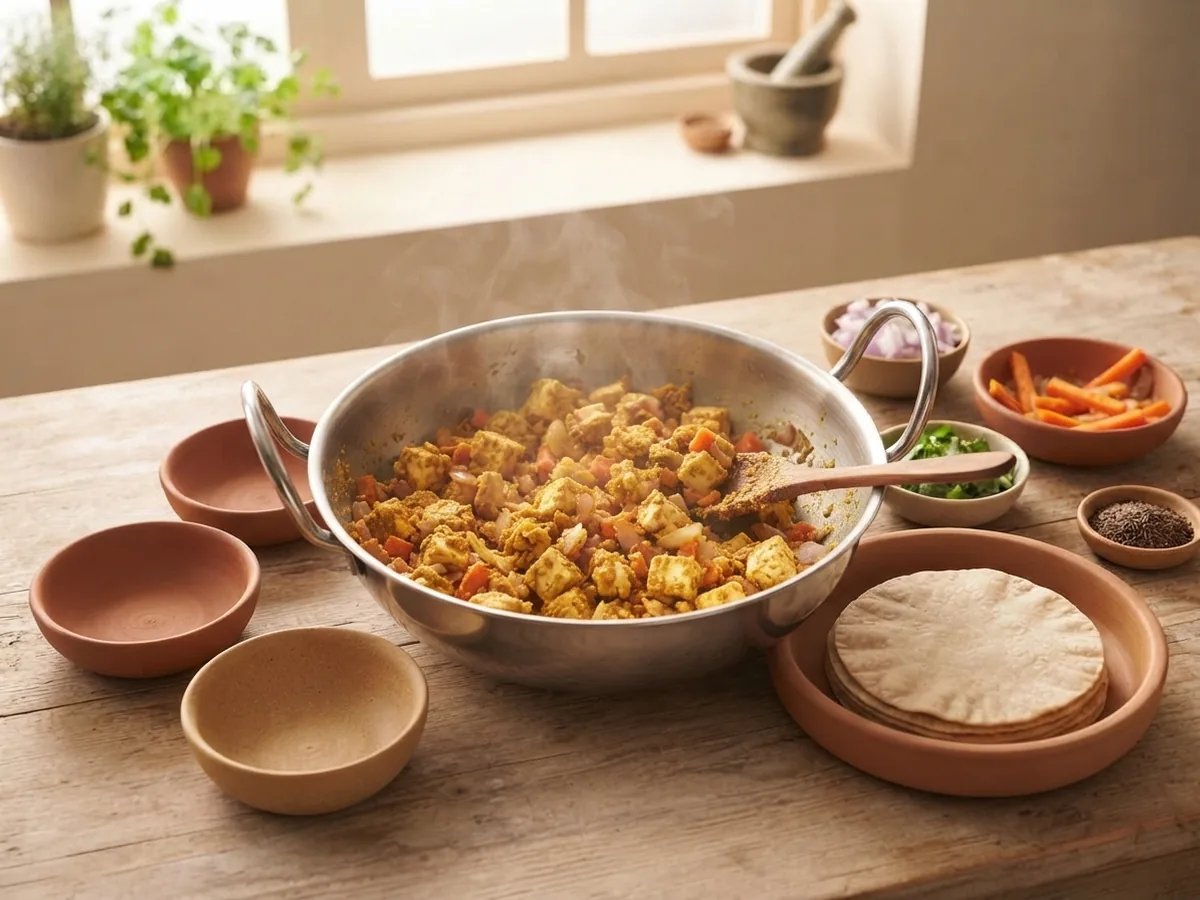
Prepare the Filling
Heat 1 tbsp vegetable oil in a pan over medium heat and add 0.5 tsp cumin. Add the chopped onion and carrot, sautéing for about 3 minutes until softened, then fold in the 200 g paneer and 0.5 cup sattu.
Done when: Onions should look translucent and soft, not brown. Avoid burning the cumin seeds at the start, as they turn bitter quickly if overheated.
10 mins hands-on
-
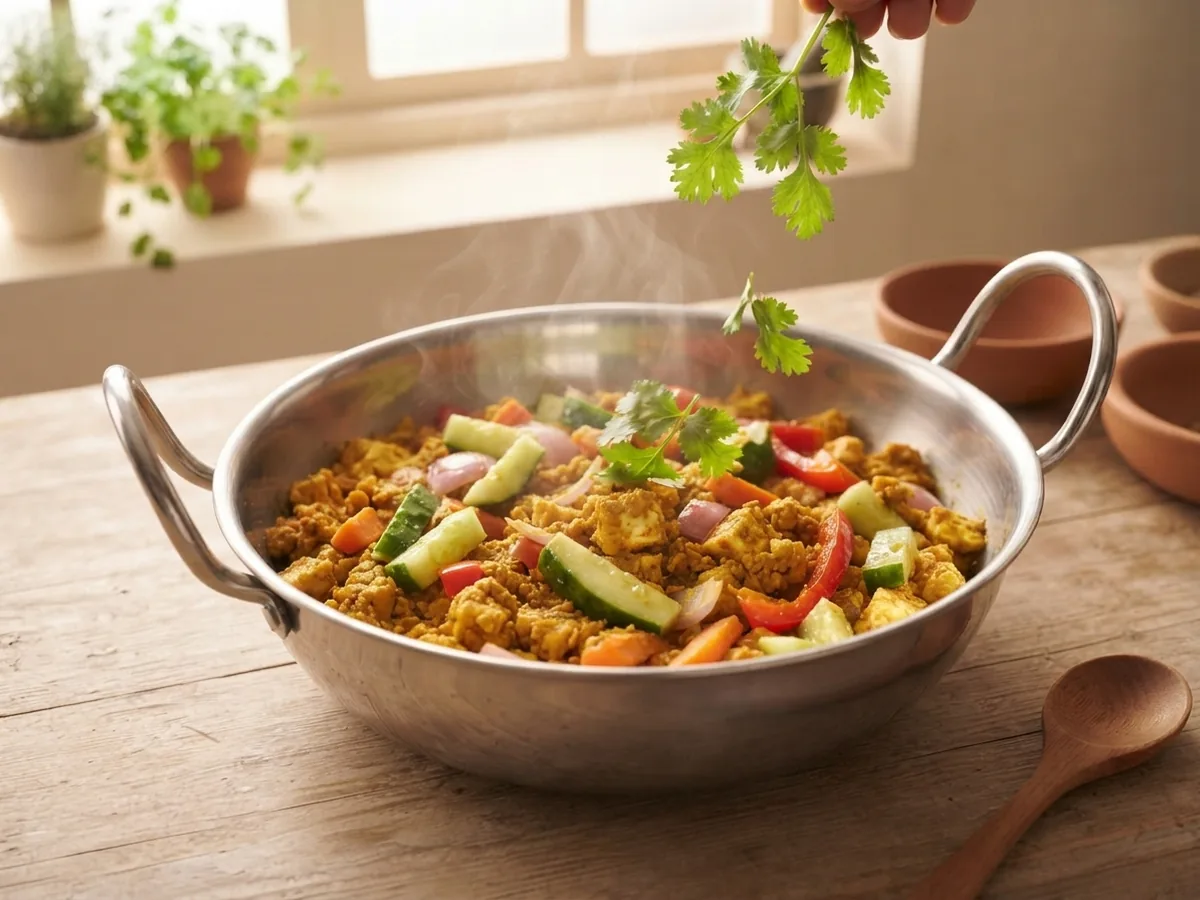
Season and Finish
Stir in 1 tsp chaat masala and 0.5 tsp salt, mixing well for 2 minutes until aromatic. Remove from heat and stir in the 0.5 cup chopped cucumber and 1 tbsp chopped coriander leaves to keep them crunchy.
Done when: The mixture should be well-combined and fragrant from the chaat masala. Adding the cucumber and coriander at the very end is key to keeping them crisp rather than soggy.
5 mins hands-on
-
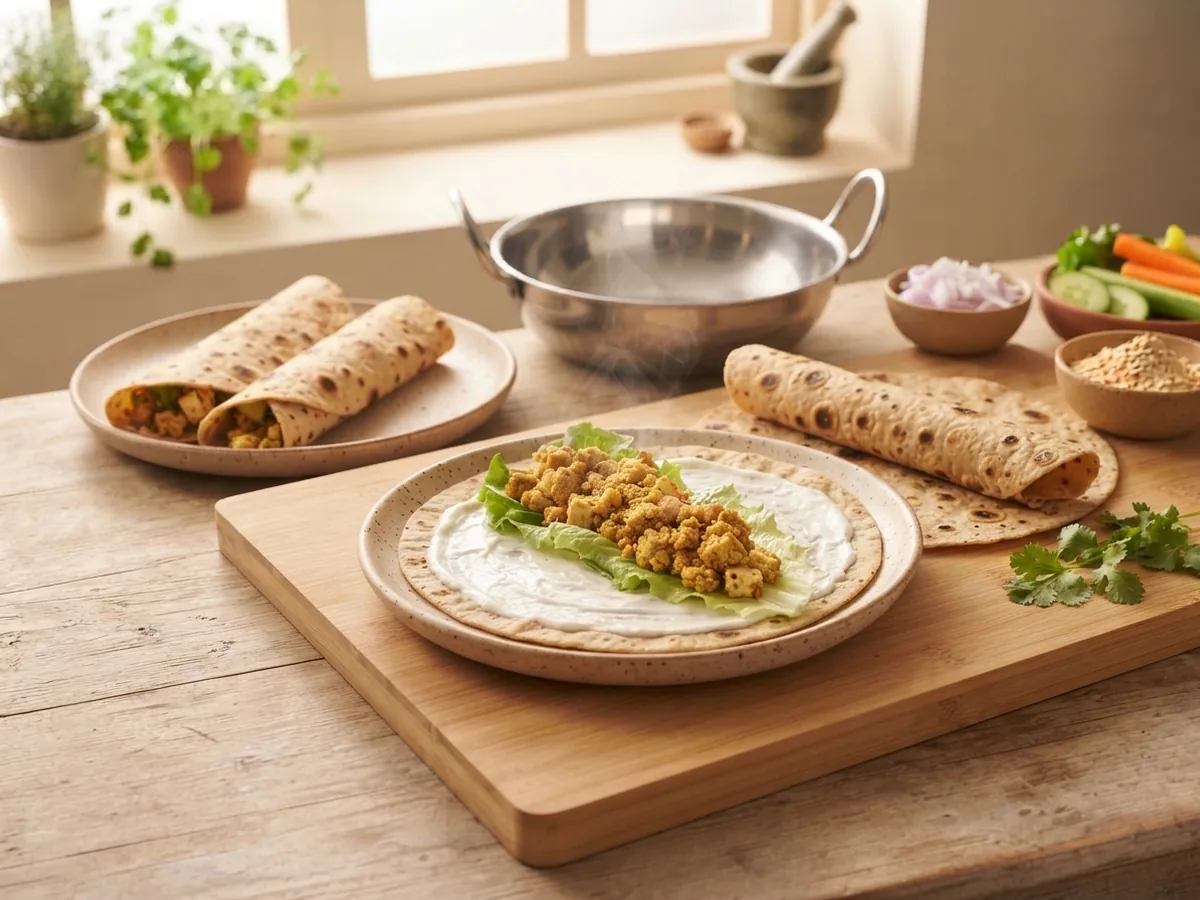
Assemble the Wrap
Lay out each of the 2 rotis and spread 1 tbsp curd on the center of each. Place a layer of lettuce, then top with half of the prepared sattu-paneer mixture per roti before rolling them tightly into wraps over 1 minute.
Done when: The roti should be soft enough to roll without cracking. If your rotis feel stiff, warm them in a dry pan for 30 seconds before assembling.
5 mins hands-on prep
“Good food is a step towards a healthier, happier you.”
Enjoy!Made it? Rate it
Be the first to rate it
Why It's Good for You
Paneer is a popular dairy staple in Indian cuisine, providing a rich source of high-quality animal protein1. It contains important minerals like calcium and phosphorus, which are essential for bone health1,2. As an unripened soft cheese, it has a cohesive, spongy texture that pairs well with various vegetables3,1.
Sattu, made from roasted Bengal gram, is a traditional food supplement valued for its high protein and fibre content4. It is an excellent source of minerals including iron, magnesium, and zinc4. Incorporating legumes like sattu with cereal-based rotis can help improve the overall nutritional balance of a meal4.
ICMR-NIN recommends that a balanced plate should source macronutrients and micronutrients from at least 9 food groups daily, with vegetables and green leafy vegetables forming a significant portion of the plate5. This recipe integrates these principles by combining dairy, pulses, and fresh vegetables. If you have specific health conditions or dietary requirements, please plan any significant changes to your daily intake with your doctor or a registered dietitian.
Sources
5
- Paneer production: A reviewUS National Institutes of Health, 2011
- Nutritional Profile, Uses and Health Benefits of Paneerresearchgate.net
- Paneer—An Indian soft cheese variant: a review - PMCUS National Institutes of Health
- Development and Standardization of Naturally Fortified Litti – Chokhaexa.ai, 2021
- What India Eats Report Shorter Version 25-9-20.cdrICMR-National Institute of Nutrition