Roti vs Rice: A Practical Guide for Your Balanced Indian Plate
Learn how to balance roti and rice in your daily Indian meals with simple, practical tips for a wholesome, fiber-rich plate.
 By Idyora Team 24 Sept 2026 5 min read
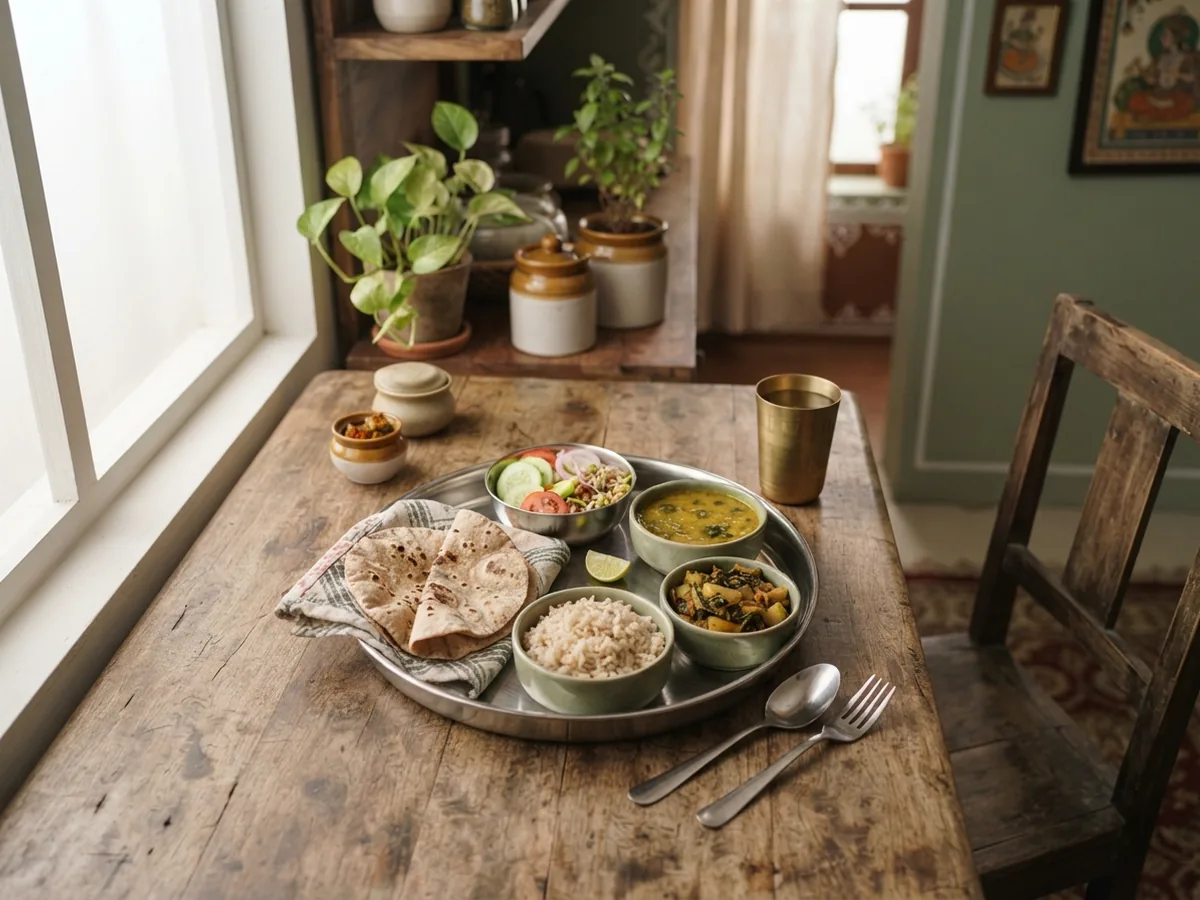
Choosing between roti and rice often feels like a dilemma, but in the context of a balanced Indian meal, both staples have a place. Rather than focusing on one versus the other, think about how you combine them with dals, vegetables, and proteins to create a satisfying plate that supports your wellness goals. To get started this week, try swapping half your usual portion of rice for a side of steamed vegetables, or pair your roti with a generous serving of protein-rich dal to help keep you full.
Understanding the Roti vs Rice Debate
For many, the preference for roti over rice stems from the belief that wheat has a lower glycemic index (GI). However, research suggests that when these staples are consumed as part of a typical North Indian mixed meal—which includes a pulse preparation and a vegetable—the difference in glycemic response between wheat chapatti and rice is not significantly different1.
It is important to remember that simply being a whole-grain food does not automatically qualify it as a low-GI food2. Factors such as the method of processing, the food's structural integrity, and how it is prepared play a vital role in how your body processes these carbohydrates2.
The Role of Glycemic Index in Indian Meals
The Glycemic Index (GI) is a tool used to measure how quickly a food may raise blood glucose levels. While some traditional Indian foods fall into the high-GI category, others, such as broken wheat upma or specific legume-based dishes, are classified as low-GI2. Research indicates that consumption of brown rice in place of white rice, or brown rice with legumes, can help reduce 24-h glucose and fasting insulin responses among overweight Asian Indians3.
When planning your meals, consider that the quality of the carbohydrate matters just as much as the source. Research indicates that whole grain-based cereal products are associated with the regulation of blood glucose4. If you are living with a condition like diabetes, it is essential to plan any significant dietary changes with your doctor or a registered dietitian to ensure your approach is tailored to your specific needs.
How Portion Control and Combinations Matter
Rather than eliminating a staple, focus on how your plate is balanced. Satiety—the feeling of fullness after a meal—is influenced by the fiber content, energy density, and the volume of the food5. Research suggests that consuming high-protein and high-fiber foods, which often lead to a lower energy density, may be effective in delaying the return of hunger5.
"One strategy for weight control would be to adopt a diet based on foods which are highly satisfying/satiating in order to help people control their energy intake without having to overtly restrict their eating or endure high levels of hunger in between meals5."
Judicious planning of accompaniments using low-GI legumes may favorably modify the glycemic response to high-GI foods in a meal2.
Beyond the Grain: Adding Fiber and Protein
The secret to a balanced Indian thali often lies in what sits beside the roti or rice. Adding protein sources like beans, chickpeas, or lentils can be a useful way to diversify your plate. For instance, white chickpea 'sundal' has been noted for its high resistant starch content2.
Furthermore, incorporating multigrain flours—which may include ingredients like defatted soya or bengal gram—can help attenuate the GI of your rotis4. Whole-grain products are rich in micronutrients and phytochemicals, which work together to support metabolic homeostasis4. Research suggests that high-protein and high-fiber foods may be effective in delaying the return of hunger5.
Practical Tips for Your Daily Thali
Making small, sustainable adjustments to your daily cooking can make a big difference over time. Here are a few practical ways to balance your plate:
- Mind your portions: Use your plate as a guide. Fill half your plate with vegetables (sabzi), a quarter with your protein source (dal or beans), and the remaining quarter with your grain (roti or rice).
- Include legumes: Adding legumes to your meal can help delay the return of hunger5 and may help reduce glycemic and insulinemic responses3.
- Mindful preparation: Choose cooking methods that retain the structure of the grain. For example, opting for whole grains over refined, processed flours is associated with the regulation of blood glucose4.
When to Consult a Professional
While these tips provide a foundation for healthy eating, individual nutritional needs can vary significantly based on your health history, activity level, and lifestyle. If you are managing a specific health condition, it is always best to work with a registered dietitian or your healthcare provider to create a meal plan that is safe and effective for you6.
Remember, wellness is a long-term journey. Small, consistent changes—like increasing your fiber intake or balancing your plate with more protein—are often more sustainable than strict elimination diets. Focus on building a relationship with food that makes you feel energized and nourished every single day.
Sources
- Glycemic Index of Wheat and Rice are Similar When Consumed as Part of a North Indian Mixed Meal - PMCUS National Institutes of Health, 2020
- Carbohydrate profiling & glycaemic indices of selected traditional Indian foodsUS National Institutes of Health
- Effect of brown rice, white rice, and brown rice with legumes on blood glucose and insulin responses in overweight Asian Indians: a randomized controlled trial - PubMedUS National Institutes of Health, 2014
- Glycemic Index and Sensory Evaluation of Whole Grain Based Multigrain Indian Breads (Rotis)US National Institutes of Health
- Research Report Satiety from rice-based, wheat-based and rice–pulse combination preparationsScienceDirect
- South Indian Cuisine with Low Glycemic Index Ingredients Reduces Cardiovascular Risk Factors in Subjects with Type 2 DiabetesJournal article, 2020