
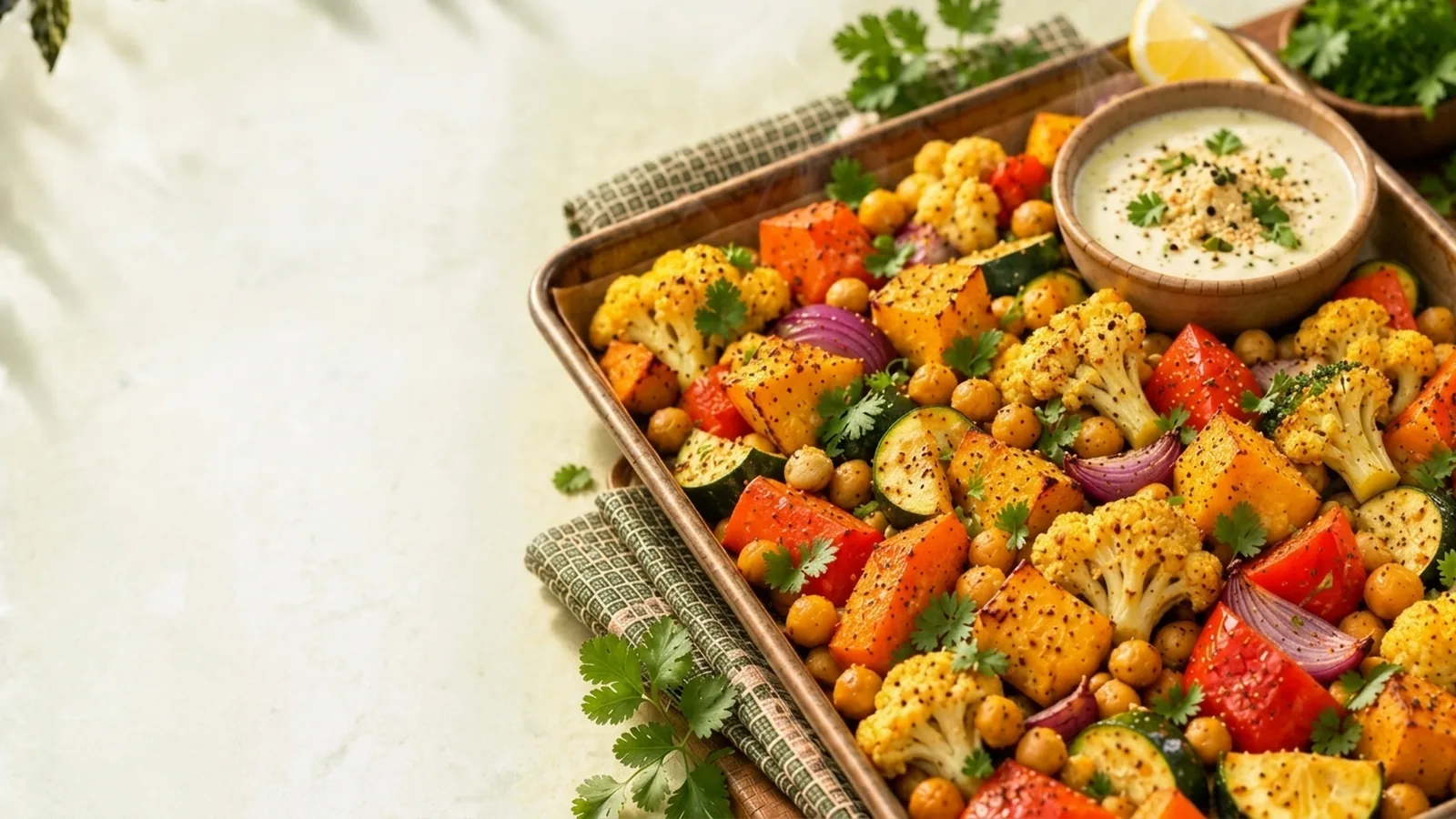
Before You Start
No chilli heat
This recipe contains no chilli ingredients and is naturally mild. To add heat, sprinkle 1/2 tsp of chilli flakes or cayenne pepper over the vegetables before roasting.
55 mins in total
25 mins hands-on (chopping and cooking), 30 mins hands-off.
Plan ahead: If using dried chickpeas, soak them overnight and boil until tender; for a shortcut, use two 400g tins of chickpeas, drained and rinsed.
Contains: Sesame
Vegan. We check for milk, gluten, tree nuts, peanuts, mustard, sesame and celery. Always check your own labels, especially for asafoetida (hing), which often contains wheat.
Ingredients
For the Roasted Tray
For the Creamy Dip & Garnish
Can't Find Something?
- 1 large red or yellow bell pepper instead of 1 medium capsicum, chopped. This is simply the UK supermarket name for the same vegetable.
- 1 medium courgette, chopped instead of 1 medium zucchini, chopped. Courgette is the standard UK term for zucchini and behaves identically.
Make It a Meal
Serve with warm flatbreads or a side of fluffy basmati rice for a complete meal.
Serve warm as a standalone lunch or pair with a whole grain roti for a complete meal.
Good to Know
Nutrition values are approximate, per serving. IDYORA shares general wellness information — not medical advice.
Watch the Recipe
Key moments and transcriptStep by Step Instructions
-
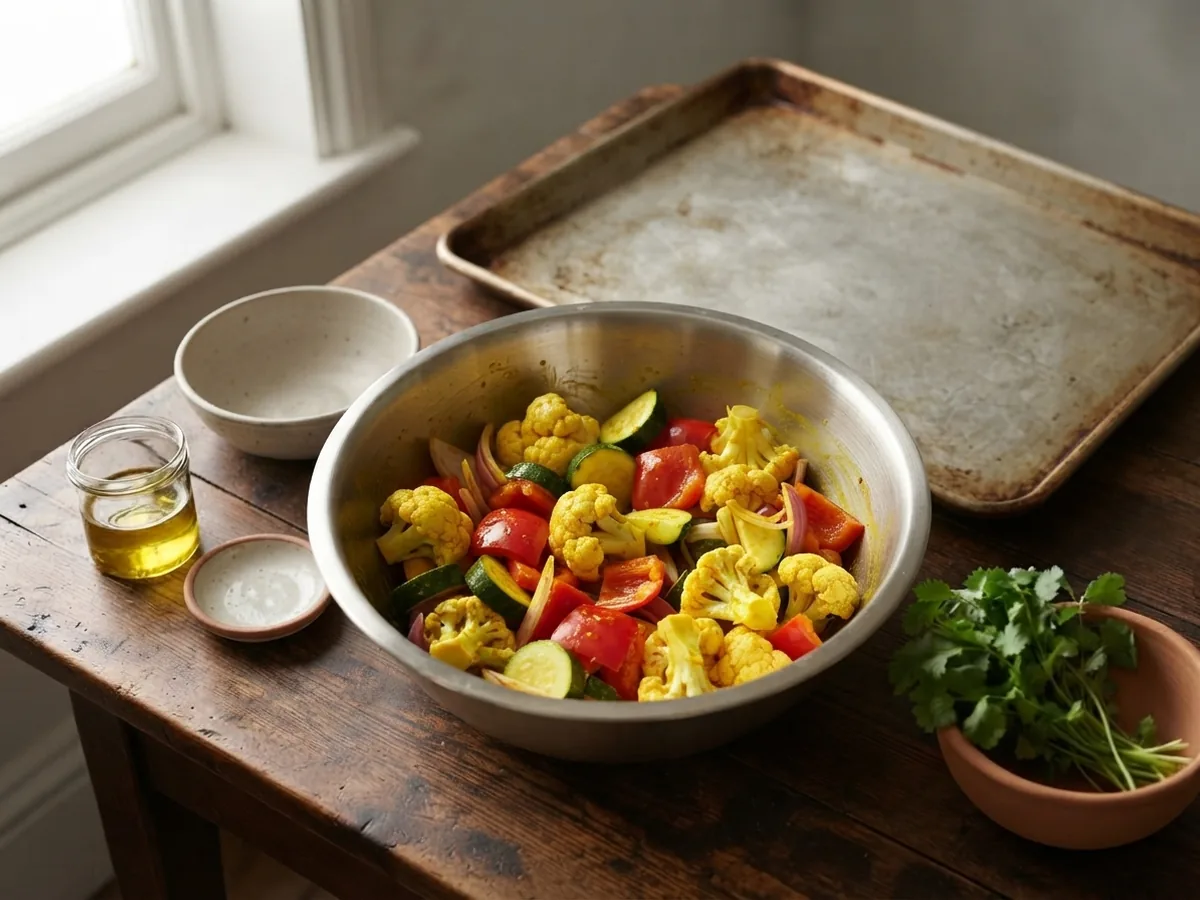
Prepare the Vegetables
Preheat your oven to 200°C. In a large bowl, toss the chopped cauliflower, capsicum, zucchini, and onion with 2 tbsp of vegetable oil, 1 tsp turmeric, and 1/2 tsp salt until evenly coated.
Done when: Vegetables should be evenly coated in a bright yellow turmeric oil; avoid overcrowding the bowl to ensure every piece is seasoned.
15 mins hands-on prep
-
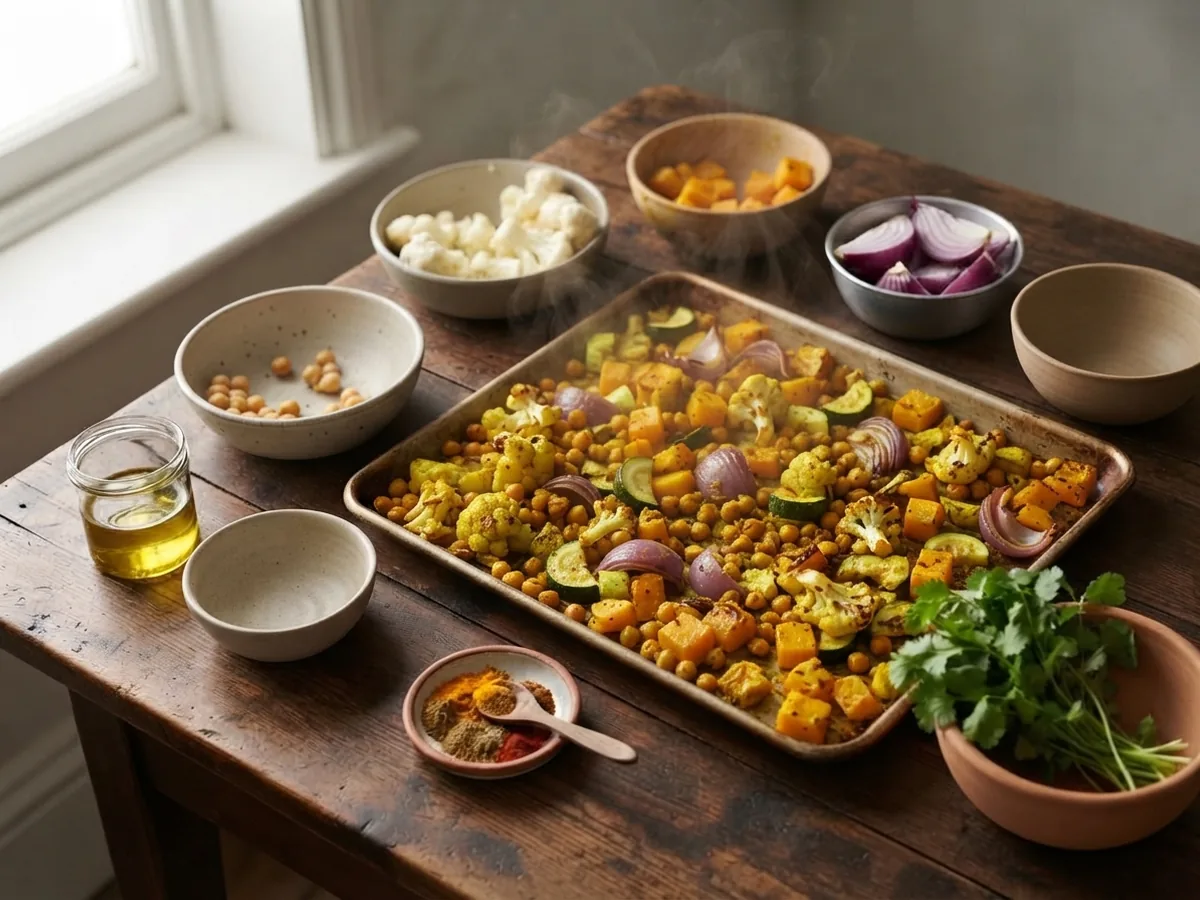
Roast the Tray
Spread the seasoned vegetables and 2 cups of boiled chickpeas on a large baking sheet. Drizzle with the remaining 1 tbsp oil and roast for 25-30 minutes until the vegetables are tender and the chickpeas are slightly crisp.
Done when: The cauliflower should be tender when pierced with a fork and the chickpeas should have a slight crunch; avoid burning the chickpeas by checking them at the 25-minute mark.
30 mins hands-off
-
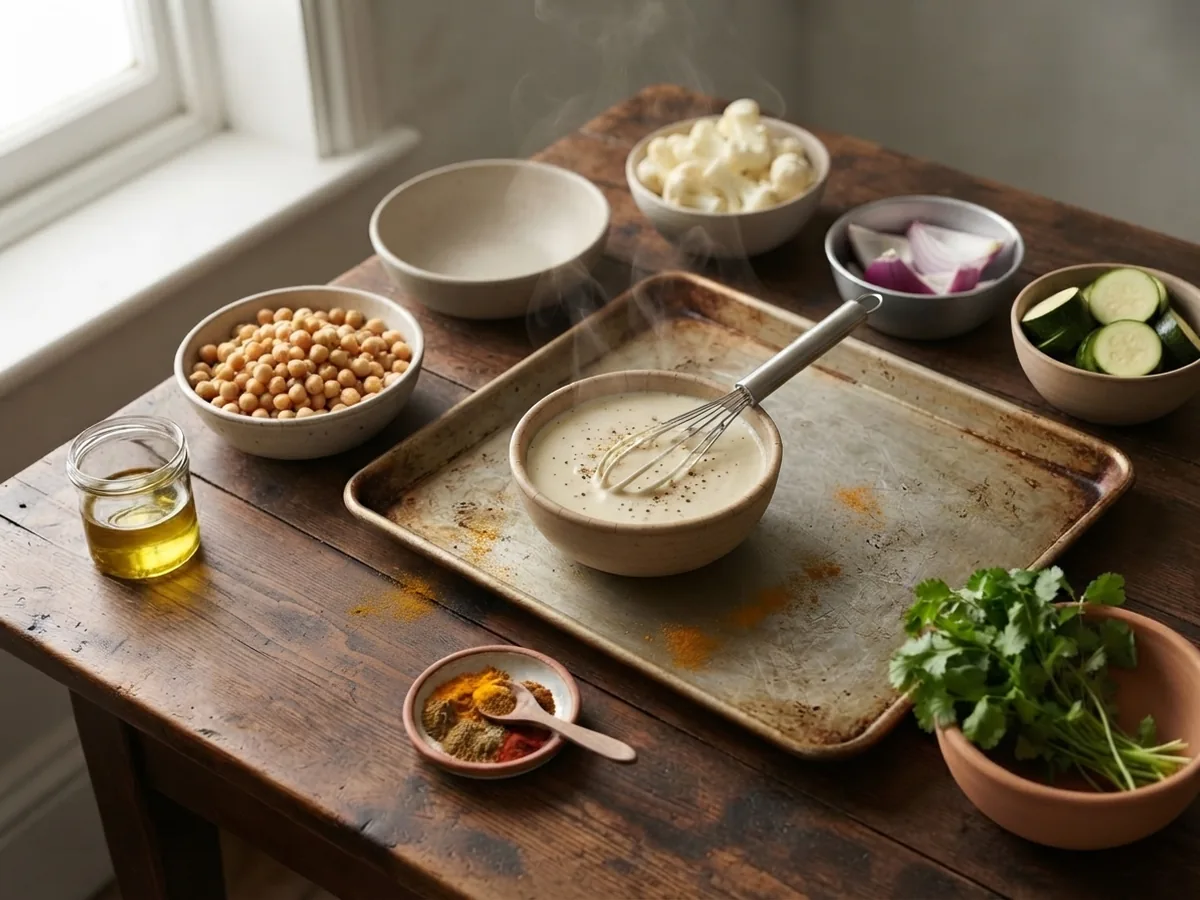
Make the Dip
While the tray roasts, whisk together 1/2 cup tahini, 2 tbsp lemon juice, 1/4 cup water, and 1/2 tsp salt in a small bowl until smooth and creamy. This healthy fat source supports nutrient absorption.
Done when: The mixture should be pale, smooth, and pourable; if it looks lumpy, add a tiny bit more water, one teaspoon at a time.
5 mins hands-on prep
-
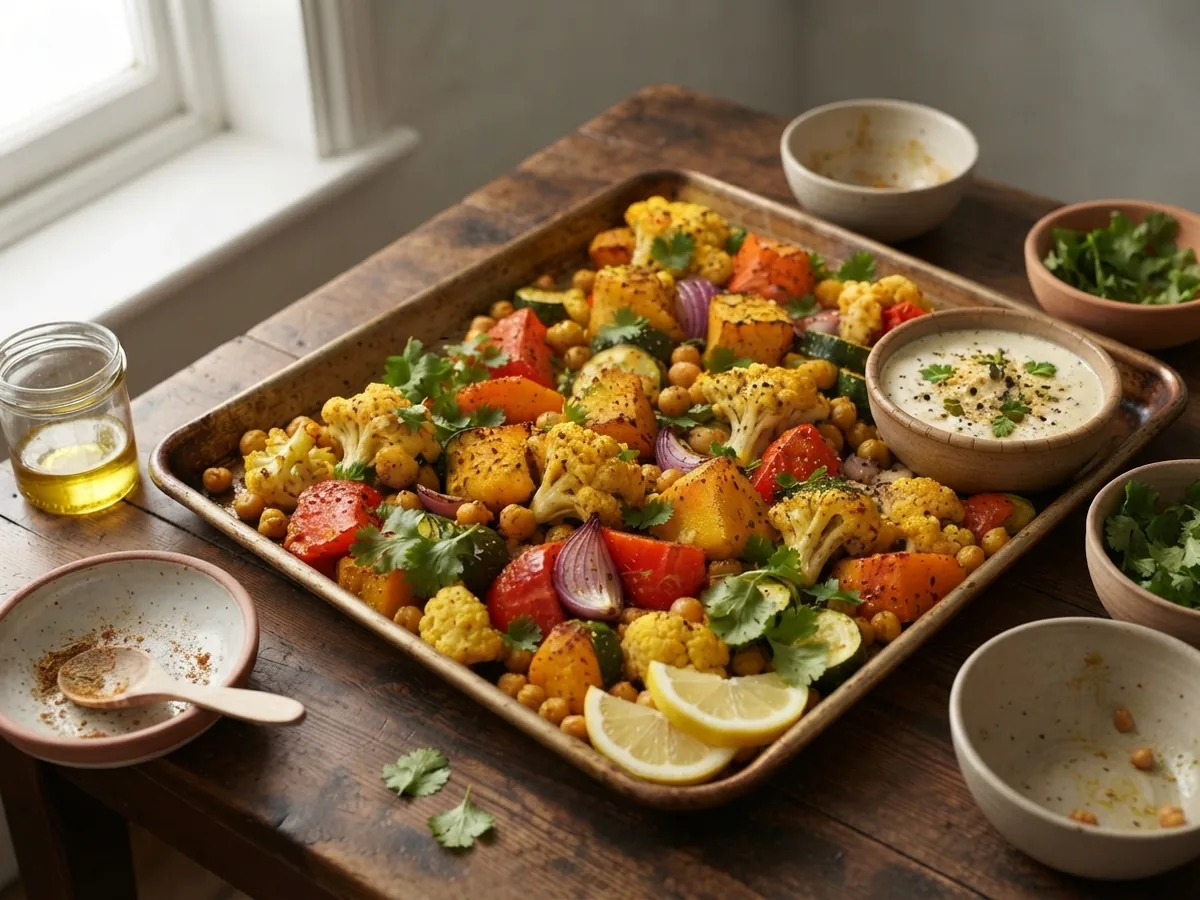
Assemble and Serve
Remove the baking sheet from the oven once the vegetables are fork-tender and the chickpeas are golden-brown. Garnish the hot tray with 1/4 cup chopped coriander leaves and serve immediately with the tahini dip and sliced lemon wedges on the side.
Done when: The vegetables should be golden and fragrant; serve immediately while hot to enjoy the contrast between the roasted vegetables and the cool, creamy dip.
5 mins hands-on
“Good food is a step towards a healthier, happier you.”
Enjoy!Made it? Rate it
Be the first to rate it
Why It's Good for You
Chickpeas are a wholesome source of plant-based protein and dietary fiber, which are essential components of a balanced diet1. By incorporating a variety of colorful vegetables like cauliflower, capsicum, and zucchini, you add important vitamins, minerals, and antioxidants such as beta-carotene and folate to your meal1. The inclusion of healthy fats, such as those found in tahini, is important as they support the absorption of fat-soluble nutrients from the vegetables1.
Traditional processing techniques, such as boiling, are effective ways to prepare legumes for consumption1. Research suggests that while the digestibility of plant proteins can vary, legumes remain a valuable part of a vegetarian diet, especially when complemented by other food groups2,1. Consuming a variety of pulses and vegetables is recommended to help meet daily nutritional needs, as these foods provide both energy and essential micronutrients3,4. Always consult with your doctor or a registered dietitian when making significant changes to your dietary patterns, especially if you are managing specific health conditions.
Sources
4
- Nutritional quality and health benefits of chickpea (Cicer arietinum L.): a review | British Journal of Nutrition | Cambridge CoreCambridge University Press, 2012
- True ileal digestibility of legumes determined by dual-isotope tracer method in Indian adultsUS National Institutes of Health, 2019
- Enhancing nutrition with pulses: defining a recommended serving size for adultsUS National Institutes of Health, 2017
- Available lysine and digestible amino acid contents of proteinaceous foods of Indiaexa.ai, 2012