Before You Start
Medium
The two dry red chillies provide the heat; use one for a milder bowl or omit them entirely if you prefer no spice.
Make it with no chilli
Simply leave the dry red chillies out of the tadka step; the dish remains deeply aromatic from the garlic and cumin.
35 mins in total
10 mins hands-on (chopping and cooking), 25 mins hands-off.
Contains: Milk (dairy)
Vegetarian · contains dairy. We check for milk, gluten, tree nuts, peanuts, mustard, sesame and celery. Always check your own labels, especially for asafoetida (hing), which often contains wheat.
Ingredients
For the Lentil Bowl
For the Garlic Tadka
For the Side Salad & Serving
Can't Find Something?
- 1/4 tsp dried chilli flakes instead of 2 dry red chilli. Provides a similar level of heat if whole dried chillies are unavailable.
- 2 tbsp unsalted butter instead of 2 tbsp ghee. Butter mimics the richness of ghee, though it has a slightly lower burn point.
Make It a Meal
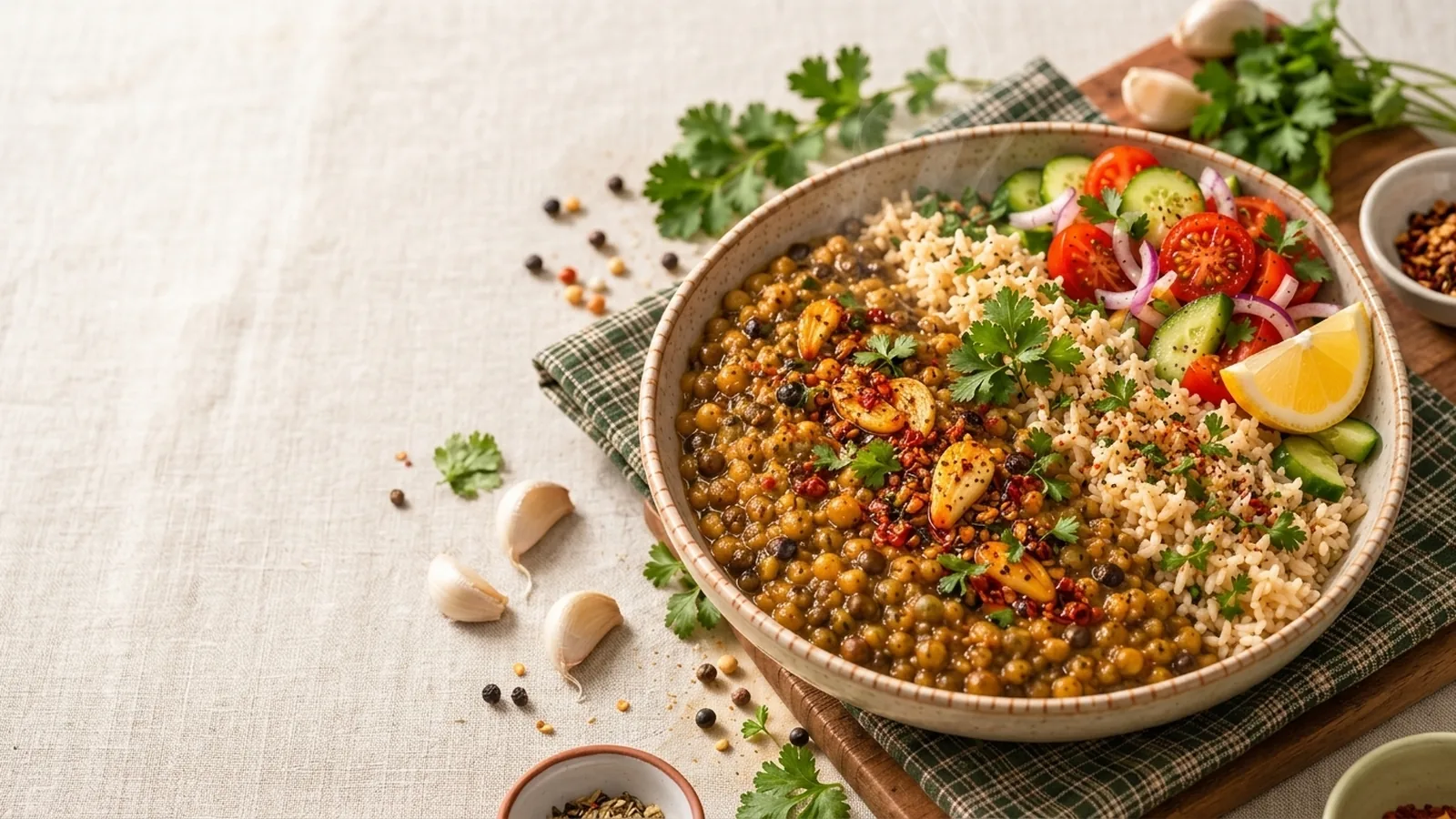
Serve with the provided rice, fresh tomato, cucumber, onion salad, and a squeeze of fresh lemon.
Serve warm as a complete, nourishing lunch alongside the fresh vegetable salad.
Good to Know
Nutrition values are approximate, per serving. IDYORA shares general wellness information — not medical advice.
Step by Step Instructions
-
Cook the Lentils
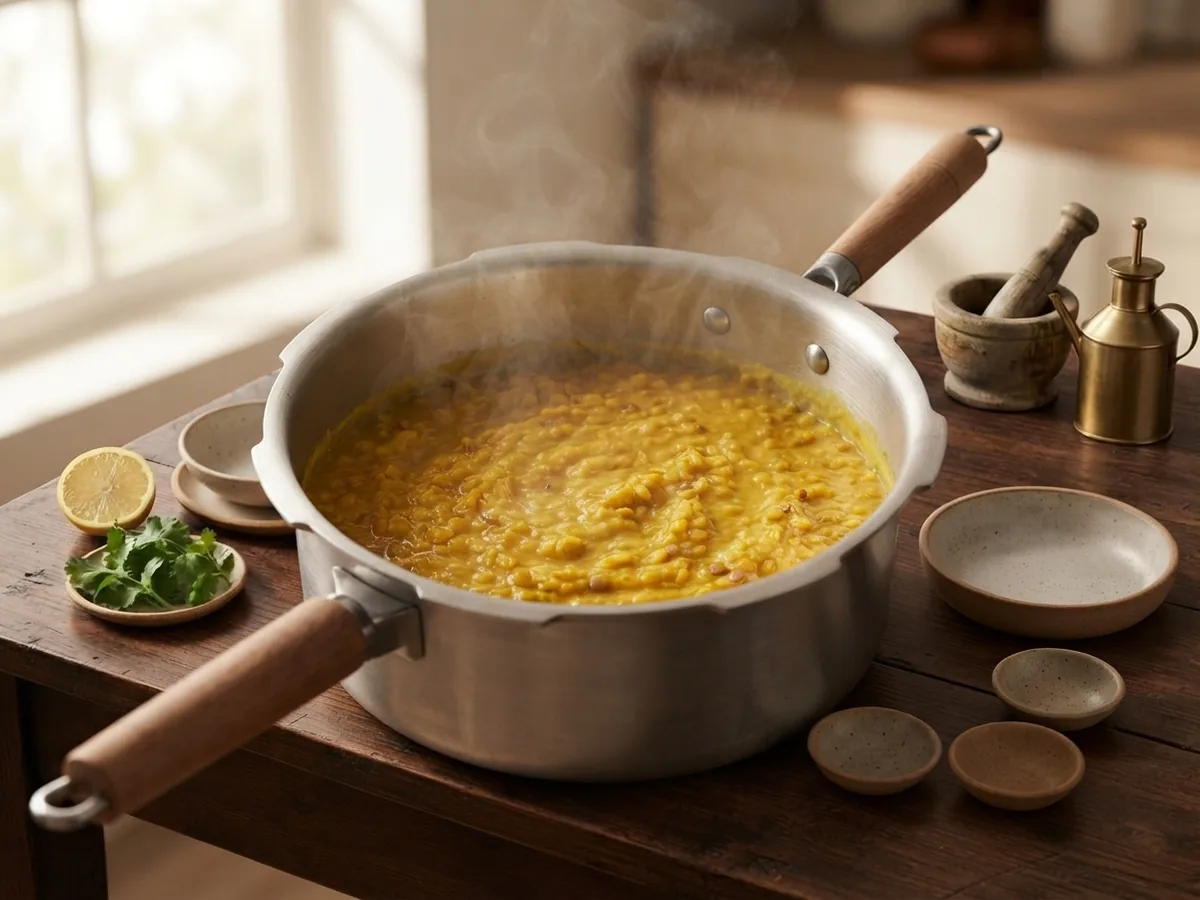
Rinse ¼ cup each of masoor, moong, toor, chana, and urad dal under cold water until it runs clear. In a pressure cooker, combine the rinsed lentils with 1 tsp turmeric, 1 tsp salt, and 4 cups water. Cook on medium-high heat for about 15 minutes or 3-4 whistles until the lentils are soft, creamy, and have completely broken down into a thick, uniform consistency.
Done when: The lentils should be soft enough to mash easily with a spoon and have a thick, porridge-like consistency; do not undercook them or the texture will be gritty.
25 mins hands-off
-
Prepare the Tadka
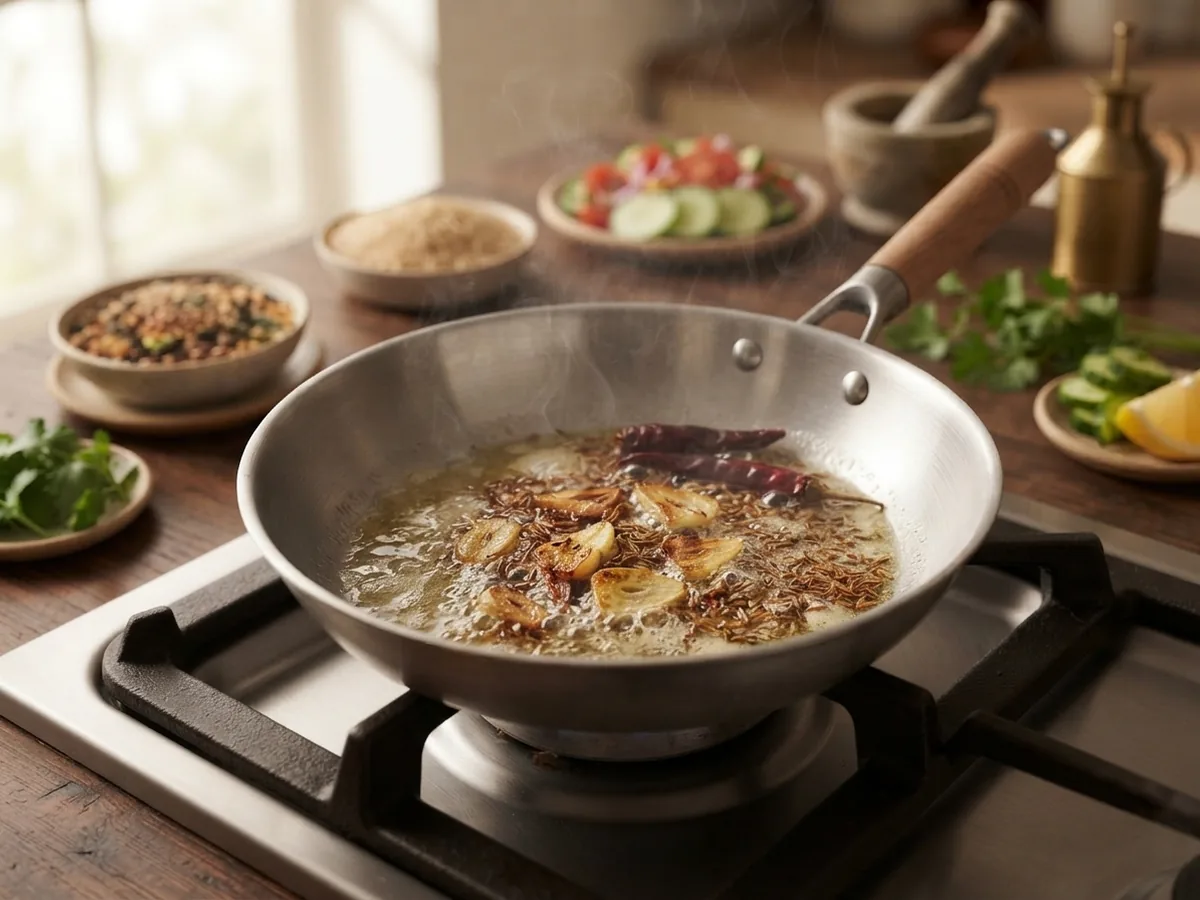
In a small tadka pan, heat 2 tbsp ghee on medium heat until it shimmers. Add 1 tsp cumin seeds and 2 dry red chillies, letting them sizzle for about 30 seconds until the cumin pops. Stir in 6-8 chopped garlic cloves and sauté for 1-2 minutes until the garlic turns golden brown and releases a strong, toasted aroma.
Done when: The garlic must be a light golden brown and smell fragrant; if it turns dark brown or black, it will taste bitter and ruin the dish.
5 mins hands-on
-
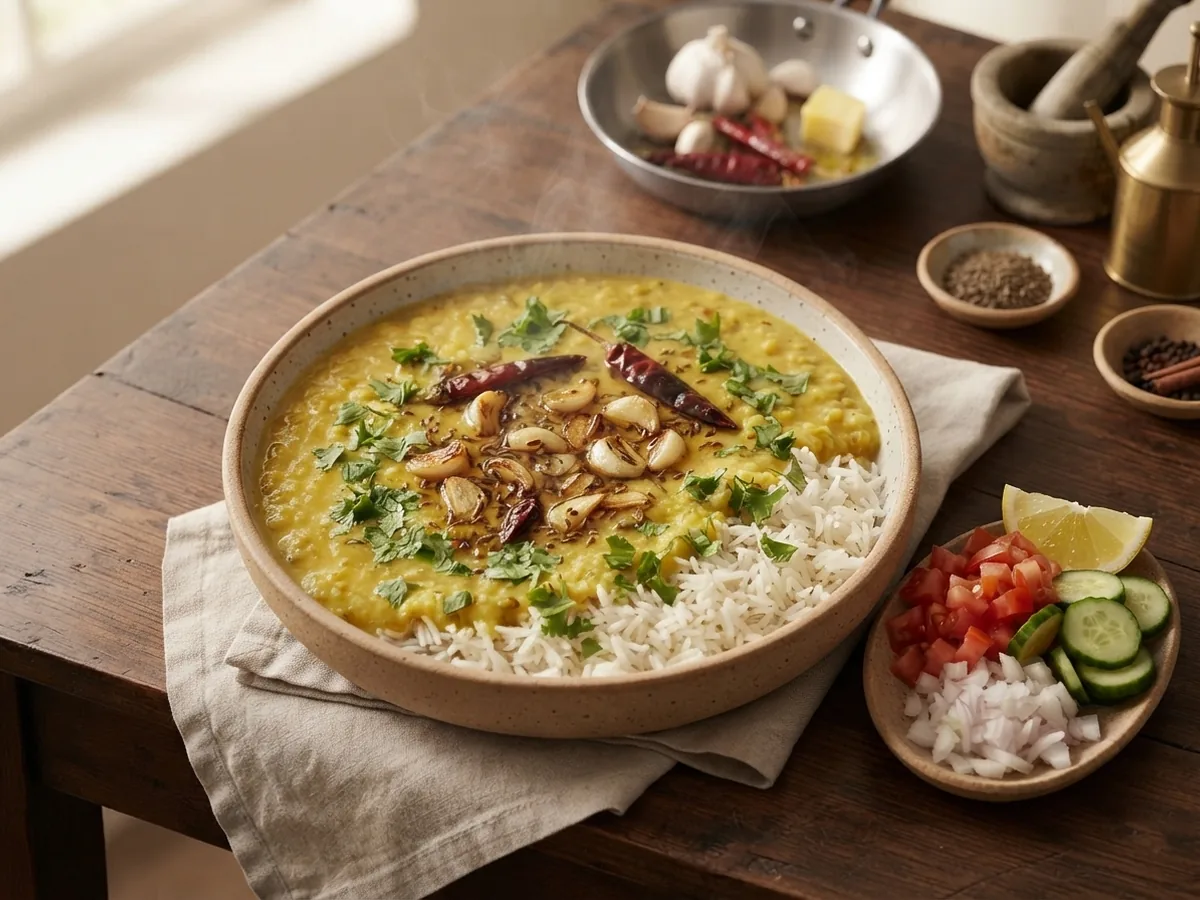
Assemble the Bowl
Pour the hot garlic tadka over the cooked lentils and stir gently to combine. Scoop 1 cup of cooked rice into a bowl, ladle the dal over it, and top with 2 tbsp chopped coriander leaves. Arrange the chopped tomato, cucumber, and onion on the side, and place a fresh lemon slice on top to serve as part of a balanced diet.
Done when: The tadka should sizzle when it hits the lentils, releasing a burst of aroma; stir gently so the lentils remain creamy and do not become watery.
5 mins hands-on
“Good food is a step towards a healthier, happier you.”
Enjoy!Made it? Rate it
Be the first to rate it
Why It's Good for You
This dish is a classic example of how traditional Indian dietary practices support everyday wellness1. Lentils are a nutrient-dense food, serving as an excellent source of plant protein, dietary fibre, and essential minerals like iron and folate2. Including fibre-rich foods like lentils in your diet helps you feel full for longer, which supports healthy digestion1.
By pairing these lentils with brown rice, you are choosing a 'lente' carbohydrate source. Such carbohydrates are absorbed slowly in the body due to their high fibre content, which helps in blunting post-meal blood glucose responses1. Research indicates that replacing refined grains with brown rice and adding legumes can be a beneficial shift for maintaining metabolic health among Asian Indians3.
Furthermore, the garlic in the tempering is not just for flavour; Allium vegetables are known to contain bioactive substances that contribute to a balanced diet4. When paired with vitamin C-rich vegetables like tomatoes, the iron from the lentils is better supported for absorption4. Always ensure your individual dietary needs are met by discussing significant changes with your doctor or a registered dietitian.
Sources
4
- ‘Old Is Gold’: How Traditional Indian Dietary Practices Can Support Pediatric Diabetes Managementexa.ai, 2021
- Effect of Adding Pulses to Replace Protein Foods and Refined Grains in Healthy Dietary PatternsUS National Institutes of Health
- Effect of brown rice, white rice, and brown rice with legumes on blood glucose and insulin responses in overweight Asian Indians: a randomized controlled trial - PubMedUS National Institutes of Health, 2014
- Beyond seasoning nutrients bioactive ingredients and healthcare effects of Allium vegetables - PMCUS National Institutes of Health