Why a Cup of Atta, Rava or Rice Is Not a Fixed Calorie Count
Measuring staples by volume can lead to inconsistencies. Learn why using a kitchen scale for your main ingredients helps bring precision to your cooking.
 By IDYORA Guides Desk 3 Oct 2026 6 min read
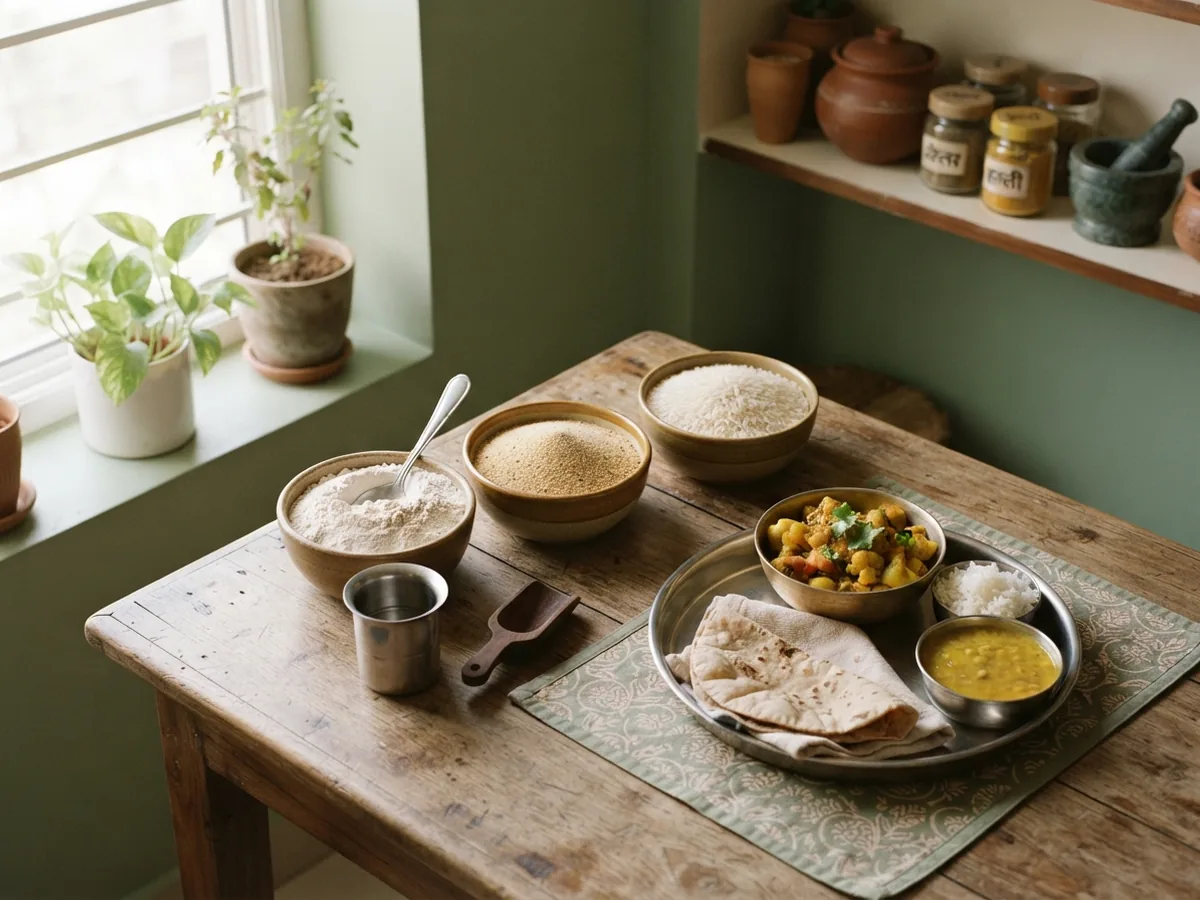
In our Indian kitchens, we often rely on the trusty katori or a standard measuring cup to portion out our daily staples. However, because these tools measure volume rather than mass, they can lead to significant inconsistencies in your daily intake, as the same cup can hold vastly different amounts depending on how loosely or tightly the ingredient is packed. By shifting your focus to weighing your main staples—like atta, rava, or rice—you can gain a clearer understanding of your nutrition, which supports a balanced diet.
The Cup vs. Grams Dilemma
For generations, the "cup" has been the universal language of Indian home cooking. Whether it is a steel katori passed down through the family or a plastic measuring cup from a baking set, we use these vessels to scoop out everything from besan for chillas to rava for upma. The problem arises when we try to use these volume-based measurements to track our daily nutrition.
Volume measures how much space an ingredient occupies, while weight measures how much it actually contains. Because different ingredients have different densities and textures, a "cup" of one ingredient is rarely equal to a "cup" of another in terms of mass. Furthermore, even with the same ingredient, the way you fill the cup—whether you scoop it loosely, tap it against the counter, or press it down firmly—can change the final weight significantly. If you are managing a specific health condition, it is always best to plan any significant dietary changes with your doctor or a registered dietitian.
Why Weight Matters More Than Volume
The main staple in any meal—the rice in your pulao, the atta in your phulkas, or the besan in your pakoras—usually provides the bulk of the calories in that dish. When this primary ingredient is measured inconsistently, the nutritional profile of the entire meal shifts.
Think of it this way: if your daily morning upma is measured by a "cup," but that cup varies in how tightly it is packed from day to day, your weekly intake becomes unpredictable. While we often focus on the small details of spices or garnishes, it is the density of the base ingredient that carries the most weight. By weighing your main staples, you remove the guesswork. You do not need to weigh every single ingredient in your kitchen; focusing on the one or two items that form the foundation of your meals is enough to bring consistency to your routine.
The Science of Density: Comparing Common Staples
To understand why volume is an unreliable metric, we can look at how different staples behave when measured by a standard US cup (approximately 240 ml). According to the USDA FoodData Central, the weight of these ingredients varies drastically, which in turn changes the caloric profile of the cup.
- Semolina (Rava): The weight of a cup of semolina can vary significantly depending on how it is scooped or settled into the measuring tool.
- All-Purpose Wheat Flour (Maida/Atta): The weight of a cup of flour varies based on the extraction rate of the wheat1.
- Chickpea Flour (Besan): The weight of a cup of besan is inconsistent due to its fine texture and tendency to settle, making weight a more reliable measure.
- Raw White Long-Grain Rice: A cup of raw white long-grain rice varies in weight based on how it is packed. Milled white rice contains 360 kcal per 100 g1.
"Different types of cereals, such as wheat and rice, have varying energy values per 100 g depending on their extraction rates and processing methods1."
This data highlights that even if two ingredients have similar calorie counts per 100 grams, the way they pack into a cup creates a massive discrepancy. For context, the FAO notes that milled white rice contains 360 kcal per 100 g1. Because rice is denser than besan, you are consuming significantly more energy in a "cup" of rice than in a "cup" of chickpea flour.
How to Measure Your Staples Accurately
You do not need to abandon your favorite katoris or measuring cups to achieve consistency. Instead, you can calibrate them to work for you. Here is a simple approach to bring precision to your kitchen:
1. The One-Time Weigh-In: Take your preferred measuring cup or katori and fill it with your staple (like atta or rava) exactly as you usually do. Place it on a kitchen scale and note the weight in grams.
2. Mark Your Tool: Write that weight down on a small piece of tape or a label and stick it to the handle of your cup or the bottom of your katori. Now, every time you use that cup, you know exactly how many grams you are working with.
3. Calculate from Grams: When you look up the nutritional information for your staple, check the pack label or a reliable food composition database. Use the formula: (kcal per 100 g ÷ 100) × your measured weight = total kcal.
4. Mind the Density: If you are comparing two different online recipes, remember that their "one cup" might be a different size than yours. Always check the gram weight if it is provided, or stick to your own calibrated measurements.
Practical Tips for Consistent Home Cooking
Consistency is the secret ingredient to understanding your nutrition. To keep your measurements reliable throughout the week, consider these habits:
- Level It Off: Always use a flat edge, like the back of a knife, to level off your cup. Avoid scooping and packing the ingredient down, as this increases the density and leads to an inaccurate weight.
- Consistency is Key: Whether you scoop or pour, try to use the same method every time. If you prefer to scoop directly from the bag, ensure you do it the same way each time so your "cup" remains consistent.
- Focus on the Foundation: You do not need to weigh your vegetables or spices. Simply weighing the dry rice, dal, rava, atta, or besan is usually sufficient to give you a much more accurate picture of your daily intake.
- Keep Your Database Handy: Once you have weighed your staples, keep a small note or digital list of the gram-to-calorie conversion for your most-used items. This makes future meal planning much faster.
By taking these small steps, you can enjoy your traditional Indian meals with more confidence, knowing that your portions are consistent and balanced. Remember, nutrition is a long-term journey, and understanding your ingredients is a wonderful way to support your overall wellness.
Sources
1
- CerealsFAO