
Before You Start
No chilli heat
This recipe contains no chilli ingredients and is mild. To make it hotter, add 1/2 tsp of red chilli powder during step 3.
35 mins in total
15 mins hands-on (chopping and cooking), 20 mins hands-off.
Plan ahead: Soak 1 cup of soya chunks in boiling water for 5 minutes before you begin cooking; no shortcut exists for this step.
Contains: Milk (dairy)
Vegetarian · contains dairy. We check for milk, gluten, tree nuts, peanuts, mustard, sesame and celery. Always check your own labels, especially for asafoetida (hing), which often contains wheat.
Ingredients
For the Soya Stew
For the Jeera Rice
Make It a Meal
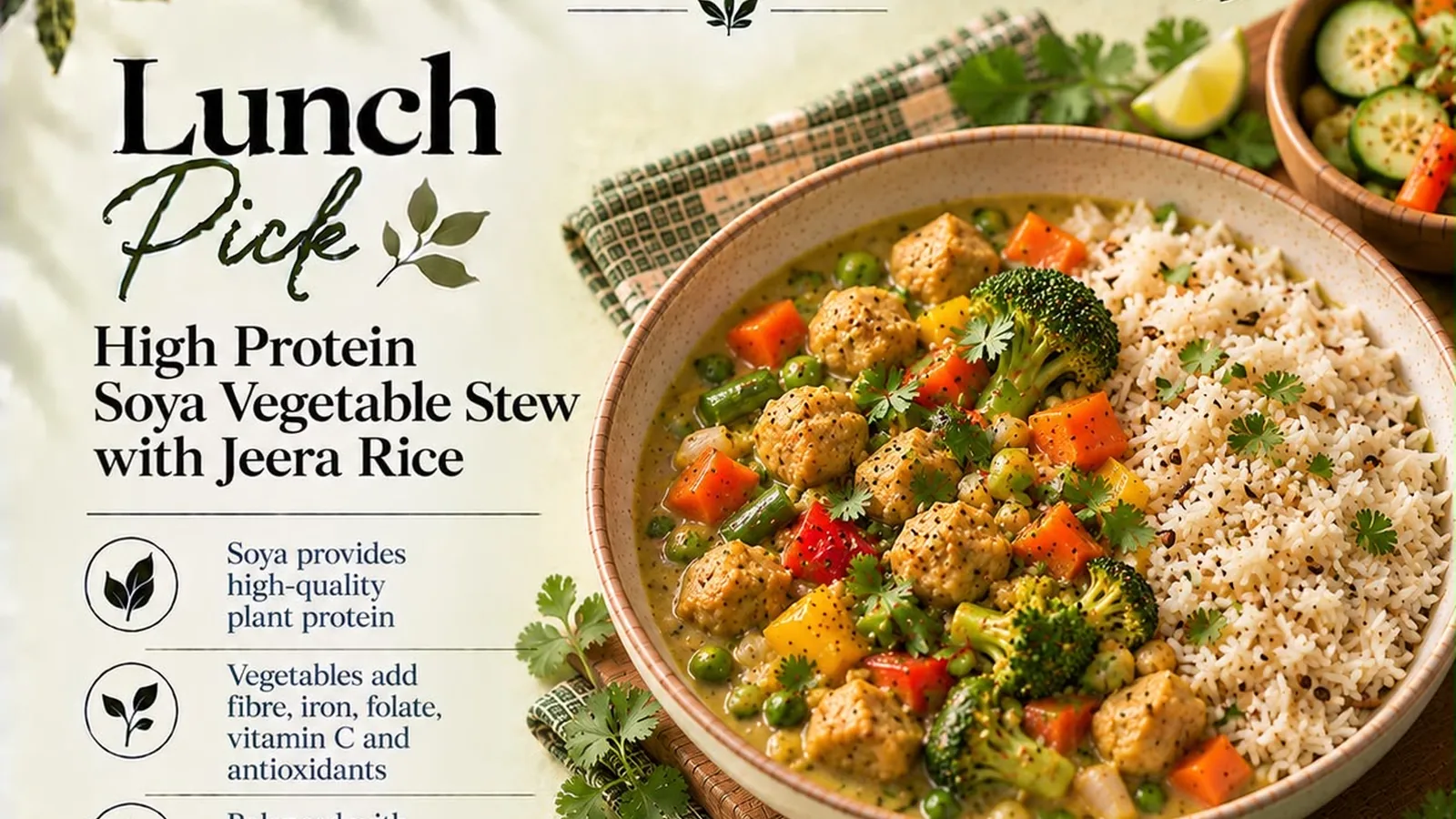
Serve with the cumin-tossed rice as a complete, protein-rich meal.
Serve warm in a deep bowl, garnished with a handful of fresh coriander leaves.
Good to Know
Nutrition values are approximate, per serving. IDYORA shares general wellness information — not medical advice.
Watch the Recipe
Key moments and transcriptStep by Step Instructions
-
Prepare Soya Chunks
Soak 1 cup of soya chunks in hot water for 5 minutes. Drain thoroughly and squeeze out all excess water so they are ready to absorb the flavors.
Done when: The soya chunks should feel spongy and soft after squeezing out the water. Do not skip the squeezing step, or the chunks will taste watery and won't absorb the gravy.
8 mins hands-off
-
Sauté Aromatics
Heat 1 tsp ghee in a pressure cooker on medium heat. Add 1 tsp cumin and let it splutter, then add 1 chopped onion, 1 tsp ginger-garlic paste, and 1 chopped tomato, cooking for about 3 minutes until the onions turn translucent and the tomatoes soften.
Done when: The cumin should pop and sizzle immediately in the ghee, and the onions should look soft and shiny. If the onions remain crisp, the base will lack depth.
7 mins hands-on
-
Cook the Stew
Add 0.5 cup mixed vegetables, 0.25 tsp turmeric, 1 tsp coriander powder, 0.5 tsp salt, and the squeezed soya chunks. Stir for 1 minute on medium heat, pour in 1.5 cups water, and pressure cook for 2 whistles until the vegetables are tender and the soya is plump.
Done when: The vegetables should be fork-tender and the soya chunks plump. Ensure you wait for the pressure to release naturally to avoid undercooking.
12 mins hands-off
-
Thicken and Finish
Once steam releases, open the lid and turn the flame to low. Whisk 2-3 tbsp besan with 4 tbsp water into a smooth slurry, stir it into the stew, add 0.25 tsp garam masala, and simmer for 2 minutes until the gravy thickens and coats the back of a spoon.
Done when: The stew should be thick enough to coat the back of a spoon. If it is too thin, simmer for an extra minute; if too thick, add a splash of water.
5 mins hands-on
-
Serve with Rice
Serve the hot stew alongside 1 cup cooked rice that has been tossed with 1 tsp toasted cumin seeds in a pan for 1 minute until fragrant. Enjoy this balanced meal as part of a healthy lifestyle1,2. Please plan any dietary changes with your doctor or a registered dietitian.
Done when: The rice should smell fragrant and nutty from the toasted cumin. Do not burn the cumin seeds when tossing them in the pan; they should turn golden brown, not black.
3 mins hands-on
“Good food is a step towards a healthier, happier you.”
Enjoy!Made it? Rate it
Be the first to rate it
Why It's Good for You
This meal combines high-quality plant-based protein from soya with the fiber and vitamins found in mixed vegetables1,2,3. Soya is unique among legumes for its protein and fat profile, making it a valuable addition to vegetarian diets2. Including a variety of vegetables in your daily meals supports a balanced intake of nutrients, including vitamins C and A, as well as essential dietary fiber3. Fiber is linked to positive health outcomes, including the management of cardiovascular health3. By pairing these with rice, you create a meal that provides complex carbohydrates for sustained energy throughout your day1. As dietary needs vary, please plan any significant changes to your nutrition with your doctor or a registered dietitian.
Sources
3
- Determination of macronutrient compositions in selected, frequently consumed cereals, cereal based foods, legumes and pulses prepared according to common culinary methods in Sri LankaUS National Institutes of Health
- The Role of Soy in Vegetarian DietsUS National Institutes of Health
- Carbohydrates, Dietary Fiber, and Resistant Starch in White Vegetables: Links to Health Outcomes - PMCUS National Institutes of Health