
Before You Start
Medium
The 1-2 small green chillies in the dip provide the heat. Use only one chilli for a mild dip or two for a noticeable kick.
Make it with no chilli
Simply omit the green chillies from the blender; the dip will remain creamy and fresh without any spice.
40 mins in total
40 mins hands-on (chopping and cooking).
Plan ahead: Boil the arbi (taro root) until tender but firm, then cool completely before peeling; this is best done a few hours or the night before to ensure the sticks hold their shape.
Contains: Milk (dairy), Sesame
Vegetarian · contains dairy. We check for milk, gluten, tree nuts, peanuts, mustard, sesame and celery. Always check your own labels, especially for asafoetida (hing), which often contains wheat.
Ingredients
For the Arbi Fries
For the Coconut Dip
Can't Find Something?
- 500g boiled new potatoes instead of 500 g boiled arbi. New potatoes have a similar waxy texture and crisp up well in ghee.
- 40g desiccated coconut soaked in 2 tbsp warm water instead of 1/2 cup fresh coconut, grated. Rehydrated desiccated coconut mimics the texture of fresh coconut for blending.
- 3-4 tbsp unsalted butter or sunflower oil instead of 3-4 tbsp ghee. Provides the necessary fat to crisp the fries if ghee is unavailable.
Make It a Meal
Serve as a snack or a side dish alongside a light lentil dal or a bowl of spiced vegetable soup.
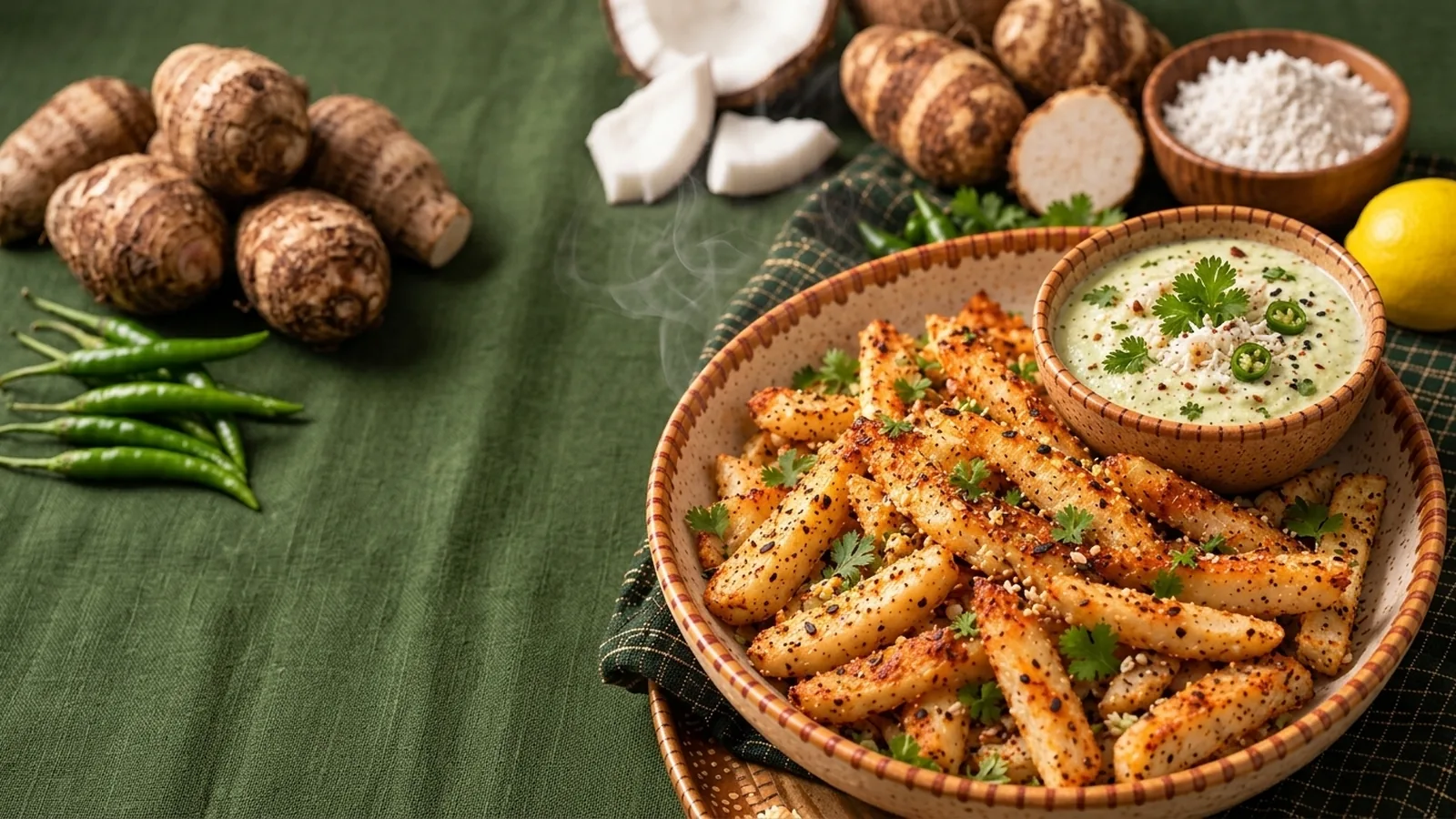
Serve these crispy arbi fries hot alongside the fresh coconut dip for a perfect Navratri snack.
Good to Know
Nutrition values are approximate, per serving. IDYORA shares general wellness information — not medical advice.
Step by Step Instructions
-
Prepare Arbi Sticks
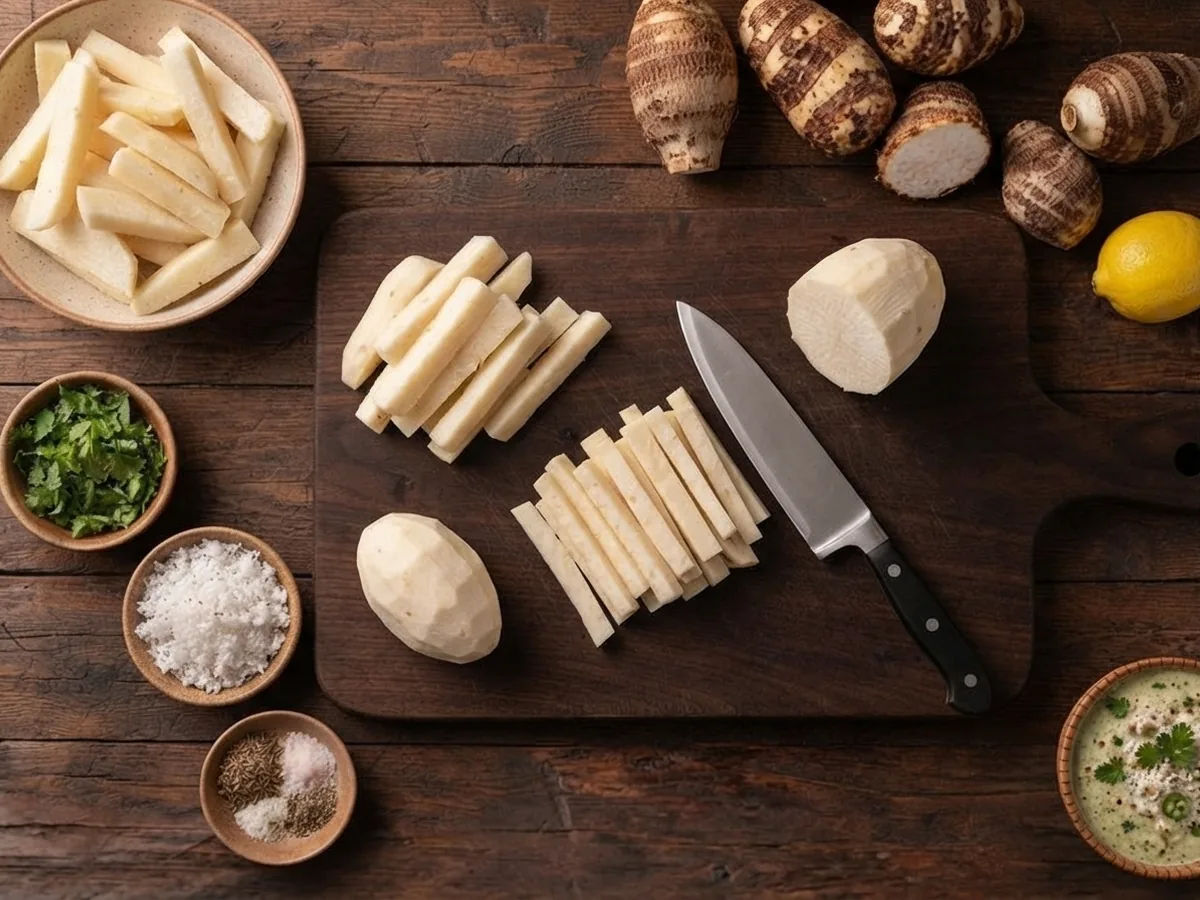
Peel 500 g of boiled arbi and slice them into 1-cm thick, fry-like batons. Pat the sticks dry with a clean kitchen towel to ensure they crisp up perfectly without sticking, leaving them ready for the pan.
Done when: The arbi should be cut into uniform, dry batons; if the pieces remain damp, they will steam rather than turn crispy in the pan.
15 mins hands-on prep
-
Make Coconut Dip
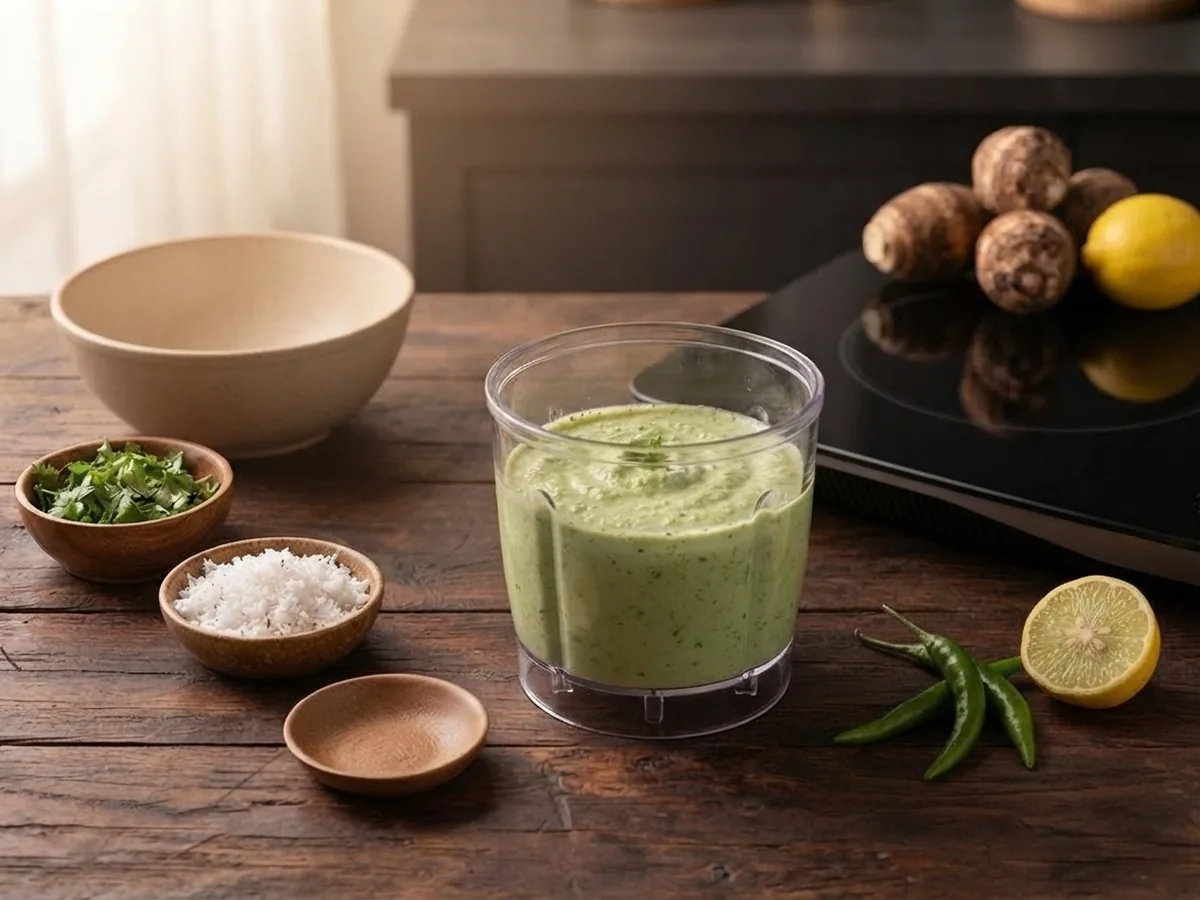
In a small blender, combine 1/2 cup fresh grated coconut, 1-2 chopped green chillies, 1 tbsp lemon juice, 2 tbsp chopped coriander leaves, and 1 pinch of rock salt. Blend until smooth, adding a tiny splash of water if needed to reach a creamy, spreadable consistency.
Done when: The dip should look bright green and feel smooth and spreadable; avoid adding too much water or it will become a thin liquid.
5 mins hands-on prep
-
Crisp the Arbi
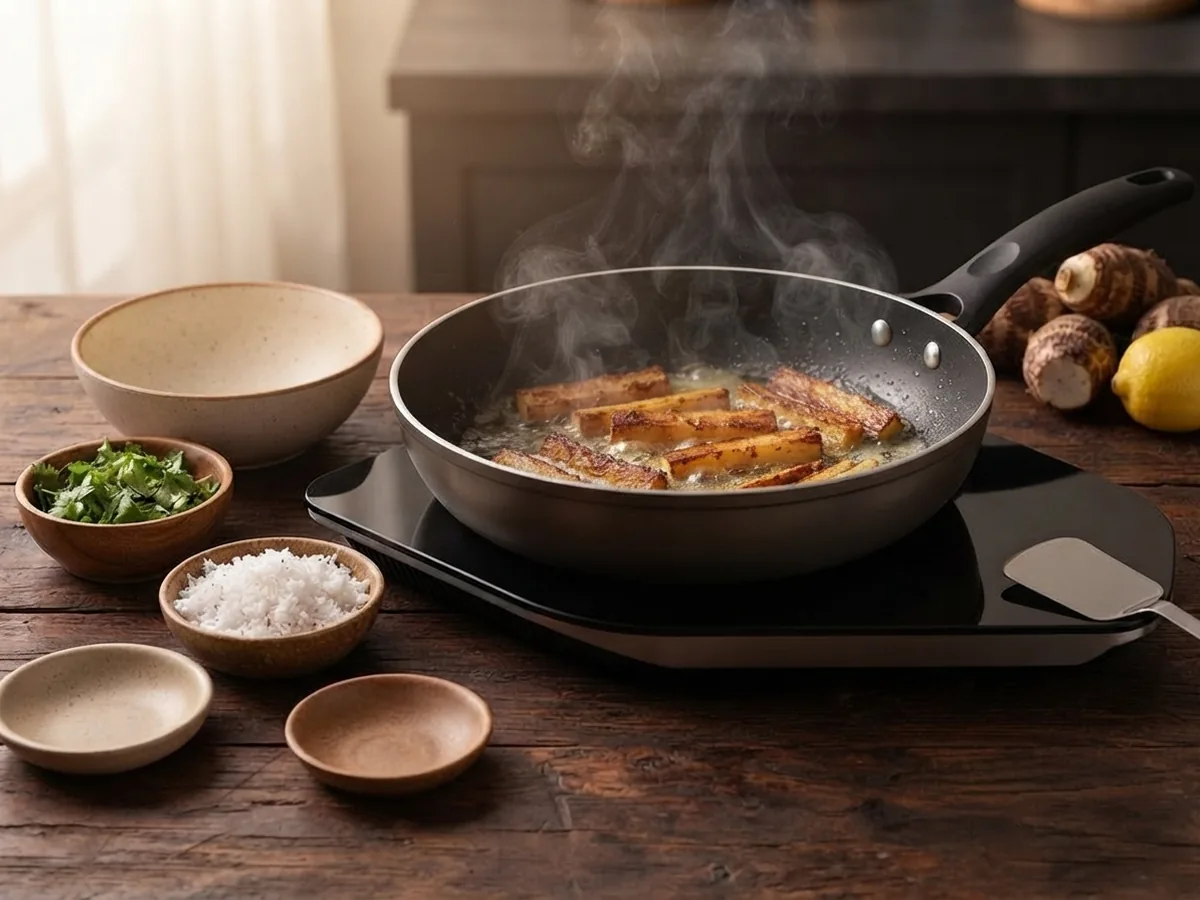
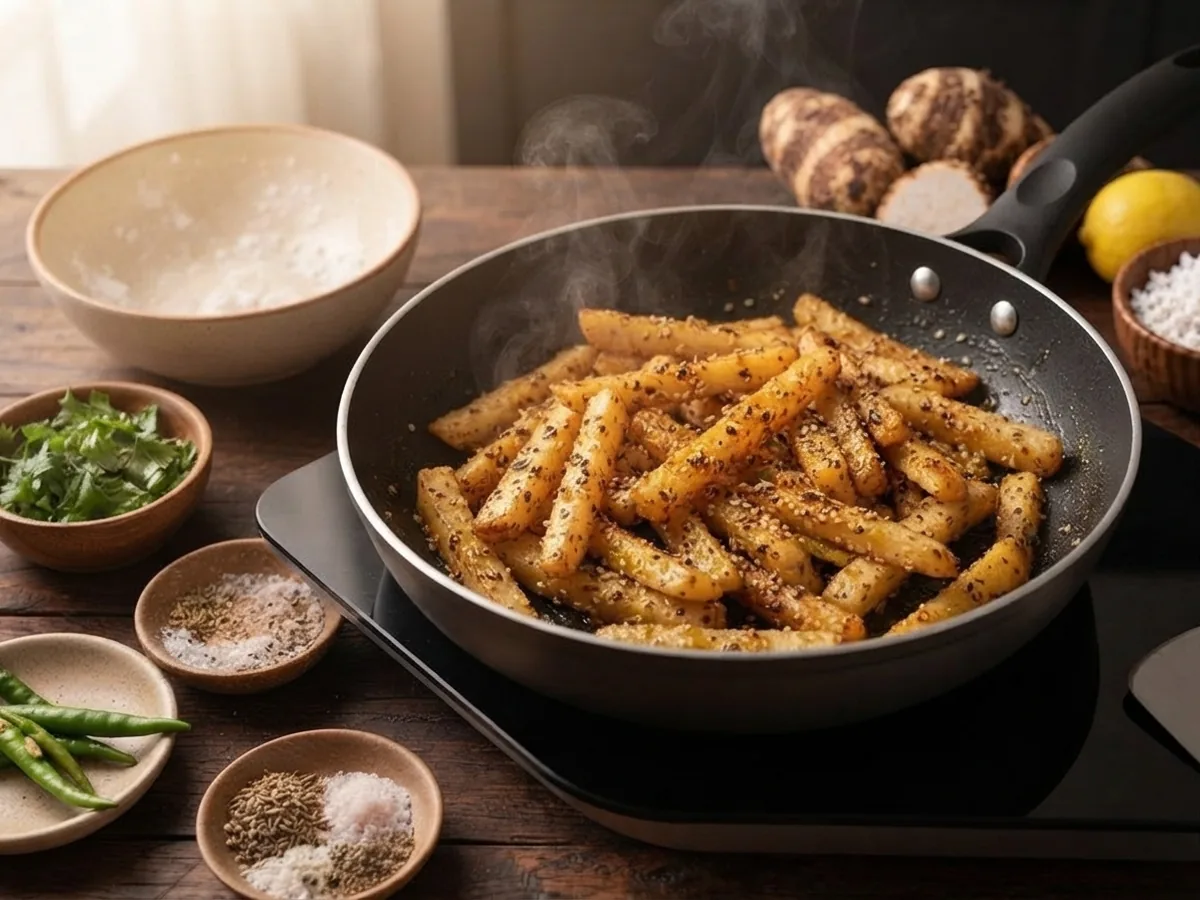
Heat 3-4 tbsp ghee in a wide non-stick pan over medium heat. Add the arbi sticks in a single layer and fry for about 8-10 minutes, turning occasionally, until they turn deep golden brown and develop a crust on all sides.
Done when: The arbi sticks should be deep golden brown with a distinct crust; do not crowd the pan, or they will soften instead of crisping.
15 mins hands-on
-
Season and Serve
Reduce the heat to low, sprinkle 1 tsp sesame seeds, 1/2 tsp rock salt, and 1/4 tsp black pepper over the arbi. Toss gently for 1 minute until the seeds are toasted and the spices coat the sticks evenly, then serve hot with the coconut dip.
Done when: The sesame seeds should smell nutty and toasted; ensure you toss gently so the soft arbi sticks do not break apart.
5 mins hands-on
“Good food is a step towards a healthier, happier you.”
Enjoy!Made it? Rate it
Be the first to rate it
Why It's Good for You
Taro root, or arbi, is a staple corm known for its starch content, providing a reliable source of dietary energy1,2. It contains essential nutrients including thiamine, riboflavin, and niacin2. As a root vegetable, it is a traditional part of the Indian diet, contributing to the diversity of plant-based nutrition1,2.
Fresh coconut is a versatile ingredient that brings a unique profile of fats and minerals to the diet3. Including coconut in traditional preparations is a common practice that can enhance the sensory qualities of food, such as taste and aroma4. When prepared as a dip, it complements the texture of the arbi, making the dish a wholesome addition to your meals. Always remember that for any specific dietary changes or if you are managing a condition, it is best to plan your meals with your doctor or a registered dietitian.
Sources
4
- Taro (Colocasia esculenta L): Review on Its botany, morphology, ethno medical uses, Phytochemistry and pharmacological activitiesexa.ai, 2023
- PHARMOCOLOGICAL POTENTIAL OF CALOCASIA AN EDIBLE PLANTexa.ai, 2013
- A concise review on oil extraction methods, nutritional and therapeutic role of coconut productsUS National Institutes of Health
- Effect of Common Culinary Methods Practiced in Sri Lanka on the Nutrient Composition of Commonly Consumed Vegetables and Other Foods - PMCUS National Institutes of Health